

On October 7, 1998, then Chinese Premier Zhu Rongji, accompanied by the then Minister of the Publicity of the Communist Party China Central Committee, visited central government-run China Central Television, now part of China Media Group.
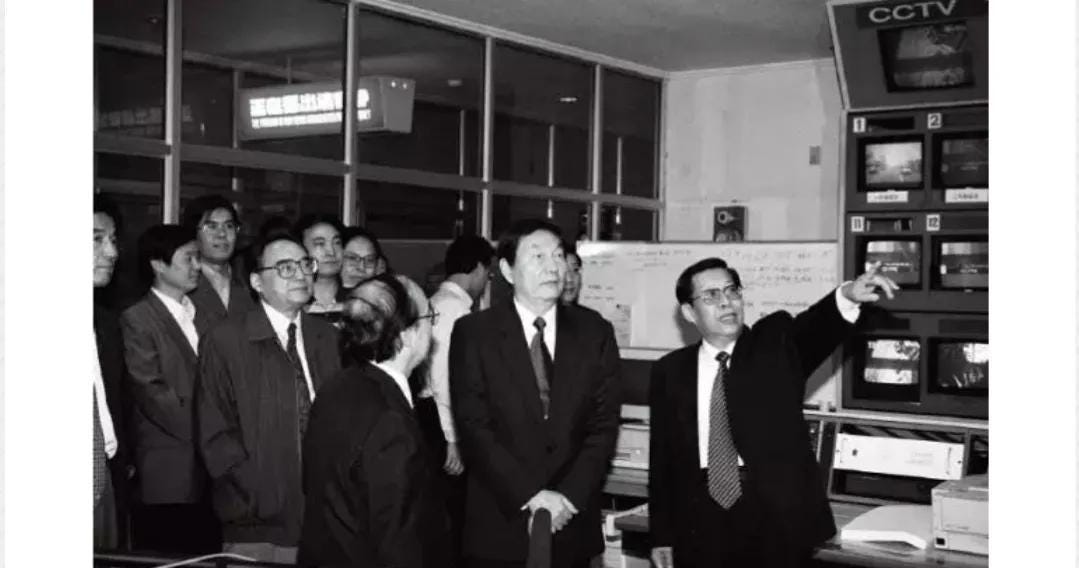
There, Zhu inscribed sixteen characters for Focus Report (焦点访谈), the prime-time program that aired nightly: “media oversight, the voice of the masses, a mirror for the government, a vanguard of reform.” (舆论监督,群众喉舌,政府镜鉴,改革尖兵)
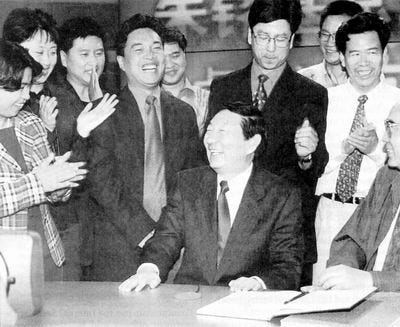
Zhu was not a man given to calligraphy for ceremony’s sake. He made an exception because, like countless Chinese viewers at the time, he was a loyal watcher of Focus Report, a program that had earned extraordinary public acclaim through its relentless exposure of official abuses and social wrongs.
He went further still, saying: “Focus Report, through its powerful impact, has won the support of the people across the country. Media oversight points out the problems on our path forward, reflects the sufferings of the masses, gives encouragement to the broad public, and lets the people see hope. Therefore, officials at all levels and all sectors of society should support media oversight.”

A few nights ago, for one fleeting evening, Focus Report seemed somehow to remember what it once was. No one is holding their breath for the next such moment of lucidity. But on April 14, 2026, this is what it broadcast.
In Junan County, Linyi City, Shandong Province, there is a project called the “Modern Agriculture Public Training Base,” with a total investment of more than 700 million yuan. Media reports once said that the project was “expected to serve 17,000 person-times annually,” that it would “make every effort to build a training base integrating agricultural varieties, technology, and services,” and that it was a “large-scale agricultural training base” capable of “simultaneously meeting the conference, training, dining, and lodging needs of more than 1,000 people.” Yet after this key project, once entrusted with great expectations, was completed, did it in fact fulfill its intended purpose? And was the huge investment really spent where it mattered most? Our reporters conducted an on-the-ground investigation.
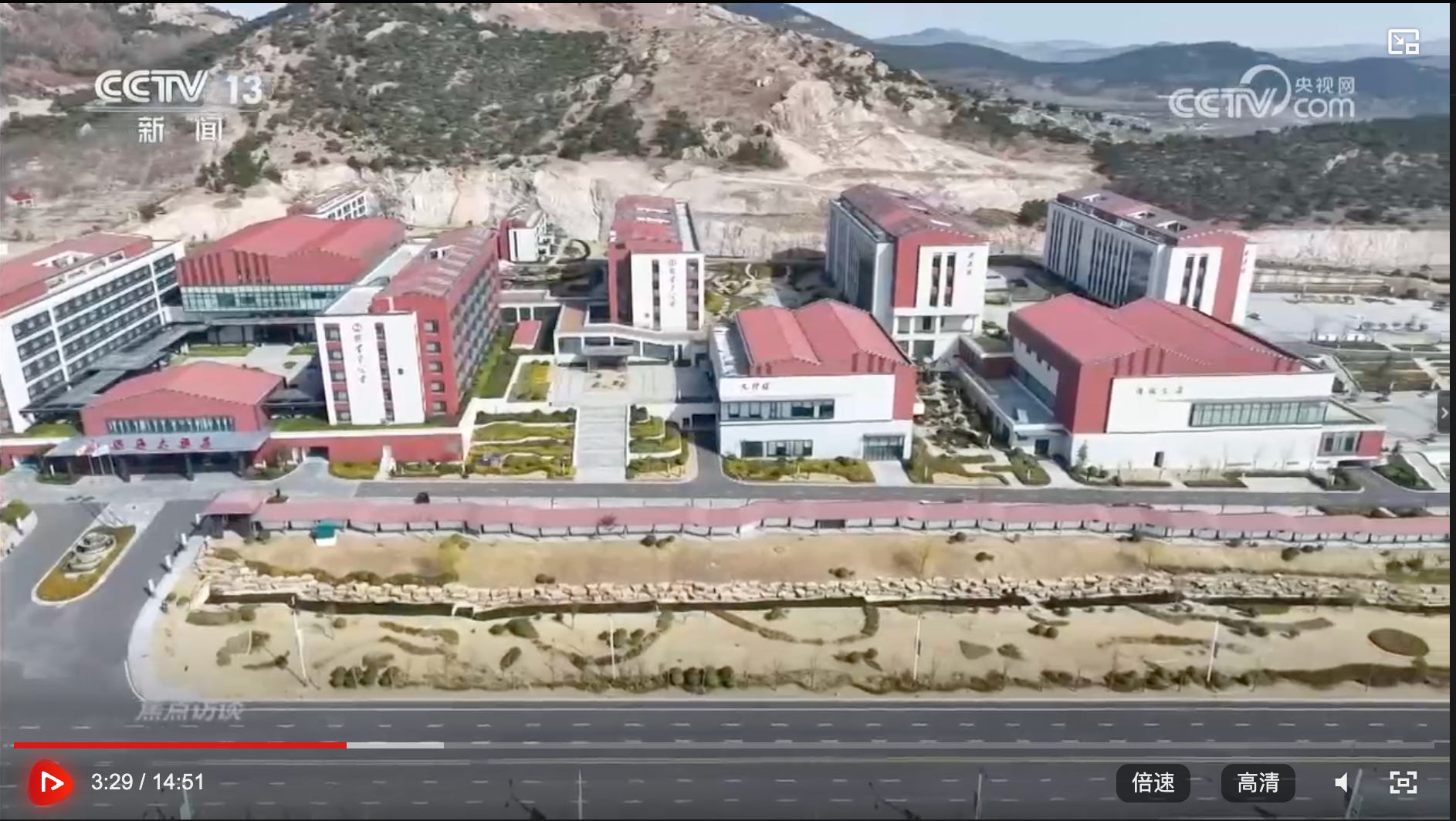
Junan County is an agriculture-oriented county under Linyi City, Shandong Province. In the northern part of the county seat, a striking cluster of buildings covering nearly 140 mu and with a total floor area of more than 90,000 square meters stands out conspicuously.
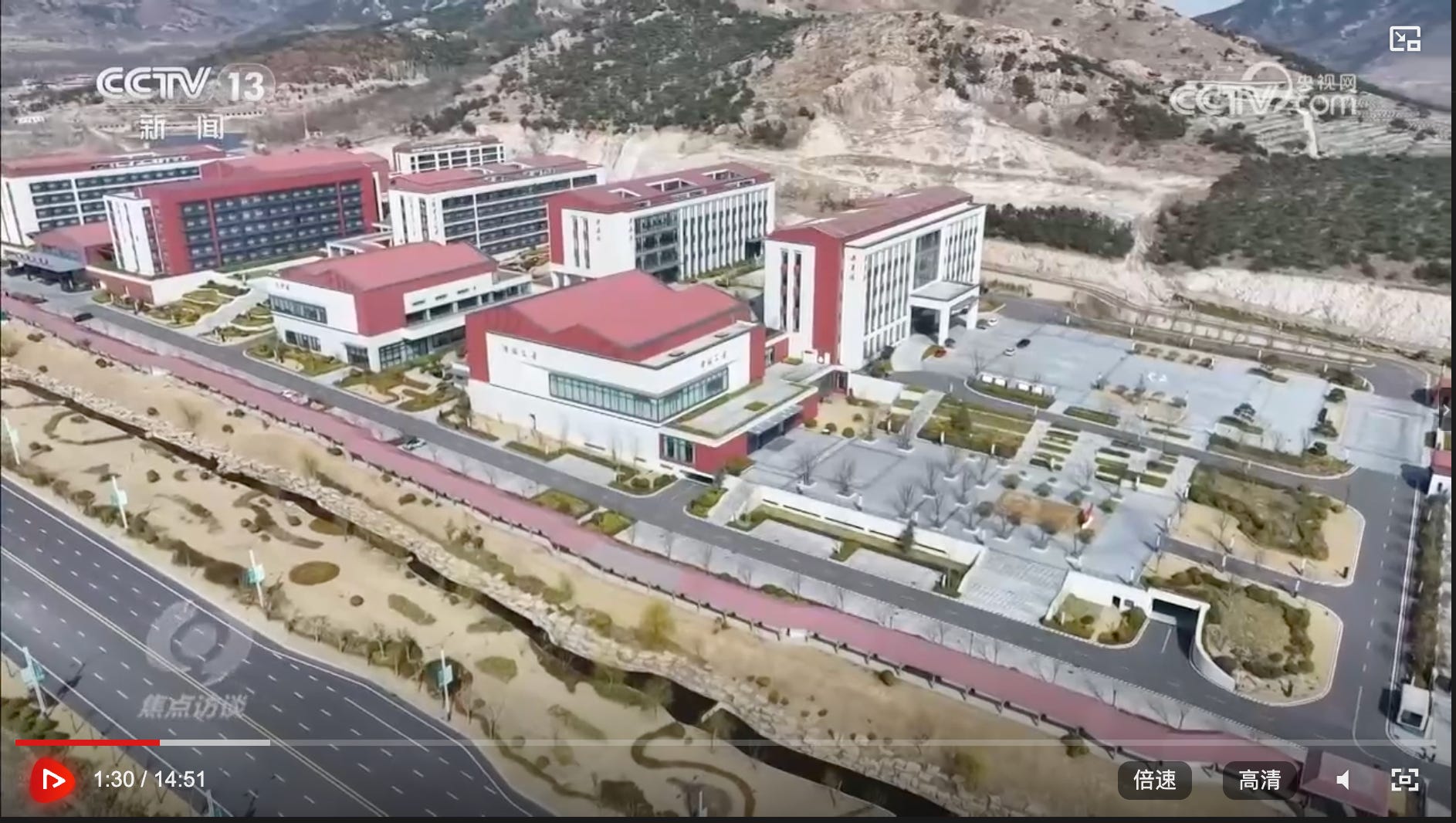
According to official documents, this is the “Junan County Modern Agriculture Public Training Base Construction Project,” with a total investment of more than 700 million yuan. It was meant to make every effort to build a training base integrating agricultural varieties, technology, and services. However, when reporters entered the complex, what they saw was far removed from “agricultural training.”
The Modern Agriculture Public Training Base that Junan County built at a cost of more than 700 million yuan, judging from its project name and planning, should have been a place dedicated to modern agricultural training and the cultivation of agricultural skilled personnel.
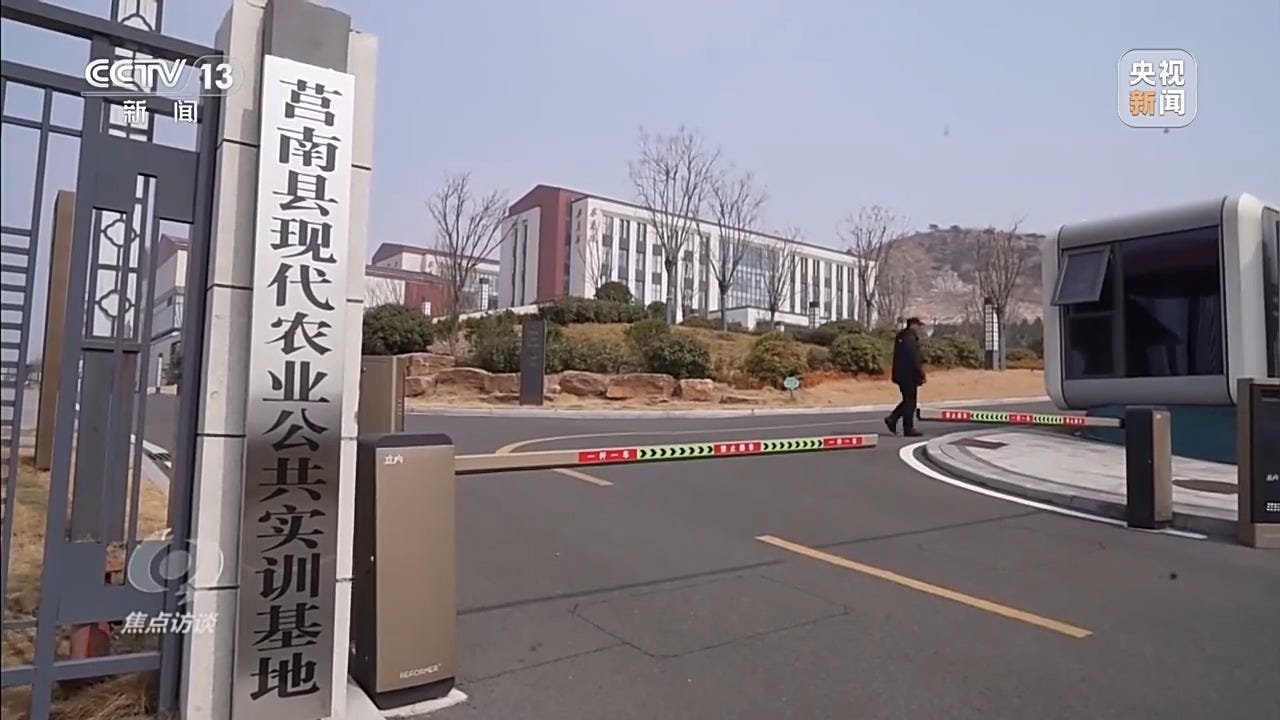
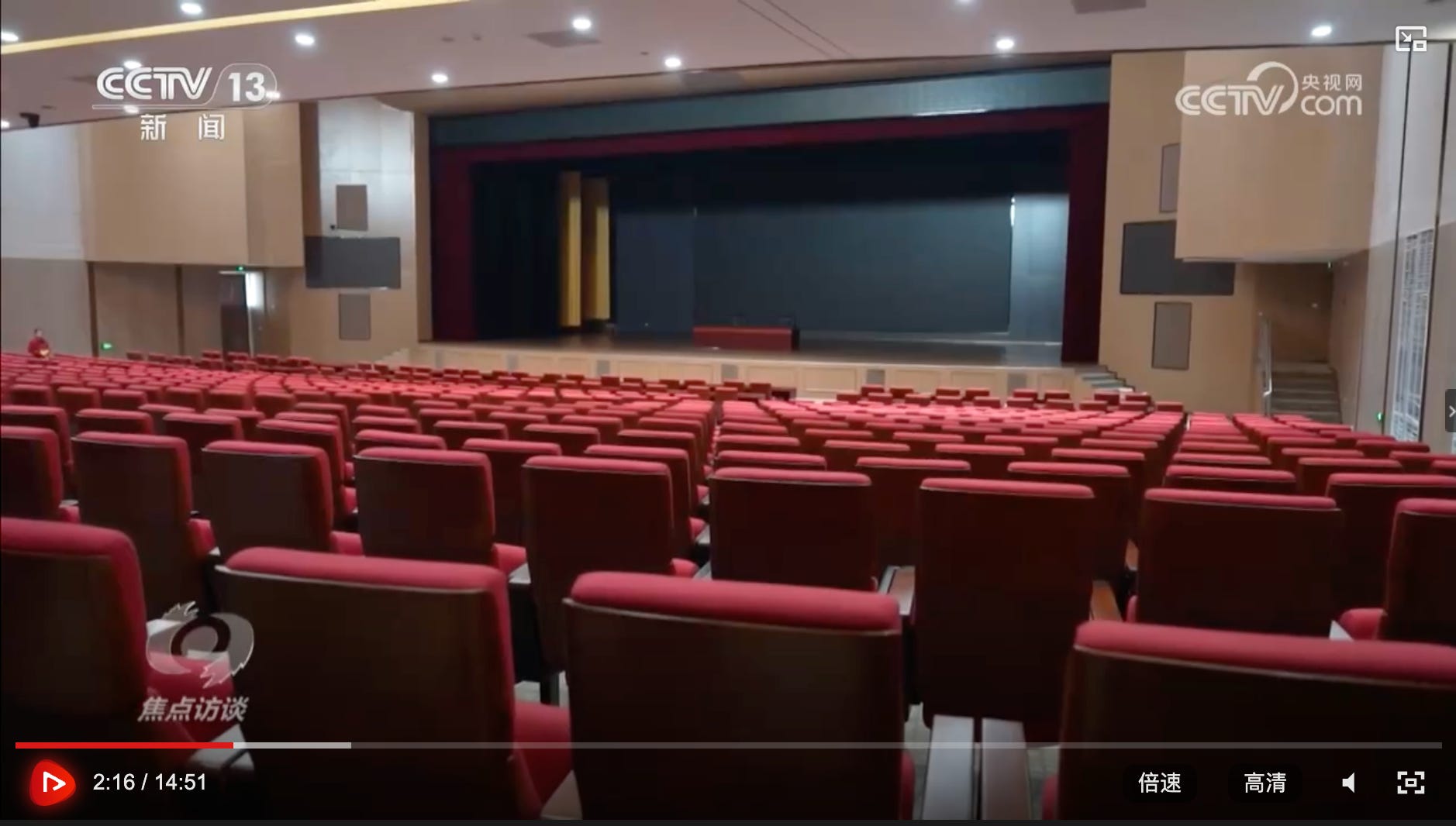
But after investigating the site for several days, reporters found an auditorium
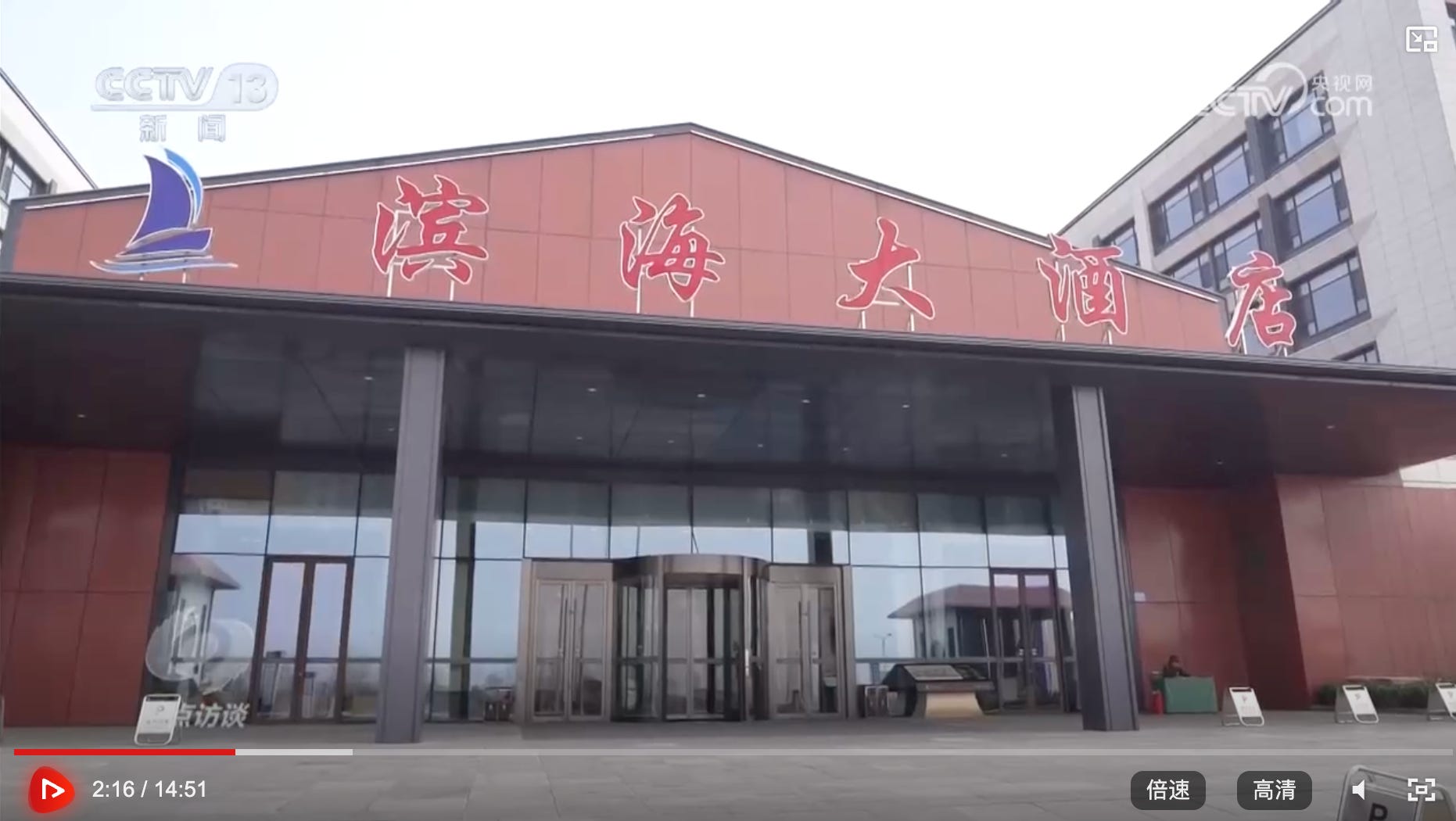
a hotel
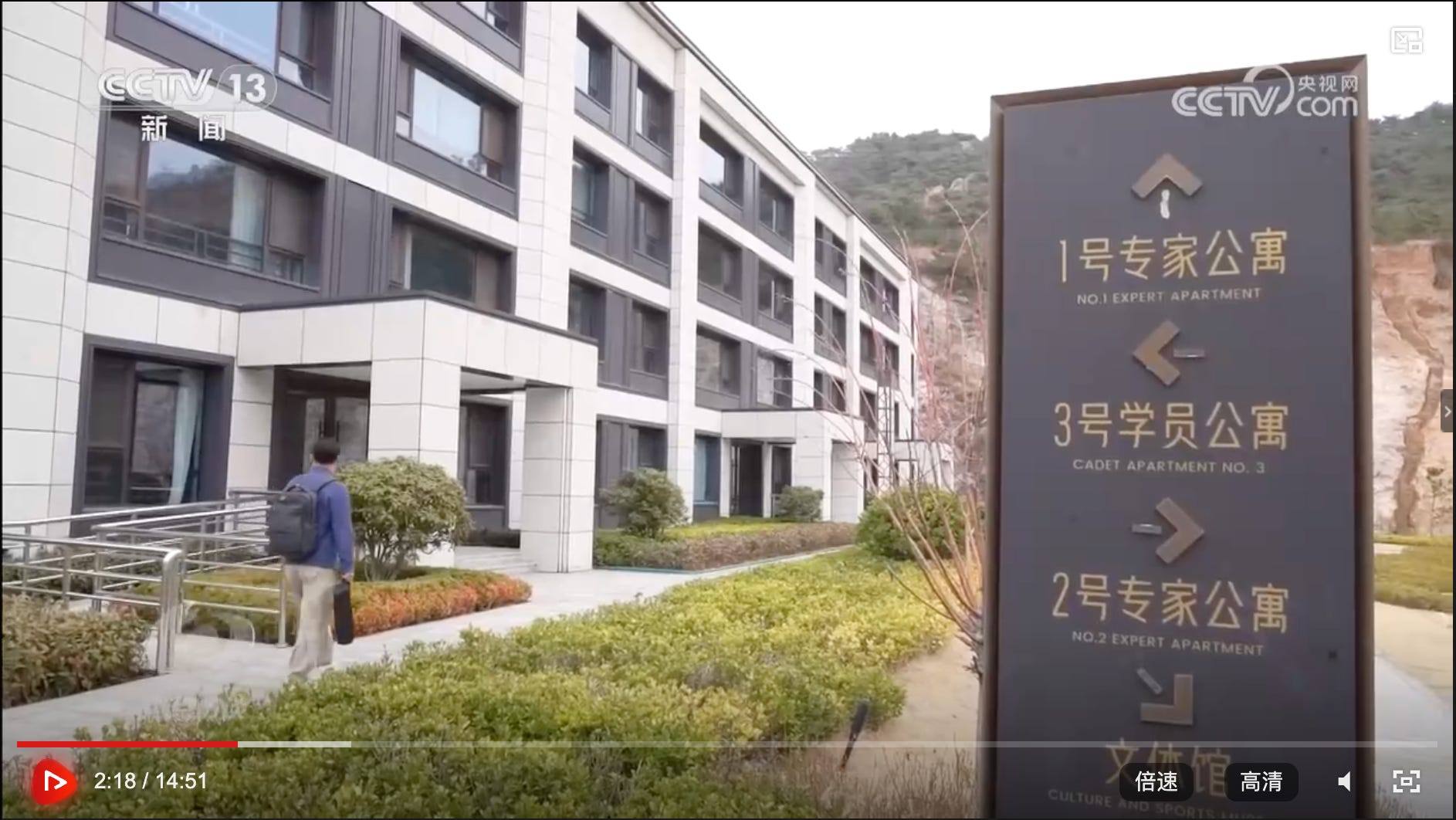
apartments, small gardens,
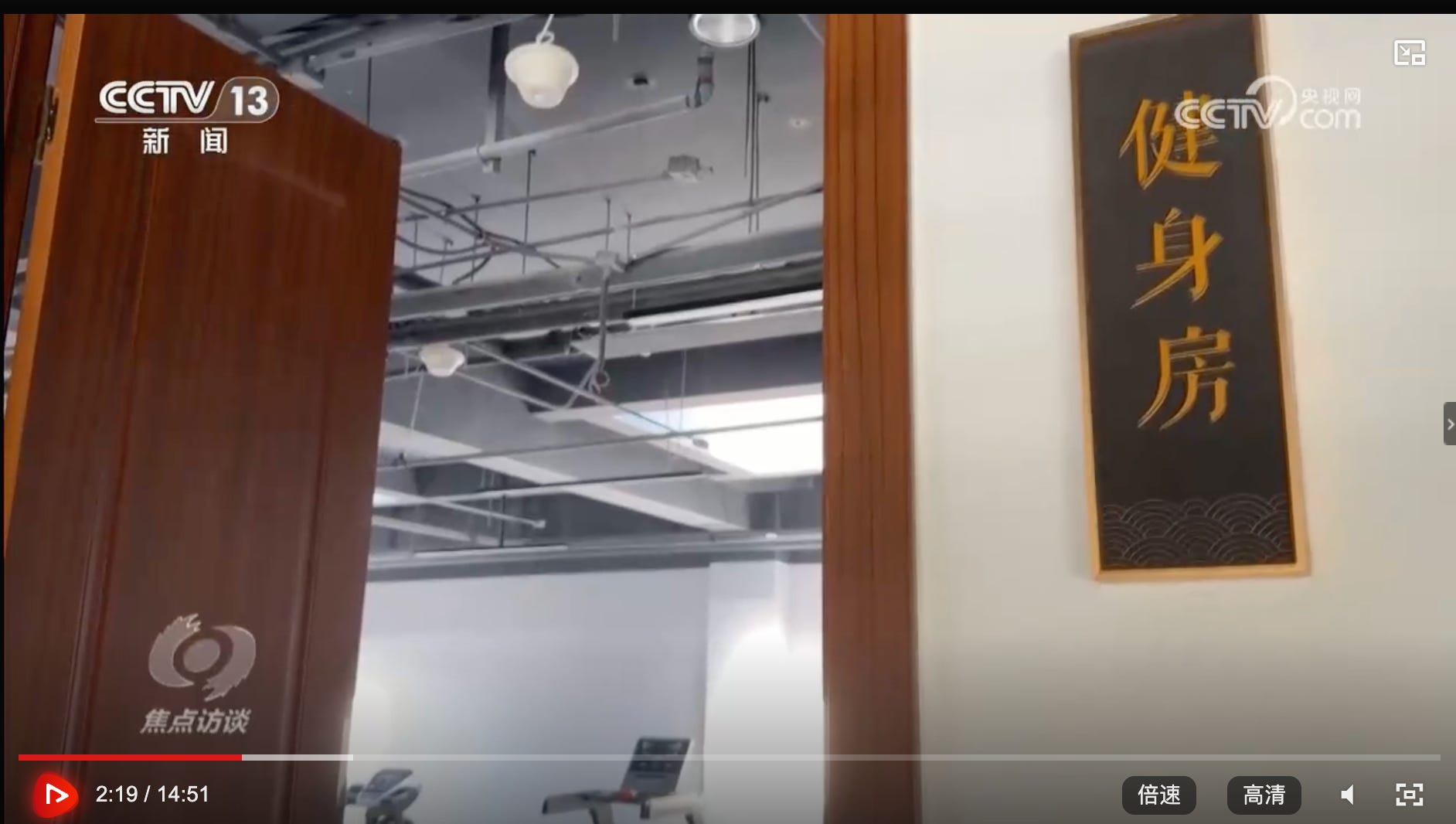
a gym,
and even leisure and entertainment facilities such as a card room.
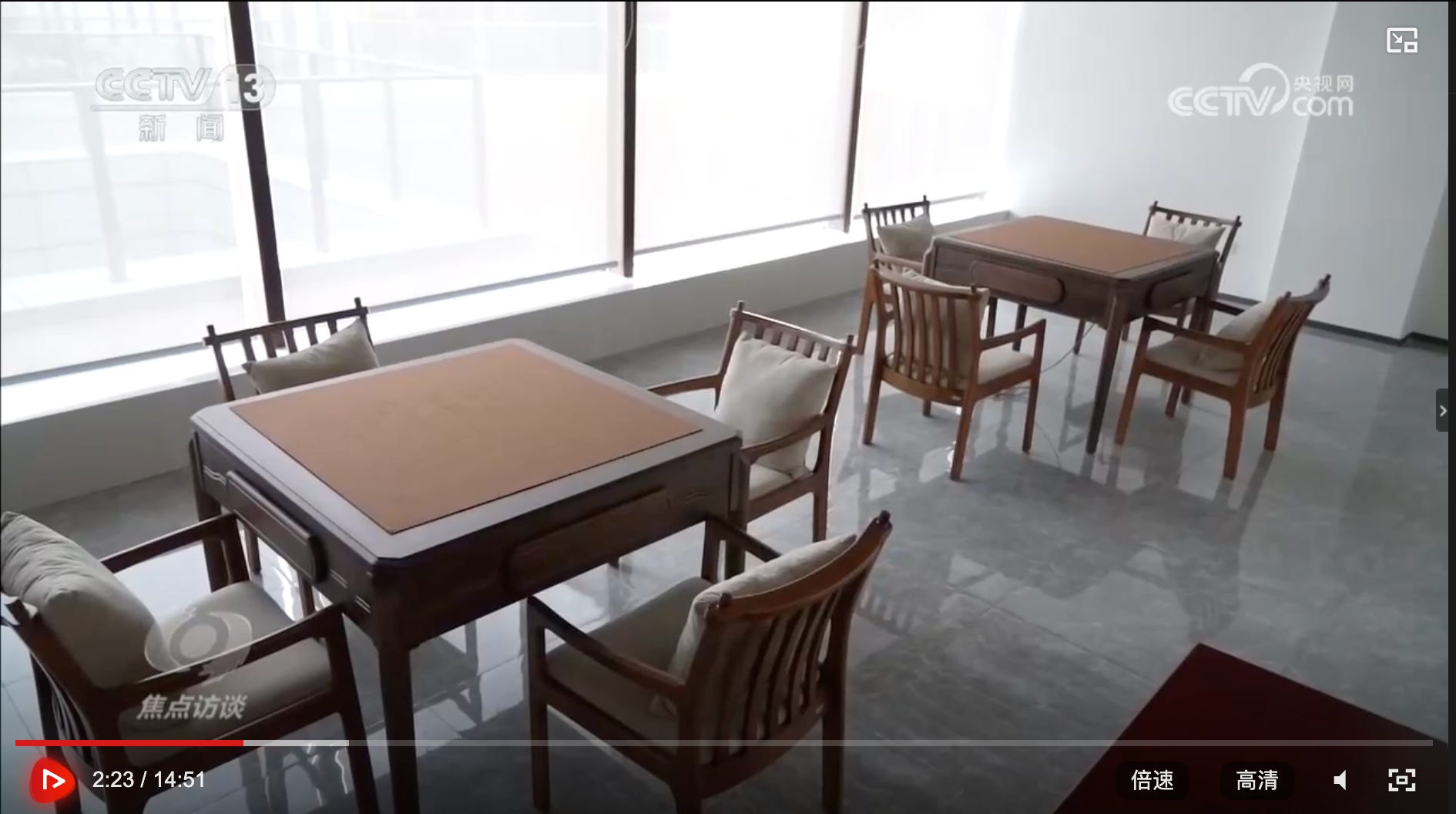
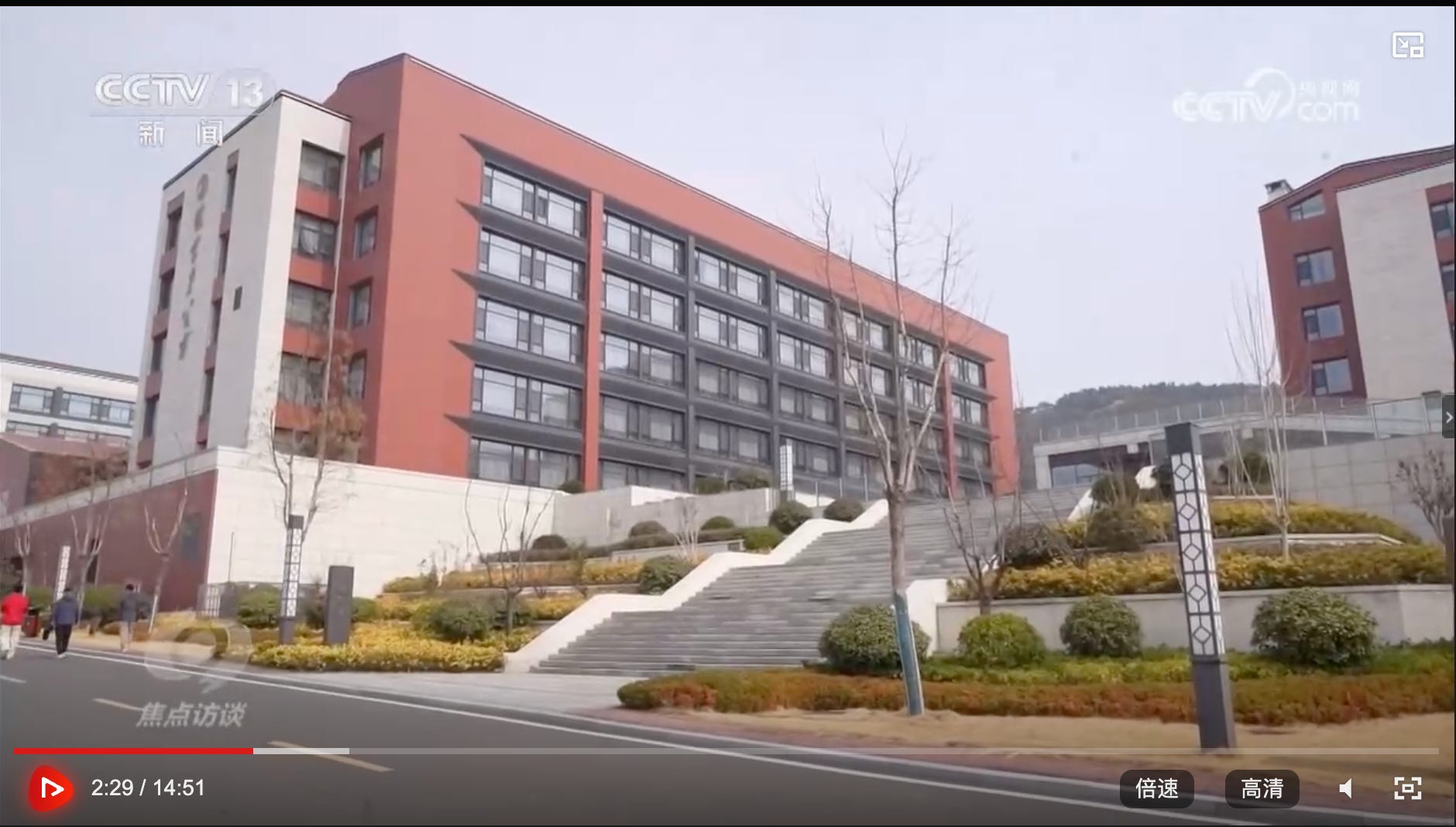
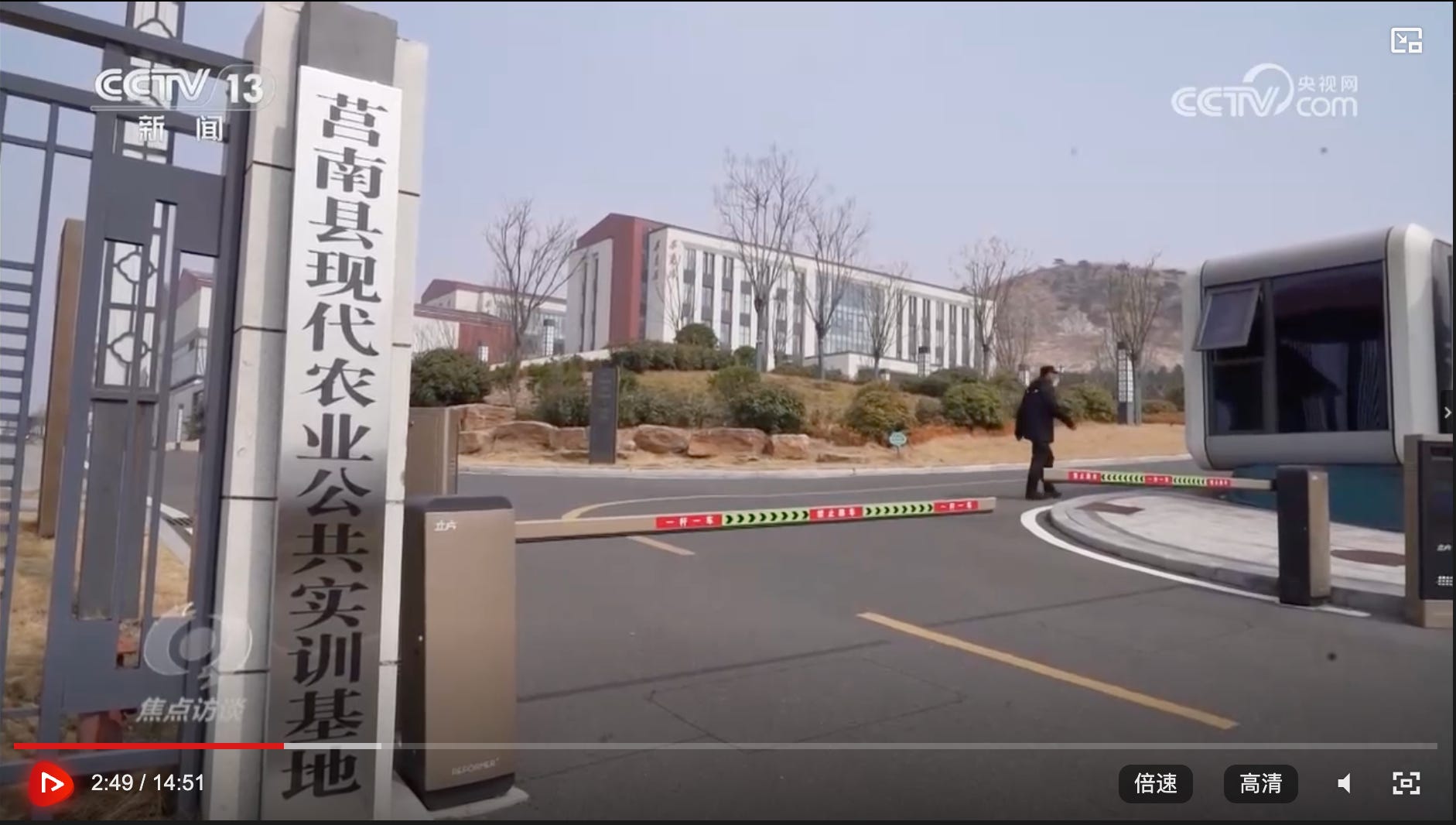
What they could not find was a single venue or piece of equipment related to planting, breeding, or agricultural machinery training. The only thing on the site that had anything to do with agriculture was a small signboard.
On the complex’s core buildings, signs reading “Qiushi Building” (Building for Seeking Truth); “Qiuzhen Building” (Building for Seeking Authenticity); “Yingbin Building” (Guest Reception Building); and “Yanbin Building” (Banquet Building) were large and unmistakable
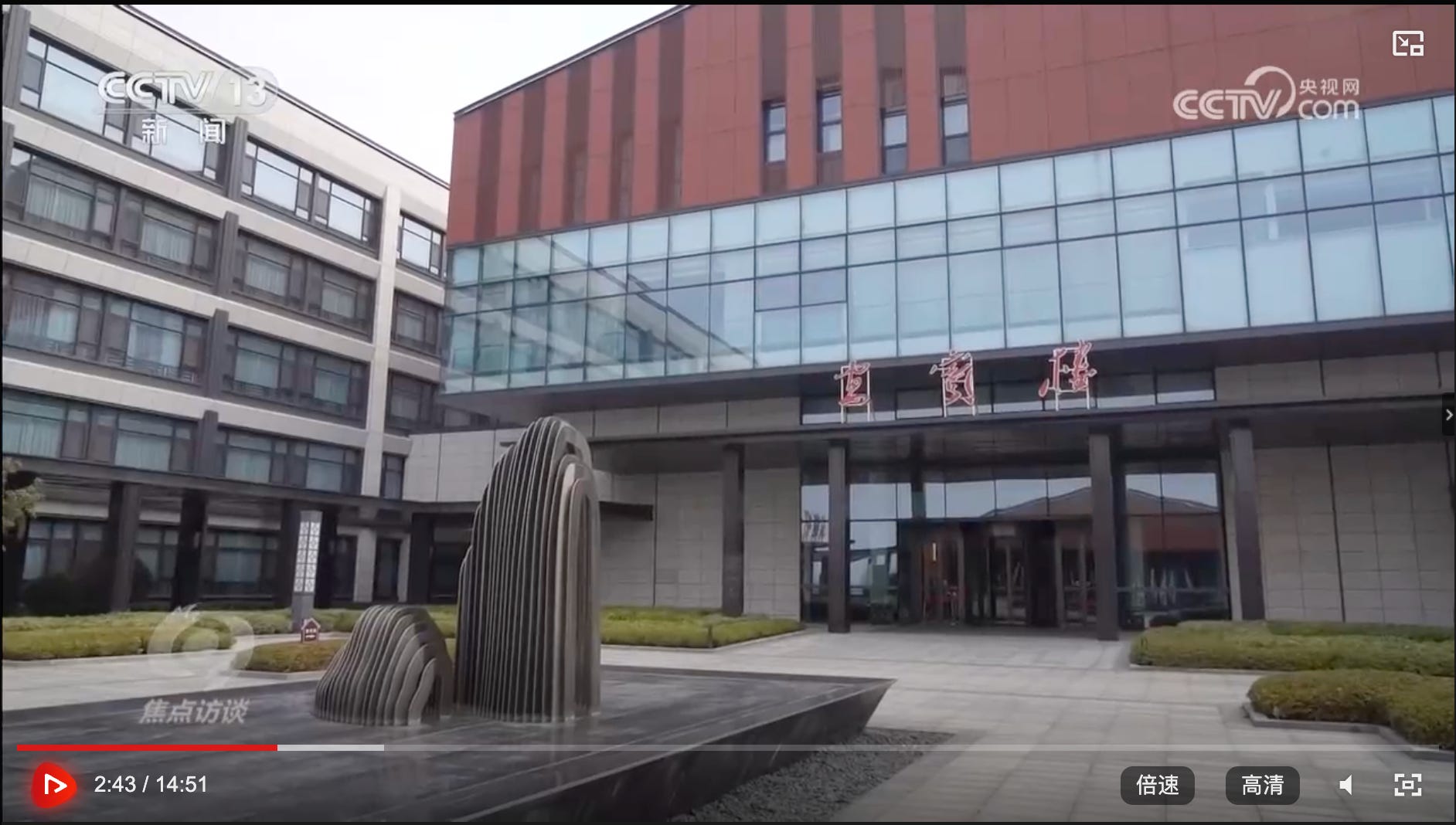
standing in sharp contrast to the inconspicuous little sign by the side gate.
inside Yanbin Building (Banquet Building), reporters also noticed large private dining rooms that could accommodate more than 20 people at the same time.
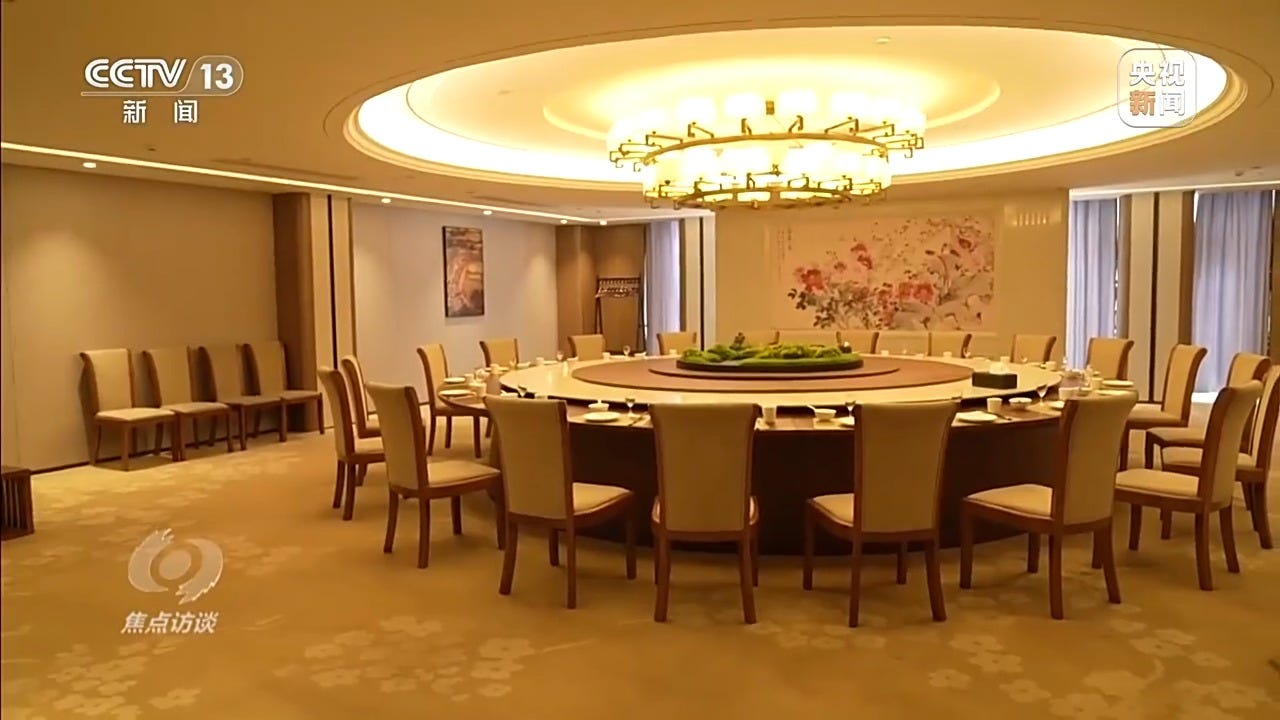
There were many other settings here as well, all of which appeared completely unrelated to agricultural training.
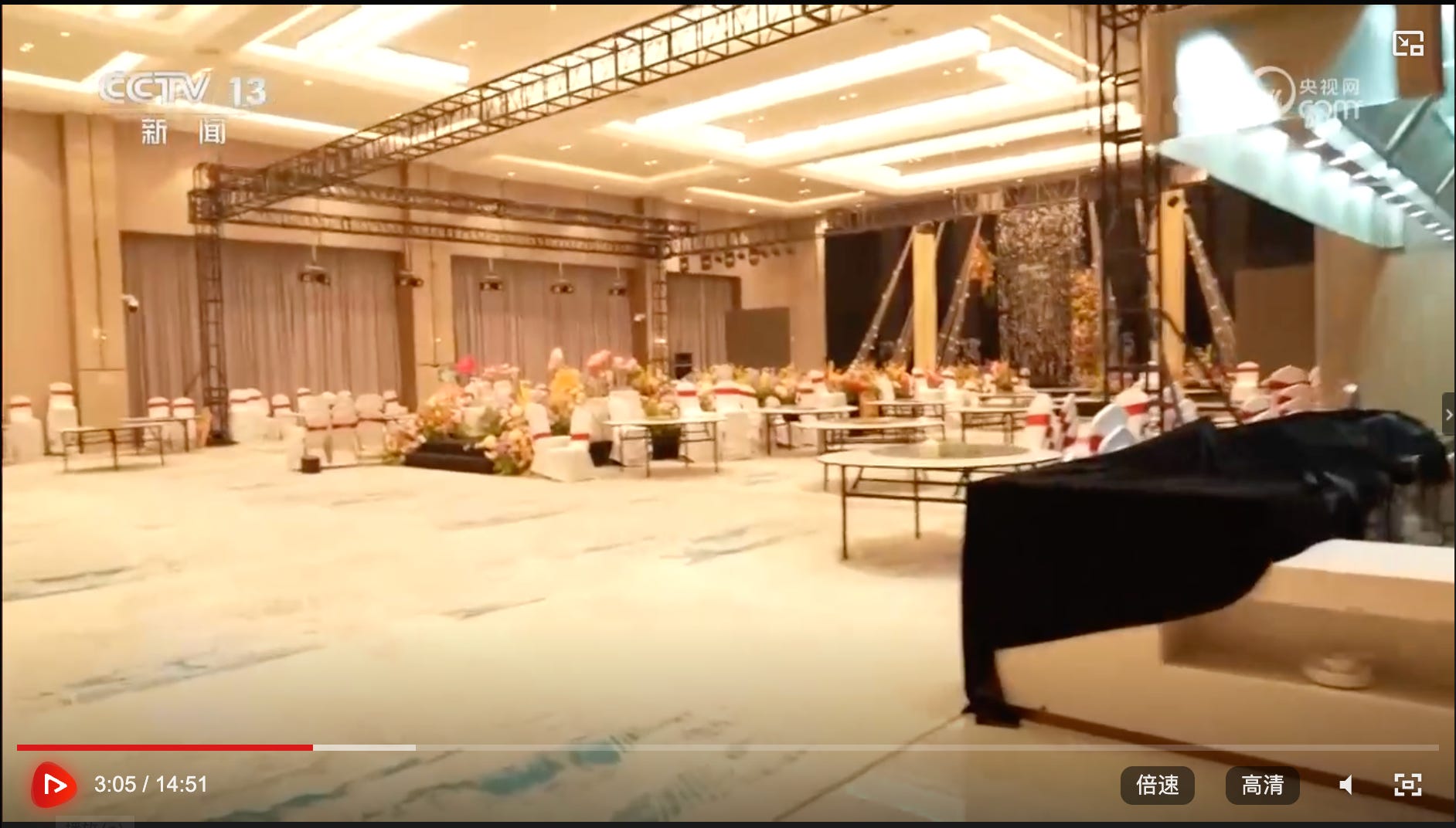
Why, then, did an agricultural training base built with an investment of more than 700 million yuan not actually end up being used for agricultural training after completion?
Reporters reviewed the project filing documents, which clearly stated that the construction content should consist of three major training bases—agricultural technology, agricultural machinery training, and planting and breeding—along with related supporting facilities. Yet at the planning stage, all of these training bases and related supporting facilities were renamed, becoming entirely different from what appeared in the filing documents.
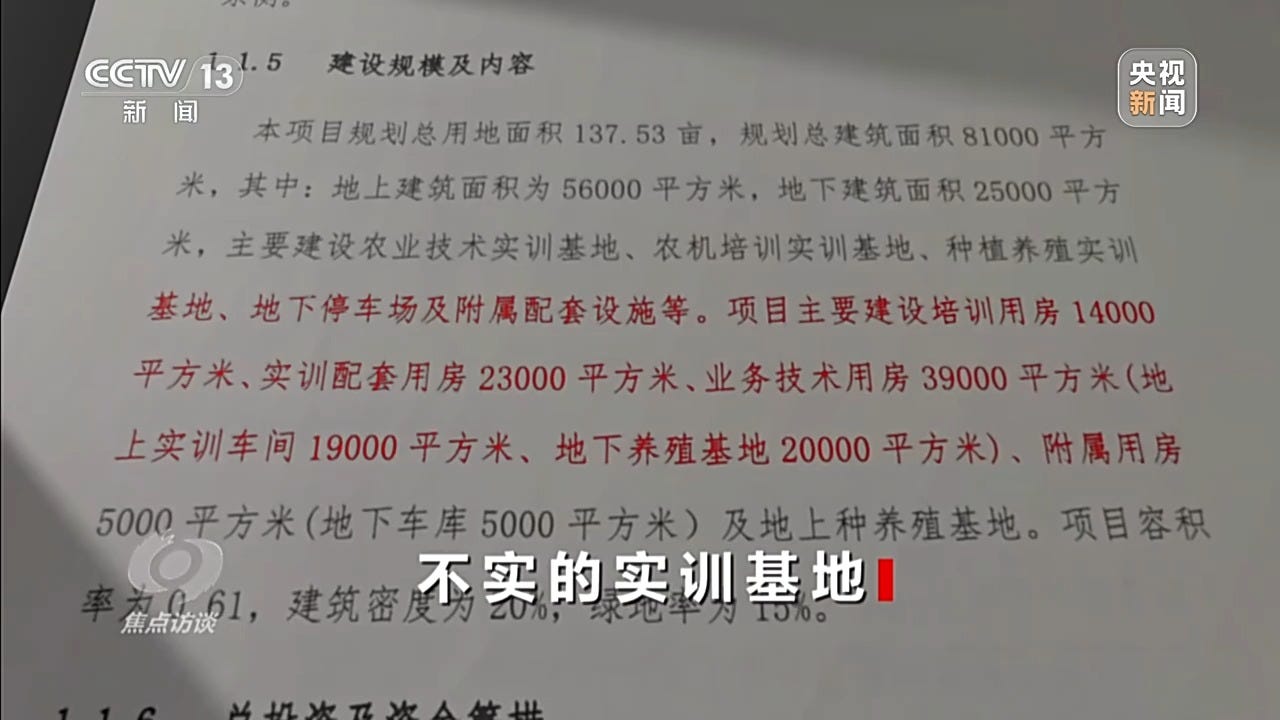
In the feasibility study report, the project clearly specified that it would mainly build training facilities, training support facilities, and business and technical facilities, including an underground breeding base. But none of these items appeared in the final plan; instead, additional construction content such as a hotel and a conference center was added. Why was there such a major discrepancy between the construction content in the filing documents and the planning and design? The construction side said that the final plan had been determined after multiple rounds of deliberation.
It is not hard to see that such planning and design were in fact intentional on the part of the county. The project, though called an agricultural training base, was planned to have an annual training capacity of as many as 17,000 person-times. But how much actual demand for agriculture-related training has there been in Junan County over the past two years?
Wang Shouhai, member of the Party leadership group of the Agriculture and Rural Affairs Bureau of Junan County, Shandong Province: “Based on what I learned earlier, for our annual vegetable and fruit training courses, including strawberry and blueberry training courses, plus aquaculture training courses, the total is only a little over a thousand trainees a year. A classroom that can hold more than 100 people would be enough.”
On one side was the actual demand of only around a thousand trainees per year; on the other, a grand project costing more than 700 million yuan and benchmarked against training tens of thousands of people. The construction scale far exceeded the county’s real agricultural training needs. According to materials provided by the local authorities, in the nearly two years since the base was completed, its training records show only 10 agriculture-related training sessions.
This means that if the project had only been built as a genuine agricultural training base, a large amount of space would have remained idle after completion. That is why, after round after round of deliberation, county leaders ultimately planned additional construction content such as a hotel and conference center.
Even more concerning than the “distortion” of the buildings’ functions is the source of the enormous funding and the associated risks. It is understood that of the project’s total investment of more than 700 million yuan, 368 million yuan came from government special-purpose bonds. Special-purpose bonds are issued for public welfare projects with a certain level of revenue generation and are supposed to be repaid with the project’s own income. In this project, those special-purpose bonds were all meant to be used for constructing agriculture-related training bases. As early as September 2023, the Junan County Finance Bureau had commissioned a third-party company to produce a performance evaluation report specifically for this project. The report clearly recorded problems such as “the use of part of the special bond funds not conforming to the contents of the feasibility study.”
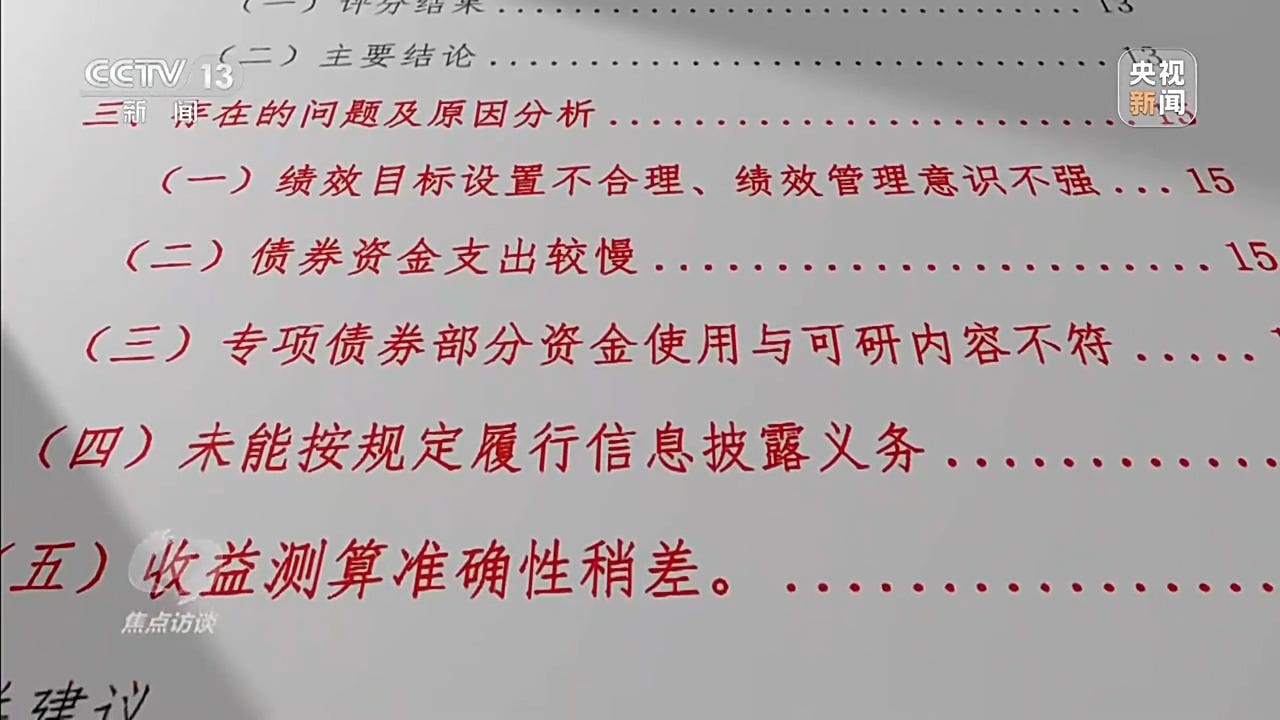
Zhao Feng, deputy director of the Finance Bureau of Junan County, Shandong Province: “We followed up on it later, but because all of the project funds had already been invested into project construction, and construction had proceeded according to the earlier planning and design, no major adjustments were made.”
Although the performance evaluation report pointed out that the three agricultural bases originally intended for construction had not been built and that the use of special bond funds did not conform to the feasibility study, the special bond funds were not effectively supervised or adjusted and were still used in this project.
Zhao Feng: “According to the normal workflow for fiscal performance evaluation, once problems are found through performance evaluation, the finance department should immediately carry out rectification and verification, and then come up with a rectification plan. But at the time, this project was considered to have undergone only minor changes, so major rectification was not deemed necessary.”
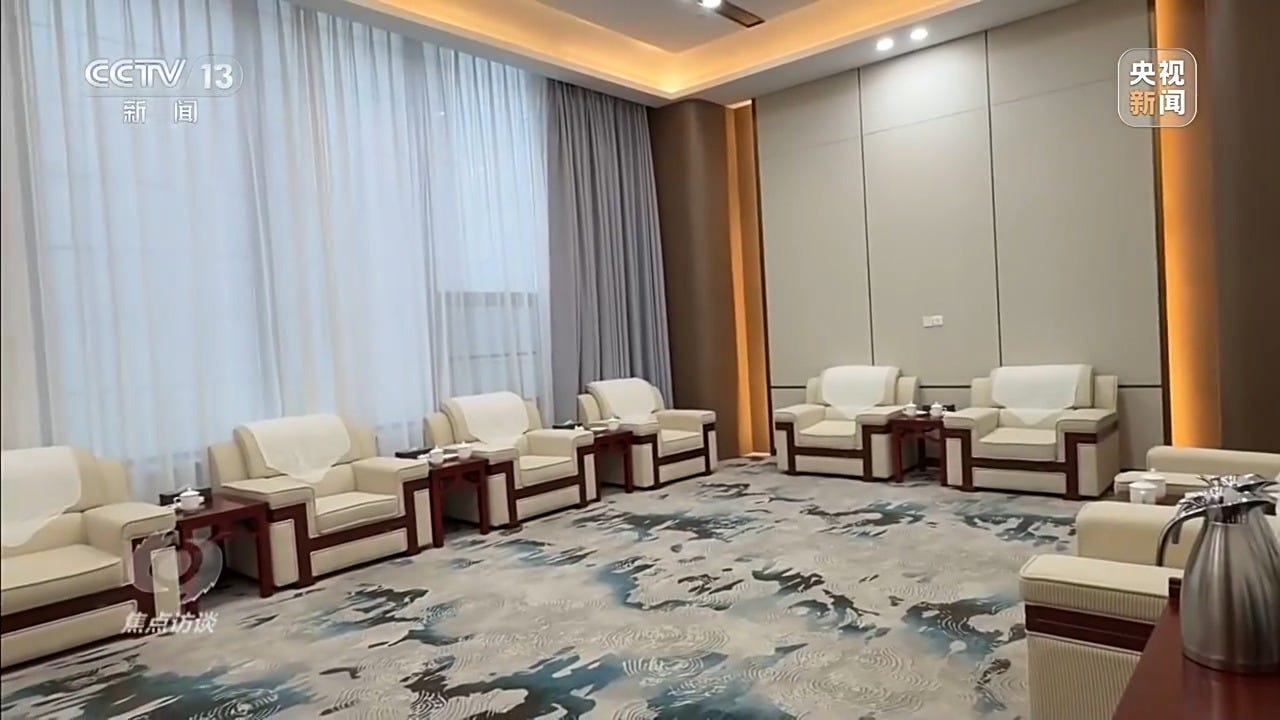
Can a transformation from an agricultural training base into a comprehensive office building, expert apartments, a conference center, and other such buildings really be considered only a minor change? And what problems would result from the failure to rectify it in time? The performance evaluation report also mentioned that projects financed by government special-purpose bonds must rely on their own revenues for repayment.
According to the project’s original plan, it had been intended to cooperate with a local agricultural school in Linyi, with annual revenue expected to exceed 80 million yuan. In reality, however, the school’s total annual student tuition income was only a little over 10 million yuan. This huge numerical gap made the project’s basis for approval appear exceptionally fragile. After the project was completed, cooperation with the Linyi agricultural school was also shelved.
Zhao Feng: “Looking at it now, the project’s revenue has indeed deviated somewhat from the original idealized projections. The design at the beginning was idealized; there was no stress-tested design, including with regard to revenue.”
Such a massive construction project deviated seriously from reality in its planning and design, the use of special-purpose bonds, and revenue projections alike. Yet over the two years from project approval and the feasibility study report through planning, construction, and acceptance, it was completed smoothly under the “supervision” of all the relevant departments.
Zhao Feng: “Later, with regard to the project managing unit and the operating unit, namely the Finance and Economics Group, we have already issued written notices concerning this project’s low utilization rate and insufficient revenue, requiring them to quickly find ways to realize project income.”
In order to avoid idleness and generate revenue, two training buildings were rented out to the county Party School, and the original three student apartment buildings were leased externally to a hotel. Apart from a handful of agriculture-related training programs, the more than 90,000 square meters of space has been split up for a variety of different uses.
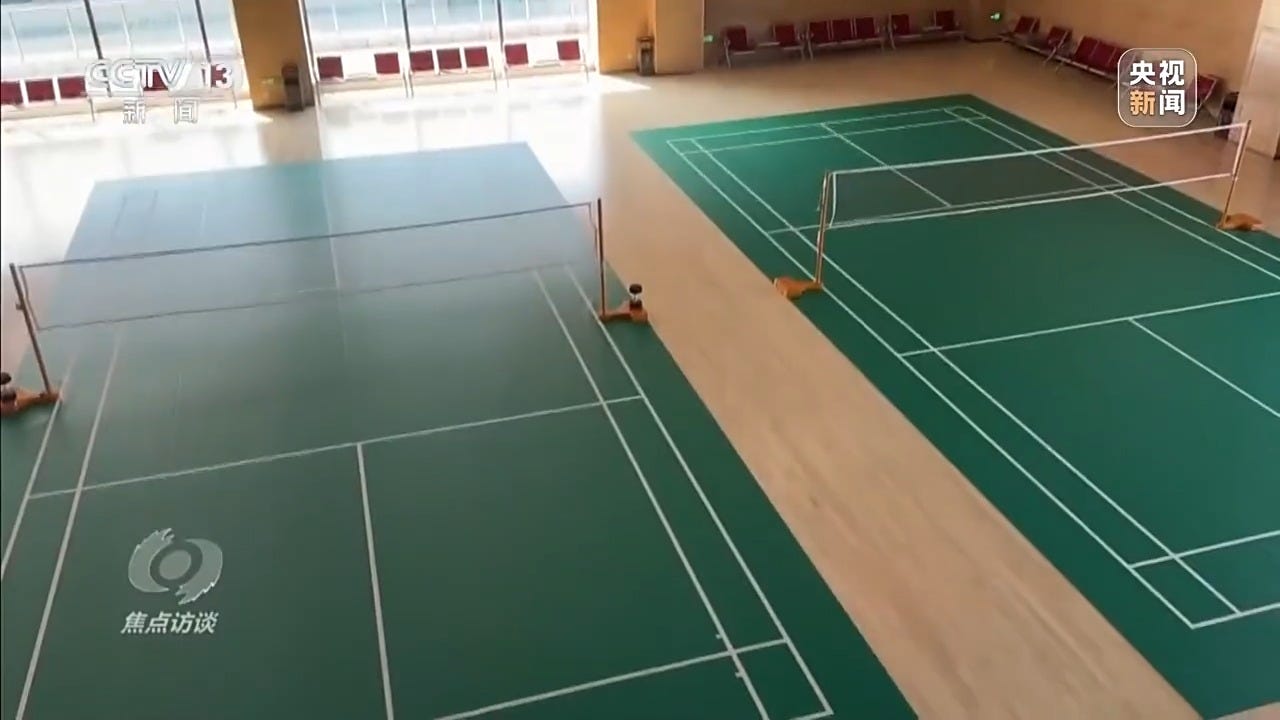
Because there has been very little agriculture-related training, the two “expert apartment” buildings within the complex have also been left idle. After considerable effort, reporters obtained several lease contracts. The contracts show that some of the apartments had been rented out to the Office of the People’s Government of Junan County.
Today, many spaces in this massive complex still remain vacant. The project’s own revenue has fallen far short of expectations, yet the 368 million yuan in special bond funds still requires the payment of more than 10 million yuan in annual interest, creating a heavy financial burden.
Pei Jiansuo, deputy dean and professor at the School of Applied Economics, Renmin University of China: “Local governments must clearly recognize that debt should not be used lightly; it has a cost. If funds are allocated, say, to a training base, but in the end the actual use is not for a training base, that means a large amount of capital has been tied up there, and ultimately the rate of return is not high. Good projects are in urgent need of resources and funding, but if bad projects occupy those resources, that creates a situation in which bad money drives out good, resulting in a misallocation of resources and a loss in the efficiency of capital.”
From what was promoted as a benchmark for agricultural training to what has in reality become a vast building complex with an ambiguous positioning and difficult operations, the gap embodied by this project exposes prominent problems in some places’ major investment decisions: emphasizing project approval while neglecting actual results, inadequate scientific demonstration, and the absence of supervision throughout the entire process. People’s livelihood projects should be people-centered, and funding should seek real results. Planning divorced from reality and execution lacking oversight cause not only enormous waste of resources, but also aggravate local debt risks and overdraw the government’s credibility. Spending money where it matters most and getting things done in ways that truly reach the hearts of the people—this is the proper underlying character of any people’s livelihood project, and it is also the bottom line of duty performance that governments at all levels must uphold.
Hu Xijin: Silence is not gold

Hu Xijin is the former editor-in-chief of the Global Times, a Chinese newspaper under the People’s Daily, the official newspaper of the Central Committee of the Communist Party of China. He recently called for “tolerance and freedom within the constitutional order” in a
Veteran commmentator slams Chinese media's meaningless "transformation"

Cao Lin is now a professor at the Journalism and Information Communication School of Huazhong University of Science and Technology in Wuhan. Before returning to his alma mater, Cao was a two-decade-long in-house commentator of the influential China Youth Daily
The Vanishing Craft of Journalism in China

The following article, from a year and a half ago, completes my recent rant on legacy media and journalism in China.
Monopoly without market, subsidies without subscribers: Guo Quanzhong on state media

The buzzword in China’s state media industry now is 系统性变革 systemic transformation, a full year after the word was included in the Resolution of the 3rd Plenum of the 20th Central Committee of the Communist Party of China on further deepening reform comprehensively to advance Chinese modernization
Journalists’ Day Shouldn't be a Celebration

November 8 is China’s state-anoited Journalists’ Day. Here is a reflection by an industry veteran who won the state-run China Journalism Award eight times in his two-decade career.