


Although Beijing has made “common prosperity” one of the defining themes of China’s current political economy, and although the phrase has attracted intense attention abroad, Li Shi’s recent lecture leaves little room for optimism about the road ahead.
Beijing’s recent call to “invest in people”(投资于人)can sound, at first, like another broad policy slogan. Li Shi’s lecture gives it a much harder meaning. For him, the phrase is not a soft add-on to growth policy, but a response to the central dilemma facing common prosperity: slower growth is making it harder to expand the pie, while entrenched gaps in income, wealth, public services, and human-capital investment are making it harder to share it fairly. His lecture therefore does two things at once. It explains why “investing in people” has become necessary, and then turns the slogan into a concrete reform agenda — higher household incomes, more support for low-income families, hukou and education reform, fairer public services, and, finally, freedom.
Li, Senior Professor and Dean of the Institute for Common Prosperity and Development at Zhejiang University, laid out at Peking University just how formidable the obstacles have become. Common prosperity is not about national strength in the abstract. It is about whether ordinary people become more prosperous, and whether the gains of development are shared more fairly. That requires China to do two things at once: “make the cake bigger” and “divide the cake better.” Both tasks are becoming harder, he said recently.
On growth, Li listed a series of mounting pressures. China’s growth rate has fallen from the high-speed era of 8–10 percent to around 5 percent. Household income growth has slowed sharply, with the weakest gains among the poorest groups. Urban wage growth has softened. Consumption remains structurally weak. Fixed-asset investment, especially private investment, has lost momentum. Unemployment, particularly among young people, remains elevated. These are not separate problems. Taken together, they raise a harder question: whether China can still generate the level of growth needed to meet its 2035 and 2050 prosperity targets.
The distributional picture is no more reassuring. China’s national income inequality has remained at a high level for nearly a decade, with the official Gini coefficient hovering around 0.46–0.47. Urban wage inequality has continued to widen. Wealth inequality is worse still. According to Li’s estimates, the wealth Gini coefficient rose from 0.45 in 1995 to above 0.7 in 2023. In other words, even where headline income inequality has stopped rising, deeper divides in wages, assets, and life chances have continued to harden.
Li’s sharpest warning concerns opportunity. Low-income families are not merely earning less today. They are also far less able to invest in education, health, childcare, and other forms of human development. Li noted that in 2021, around 300 million people had monthly incomes below 1,000 yuan, and nearly 98 million below 500 yuan. For these households, “investing in people,” Beijing’s recent policy phrase, is not simply an aspiration. It describes a constraint. Without income, access, and public support, they cannot make the investments that would allow the next generation to move upward.
Strikingly, after discussing growth and distribution, Li turned to something more fundamental: freedom. Investment in people, he argued, is different from investment in machines or infrastructure. Human beings are not passive assets. They have consciousness, values, beliefs, and an innate desire for freedom. In this sense, freedom is not merely a moral claim or a form of individual welfare. It is also a condition for productivity, innovation, and human flourishing. Li’s final policy advice was therefore unusually direct: China should create an environment in which people can develop more freely, so that society’s creative potential can be more fully released.
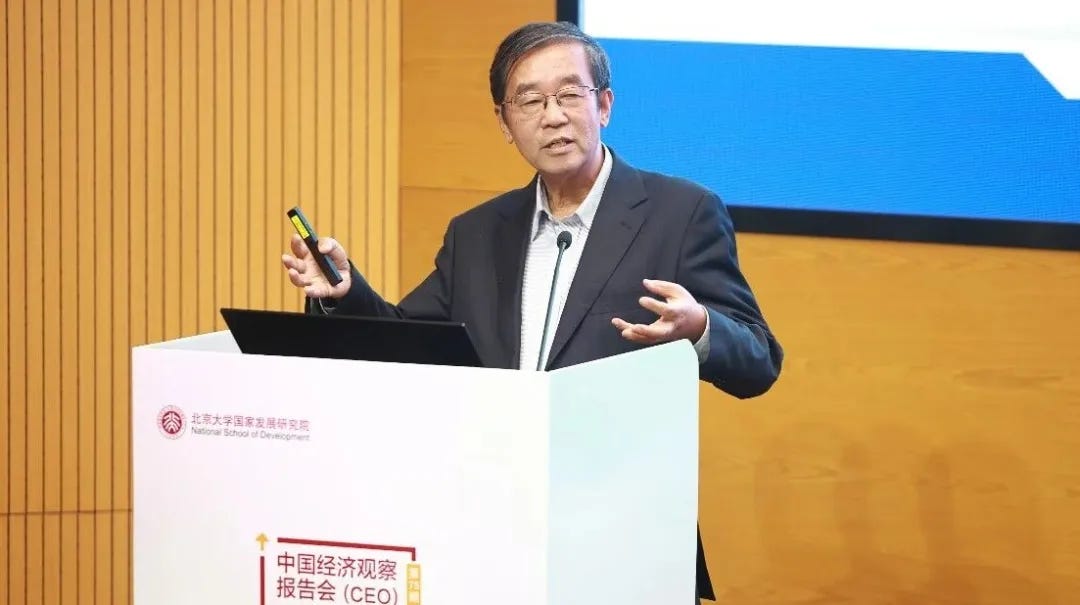
Li delivered the following speech at Peking University’s National School of Development (NSD) on 29 March 2026. The transcript was published on the NSD’s official WeChat blog on 28 April 2026.
—— Zichen Wang
李实:共同富裕的关键是“投资于人”
Li Shi: Investing in People is Key to Common Prosperity
Since joining Zhejiang University, my research has focused primarily on common prosperity. I therefore tend to interpret the central government’s new policy initiatives through the lens of how they may contribute to that objective.
Today’s theme is “Investing in People and Advancing Common Prosperity.” From the perspective of common prosperity, I will discuss how “investing in people” can help advance this agenda. My remarks will focus on three questions:
the main challenges facing common prosperity;
why “investing in people” is a more effective pathway among the many possible approaches;
what reforms are needed to implement such a strategy.
The Main Challenges Facing Common Prosperity
Having studied common prosperity for many years, my understanding of the concept differs from that of the general public, and even from mainstream media interpretations. As I define it, common prosperity means prosperity shared by all people. Its emphasis is on the prosperity of the people themselves, not on the economic strength of the state.
Common prosperity can therefore be assessed along two dimensions.
The first is the prosperity dimension: China must reach its stated prosperity targets in stages, first by 2035 and then by 2050.
The second is the sharing dimension: all people should share fairly in the fruits of economic and social development, and various forms of disparity should be narrowed, without falling into egalitarianism.
Under the prosperity dimension, three variables are central to people’s well-being and human development: income, asset accumulation, and the level of public services. Under the sharing dimension, the question is whether these three variables are widely and fairly shared across society. This means narrowing income gaps, reducing disparities in asset accumulation, and achieving equal access to basic public services. Put more simply, advancing common prosperity requires both growing the “pie” and sharing it more fairly.
On this basis, research on common prosperity must also examine urban-rural, regional, intra-regional, and inter-population-group disparities. All of these questions fall within the analytical framework outlined above.
Based on this understanding, I believe China faces two major challenges in advancing common prosperity: how to grow the pie, and how to share it better.
1. The challenge of growing the pie
The core objective of growing the pie is to steadily raise the prosperity level of the entire population, enabling China to reach the level of a moderately developed country by 2035 and to enter the ranks of developed countries by 2050. To meet these two-stage prosperity targets, China will need to maintain a relatively high growth rate over the next 10 to 25 years. Yet the sustained slowdown in economic growth in recent years has become a significant constraint. This is reflected in the following respects:
First, the long-term growth rate has been trending downward. Between 2005 and 2024, China’s long-term economic growth rate declined steadily. In recent years, official growth has been around 5 per cent, a marked fall from the 8–10 per cent growth rates seen 15 years ago. This points to weakening growth momentum.
Second, household income growth has slowed significantly. Since 2013, our research team has completed three rounds of national household income surveys in 2013, 2018, and 2023. These surveys divide the decade into two five-year periods: 2013–2018 and 2018–2023. Based on the survey data, the average annual real growth rate of household income was around 8 per cent in the first period, a relatively high level. In the second period, however, it fell to below 5 per cent, a decline of more than three percentage points. Among them, the bottom 10 per cent of income earners had an average annual income growth of less than 2 per cent, while income growth among middle-income groups was also weak.
Third, the wage growth curve for urban employees has shifted downward. Based on the same three rounds of survey data, we also examined urban wage growth. From 2013 to 2018, the average annual real wage growth rate for urban workers was close to 8 per cent. In the following five-year period, the growth rate fell by around three percentage points, with an even sharper decline among low-wage workers.
Fourth, consumer demand has remained weak. In 2024, the average monthly growth rate of total retail sales of consumer goods was around 3 per cent. Short-term stimulus measures introduced at the end of 2024, including trade-in programmes, provided a temporary boost. Between March and June 2025, the average monthly growth rate of retail sales exceeded 4 per cent. From July onward, however, consumption growth continued to weaken, falling below 1 per cent by December. This suggests that short-term stimulus measures can generate only temporary effects; they cannot sustain long-term consumption growth.
The household consumption rate has also been persistently low. This is not a recent phenomenon, but a long-standing structural problem. In 2004, household consumption accounted for more than 40 per cent of national income. Between 2004 and 2010, this share continued to fall, reaching a low of around 35 per cent. Since 2010, it has recovered gradually, but it has still not returned to its 2004 level. If consumption cannot grow on a sustained basis, its contribution to economic growth will continue to weaken, making the goal of maintaining high-speed economic growth difficult to achieve.
Fifth, fixed-asset investment growth has slowed. In the first half of 2025, fixed-asset investment growth remained low, at around 4 per cent. It continued to decline from May, turned negative in September, and fell to -4 per cent in December. The slowdown in private fixed-asset investment was even more pronounced. At the beginning of 2025, private investment was flat; from May onward, it remained in negative growth, and by December the contraction had exceeded 6 per cent. Investment is an important source of economic growth, but its continued slowdown means it can no longer provide an effective growth impulse.
Sixth, urban unemployment remains high. Over the past two years, the surveyed urban unemployment rate has generally stayed above 5 per cent. The unemployment rate among those aged 16 to 24 has remained around 16 per cent for an extended period, fluctuating only for seasonal reasons. Unemployment among other age groups has also risen gradually, indicating clear pressure in the labour market.
These are the main challenges China faces in growing the pie.
2. The challenge of sharing the pie better
The goal of sharing the pie better is to narrow gaps in income, wealth distribution, and access to public services. Judging from the available data, however, the trend is not encouraging.
First, the national income gap has remained high for a prolonged period. Data from the National Bureau of Statistics show that, since 2003, China’s Gini coefficient first rose and then declined. However, in the decade after 2015, it has fluctuated within a high range of 0.46–0.47. It has not shown a clear upward trend, yet nor has it continued to fall. This reflects the combined effect of different forces influencing income inequality, some of which offset one another.
Second, the urban wage gap has continued to widen. Even after 2008, when overall income inequality narrowed for a time, wage inequality kept increasing. According to our estimates, the Gini coefficient for wages among urban employees rose from 0.27 in 1988 to more than 0.4 in 2023.
Third, the wealth gap has widened further. Based on household survey data, the Gini coefficient for wealth inequality rose from 0.45 in 1995 to more than 0.7 in 2023. This indicates that wealth inequality has not narrowed; on the contrary, it has continued to expand.
In short, China’s pursuit of common prosperity faces two sets of pressures. On the one hand, it must grow the pie amid slowing growth, weak consumption, declining investment momentum, and pressure on employment. On the other hand, it must share the pie better while income inequality remains high and wage and wealth disparities continue to widen.
“Investing in People” Is a More Effective Pathway to Common Prosperity
How should these challenges be addressed? In my view, the central authorities’ proposed strategy of “investing in people” offers a more effective pathway to common prosperity. It can play an active role both in growing the pie and in sharing it more better.
1. “Investing in people” as a driver of growth
Growing the pie depends on high-quality development, a goal repeatedly emphasised by the central authorities. China’s population growth rate has continued to fall, and the size of the labour force is gradually shrinking. Against this backdrop, achieving high-quality development is crucial to realising common prosperity.
High-quality development must mean not only better quality, but also a reasonable pace of growth. The importance of growth speed should not be overlooked. Without sufficient growth, the targets for common prosperity will be difficult to achieve.
In this context, high-quality development should draw on the insights of endogenous growth theory. Developed in the 1980s and 1990s, this body of theory stresses the role of human capital investment and innovation in driving economic growth. It shows that an economy relying solely on physical capital investment will eventually face diminishing marginal returns. This is a key reason why most economies slow after reaching a certain stage of development.
By contrast, “investing in people” can help overcome this constraint and generate increasing marginal returns, because human capital is the source of knowledge production, technological innovation, and new ideas. It is an endogenous engine of economic growth.
Empirical evidence also shows that people with higher levels of human capital earn higher incomes. Chinese survey data indicate that in 1988, wage differences across education levels were relatively modest: university graduates earned only about 30 per cent more than junior secondary school graduates. With technological progress, economic development, and the rise of high-tech industries, however, demand for human capital has continued to grow. Returns to education have risen, and relative wage gaps across education groups have widened.
Even after more than two decades of university enrolment expansion, which greatly increased the supply of highly educated workers, returns to education in China have not fallen significantly. This provides strong evidence that investing in people can raise wages, increase labour productivity, and support economic growth.
At the same time, growing the pie requires stimulating people’s own drive for development. Investing in people can unleash individual vitality and creativity. When people acquire more knowledge and skills, they become more creative and better able to achieve free and all-round development.
The free and all-round development of all people was, in Marx’s vision, the ultimate goal of human society. From this perspective, investing in people is of vital importance.
2. “Investing in people” as a lever for dividing the pie better
Investing in people can narrow gaps in development opportunities at their source, and is an important way to share the pie better.
Directing more human capital investment toward disadvantaged households and individuals, and narrowing differences in such investment across social groups, can raise the overall return on human capital investment. This is because investing in the human capital of low-income groups tends to generate higher marginal returns. This point deserves close attention as it advances both economic efficiency and social equity.
Investing in people is not only a public policy. To some extent, it is also a matter of household resource allocation. Its funding sources include both public investment and private household investment. Low-income groups may have the willingness to invest in human capital, but limited incomes often prevent them from doing so. Raising the income floor can therefore have the most direct effect.
I have long argued that the key difficulty, and the main priority, in advancing common prosperity lies in raising the incomes of low-income groups. Only by doing this well can common prosperity move forward smoothly.
At the same time, low-income groups should be given preferential conditions for human capital investment, so that their investment costs are reduced. Current policies such as grants and student loans for students from financially disadvantaged families fall into this category. Investing in the human capital of low-income groups can generate higher returns while narrowing gaps in development opportunities across society.
Why do I emphasise low-income groups? Because China’s low-income population is extremely large, larger than many people might expect. Based on the National Bureau of Statistics’ definition of the middle-income group, and using estimates derived from our survey data, around 300 million people had monthly incomes of less than 1,000 yuan in 2021, while nearly 98 million had monthly incomes below 500 yuan. Even though household incomes have risen in recent years, the low-income population remains sizeable. Constrained by very low income levels, these groups generally lack the capacity to invest in human capital or to provide high-quality educational resources for their children.
Enabling them to acquire the conditions and capacity for human capital investment is therefore one of the first problems that must be addressed in advancing common prosperity.
China’s income and wage gaps continue to widen for multiple reasons, but differences in educational opportunity and quality are among the key factors. A decomposition of the Gini coefficient for urban wage inequality shows that the explanatory power of educational differences rose from around 14 per cent in 2013 to nearly 17 per cent in 2023, surpassing work experience as a more important factor. This suggests that groups with greater access to human capital investment enjoy more development opportunities and receive higher labour compensation in the labour market. Unequal access to human capital investment eventually translates into income inequality, reinforcing the widening of income gaps.
I want to stress that a better balance between the roles of government and households in investing in people can generate a stronger sharing effect. Human capital investment comes from two sources: public investment and private resources. As the economy develops, rising household income tends to produce a more-than-proportional increase in private investment in education, health, and related areas. This is a general pattern. But income and wealth gaps also widen disparities in human capital investment among households. High-income families can provide better educational resources for their children, further deepening social differentiation.
Therefore, relying on private allocation alone will hardly narrow human capital investment gaps. As the main allocator of public resources, the government should distribute public resources fairly, while also taking into account the allocation preferences of private resources.
In my view, the government should not merely equalise educational opportunities. It should also tilt resources appropriately toward families that lack the capacity to invest in human capital, and use redistribution to narrow differences in total human capital investment across individuals. Balancing the division of responsibility between government and households, and ensuring that public investment benefits low-income groups to a greater extent, can maximise the sharing effect of investing in people.
Advancing the Strategy of “Investing in People” Requires Further Reform
Investing in people means shifting economic and social resources toward human capital investment and human development. This is not simply a matter of expanding the quantity of resources. It also requires improving the efficiency of resource allocation and the quality of investment. Institutional reform and policy innovation are therefore essential, and reform must be deepened across the board.
Implementing an investing-in-people strategy involves many fields, including education, health, and population mobility, as well as the corresponding resource-allocation mechanisms and public policies. In-depth reform is needed in the institutions and policies that constrain investment efficiency and limit the release of human potential. Public resources should be allocated more efficiently and fairly, and high-quality public resources should be directed more toward low-income groups.
The first, and most important, reform is to strengthen the capacity of households, especially low-income households, to invest in human capital. This requires sustained growth in household income. More specifically, three areas are important.
Reform should be deepened to unlock economic growth potential and reasonably raise the economic growth rate.
The share of household income in the national income distribution should be increased. Although China’s household income share has recovered somewhat, it remains below its level in the mid-1990s and below that of comparable economies. One point deserves particular attention: the household income share in primary distribution is higher than that after redistribution. This means that, after more than a decade of redistributive adjustment, the income shares of both government and enterprises have risen, while the household income share has fallen rather than increased. Optimising the distribution structure is therefore an urgent task.
The share of public spending devoted to people’s livelihoods should continue to rise.
The second important reform is reform of the household registration (hukou) system. One way to invest in human capital is to invest in population mobility. The free movement of people and labour can generate greater social benefits and improve people’s well-being. It is therefore necessary to accelerate hukou reform, remove institutional and policy barriers to population mobility, and ensure that investing in people is put into practice.
Hukou reform has been underway for many years and has now reached the most difficult final stage: how megacities and very large cities should relax hukou restrictions. In addition, equal access to public services should be achieved between urban residents without local hukou and those with local hukou.
The third reform concerns the model of educational development. This is the core of human capital investment, and reform should focus on four areas.
Discriminatory systems in access to education should be abolished, and greater freedom in school choice should be realised. At present, a major problem is that many children of migrant workers in cities cannot take the national college entrance examination where their parents work. At the same time, examination content and difficulty level differ between their place of household registration and the place where their parents work, forcing many children to return to their hometowns for schooling. This system is neither fair nor humane. Policies allowing students to take the college entrance examination outside their place of household registration should therefore be implemented.
Educational resources should be directed toward groups with greater needs. This includes preschool education, educational support for children from disadvantaged families, and childcare services for infants and toddlers aged 0 to 3.
Reform of school governance should be deepened. The administrative model of university governance should be changed, the central role of teachers should be strengthened, and teachers’ professional initiative and internal motivation should be stimulated.
The teaching paradigm should be reformed. China needs to move beyond the path dependence of exam-oriented education and cultivate students’ capacity for innovation and creativity. Zhejiang University has proposed helping students move from “knowing how to learn” to “knowing how to create.” This goal may sound simple, but it requires a fundamental change in the teaching paradigm.
My final policy recommendation is to create an environment that supports the free development of individuals.
Unlike investment in physical capital, where expected returns can often be calculated, the object of investment in people is the human being. Human beings have consciousness, ideas, values, and beliefs. They pursue freedom, and as society develops, their desire for freedom becomes stronger.
This means that whether human capital investment can generate individual and social returns is closely related to people’s values and beliefs, and also to the space they have for freedom. To stimulate innovation and creativity, society must create a free and inclusive environment for development.
Freedom is not only a right and a form of welfare for every individual. It is also a source of productivity and creativity. Only by safeguarding the space for individuals’ free development can human potential be fully released.

China’s consumption problem is an income distribution problem

Last month, Cai Fang, former Vice President—meaning Vice Minister—of the Chinese Academy of Social Sciences (CASS), wrote in the Communist Party of China (CPC)’s flagship journal Qiushi that China should optimise its income distribution structure through institutional development.
Wang Xiaolu’s alternative tally of who gets China’s national income

Wang Xiaolu is Deputy Director and Senior Research Fellow at the National Economic Research Institute, and a former standing Council Member of the China Society of Economic Reform under the National Development and Reform Commission (NDRC).
Cai Fang on Beijing's income equality playbook

Beijing has long framed its fight against inequality in a vocabulary of its own, built around a three-stage taxonomy of income allocation: primary distribution, meaning wages and returns to capital; secondary distribution, where the tax and welfare systems reallocate income via social security, public services, and transfer payments; and a third, “terti…

Migrant Workers Waiting for Work by the Roadside in the Early Morning

Below is a story by Yicai, the financial news arm of Shanghai Media Group, one of China's largest state-owned media conglomerates, published on Wednesday, Jan. 10. The author is Yicai reporter 马纪朝 Ma Jichao.

