


Diao Daming, Professor at the School of International Studies and Chair of the Department of Diplomacy, Renmin University of China, appears deeply concerned that China studies in the U.S. is losing intellectual discipline at precisely the moment it matters most.
Where earlier scholars sought to understand China on its own terms, some younger researchers who came of age intellectually in the era of “strategic competition” approach it with “vigilance” rather than inquiry. Diao points to a rising cohort of researchers who rarely visit the country and possess little to no command of the language, history, or culture. In place of lived experiences and primary sources, they have substituted quantitative data and computer modelling, and are too often forcing China’s institutional realities into American political and economic templates. In a relationship already running on fragile trust, he cautions that this drift towards abstract, off-the-top-of-the-head analysis is not merely regrettable, but “crisis-inducing”.
—Yuxuan Jia
Some readers will no doubt feel a few feathers get ruffled—especially around the claim that American China studies is drifting away from language, lived experience, and fieldwork. Before that reaction kicks in, it’s worth stating plainly: the shrinking space for U.S. scholars to do field research in China is not solely an American-side story. At the same time, Chinese “America studies” is hardly immune from its own pathologies.
—Zichen Wang
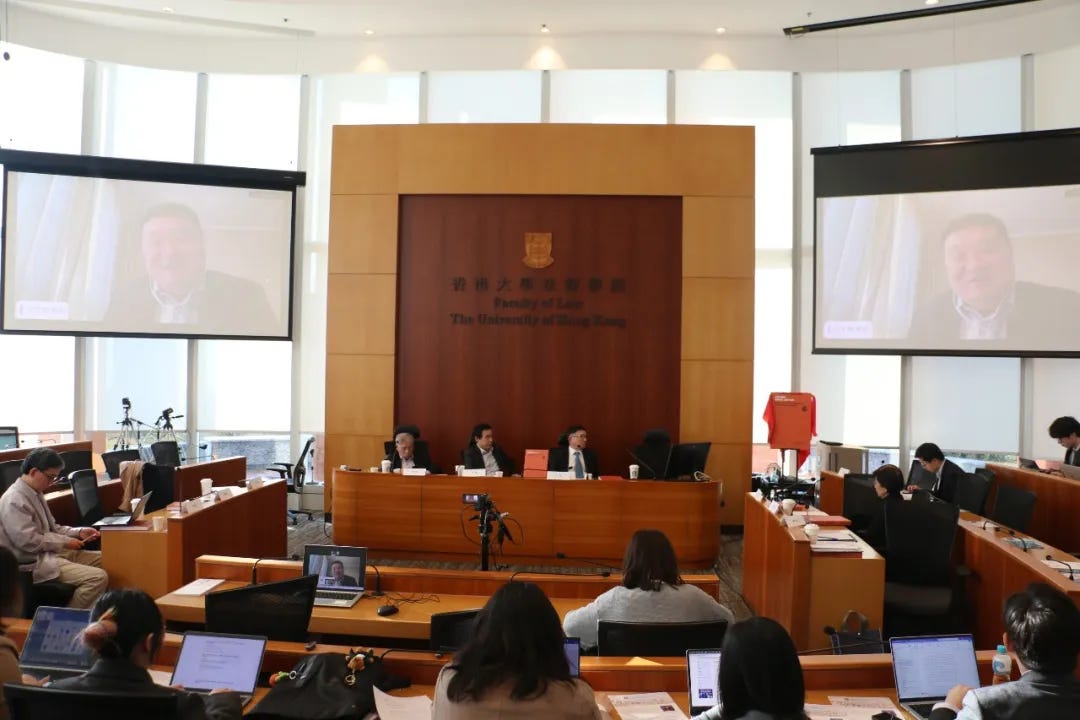
Diao made the speech virtually on 16 December 2025, during the book launch event for the Global Think Tank Directory on China Studies Institutes published by the Centre for Contemporary China and the World (CCCW) at the University of Hong Kong and the China Think Tanks Research and Evaluation Center (CTTREC) at Nanjing University.
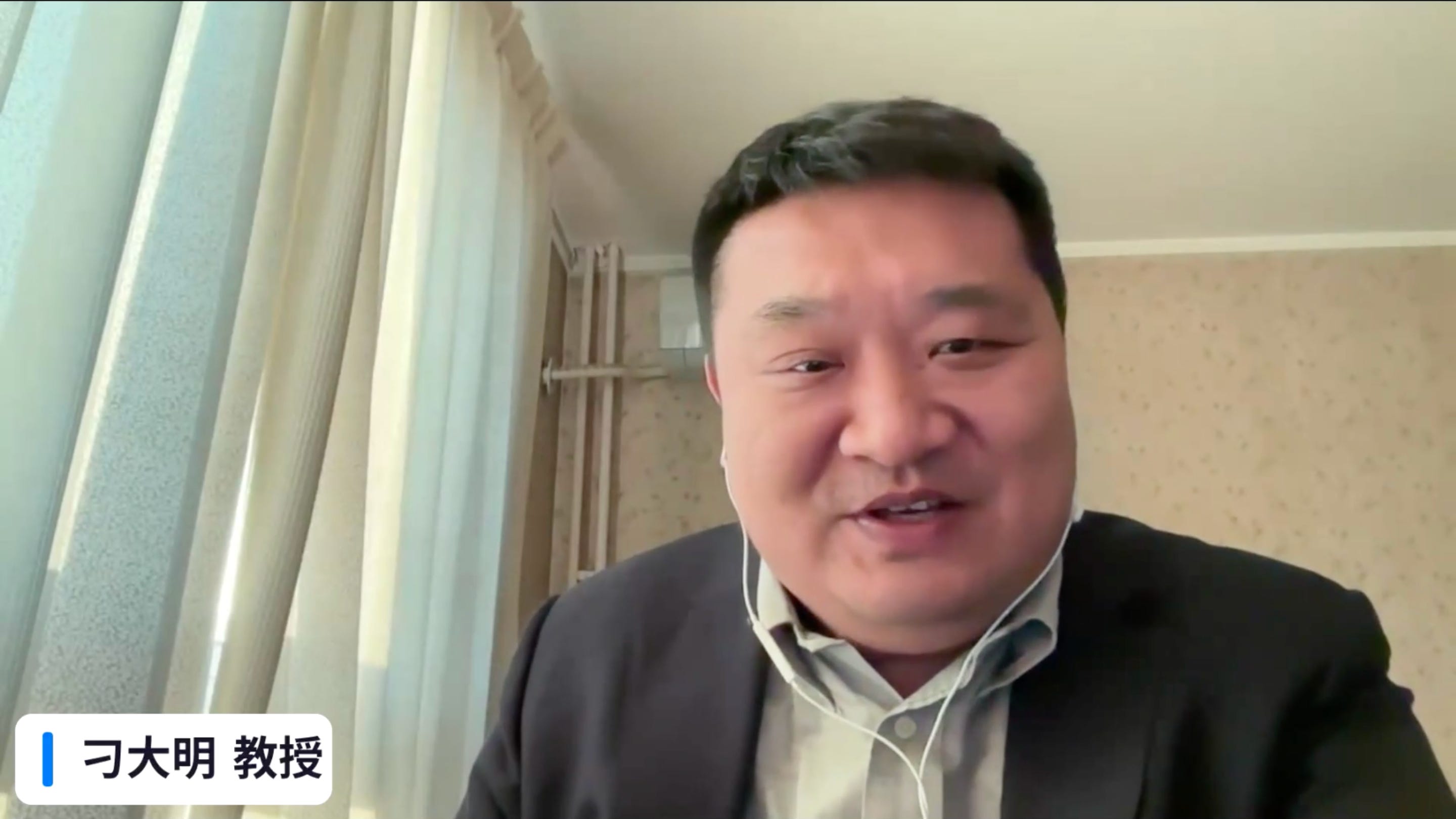
The video recording and Chinese transcript of Diao’s speech are available on CCCW’s official WeChat blog.
美国学界和智库中国研究的困境
The Challenges Facing China Studies in U.S. Academia and Think Tanks
Distinguished Professors Li Cheng, Li Gang, Huang Renwei, and all colleagues, good afternoon. I would like to begin by expressing my sincere thanks to Professor Li Cheng and the Centre for Contemporary China and the World (CCCW) at the University of Hong Kong for the invitation and this valuable opportunity to learn and engage. I am also very honoured to participate in this event, and I would like to congratulate the CCCW and the China Think Tanks Research and Evaluation Center at Nanjing University on jointly releasing the Global Think Tank Directory on China Studies Institutes.
In my view, the Directory is another significant scholarly contribution and a valuable public resource from CCCW. Over time, it should help deepen exchange and collaboration between Chinese and international researchers in China studies. It can also support a more nuanced global understanding of contemporary China, while helping Chinese academia better see how China is being studied and interpreted abroad. I look forward to reading the Directory closely in the near future.
Having engaged with parts of China studies in U.S. academia, I would like to use this opportunity to share a few thoughts, impressions, and observations. I hope they may invite constructive critique from the distinguished professors here.
On the one hand, as Professors Li Cheng and Huang Renwei have already noted, it is only fair to recognise that many works produced by earlier generations of U.S. scholars are widely read in China and have real scholarly value. Many have been translated and introduced to Chinese audiences, generating sustained discussion across disciplines. In both perspective and methodology, this body of scholarship has offered Chinese researchers valuable third-party readings and is genuinely illuminating.
On the other hand, it is also important to acknowledge that China studies in the U.S. today—especially over the past several years, and certainly since “strategic competition” became a theme—has faced visible constraints and growing challenges.
Based on some preliminary reflection, these challenges can be grouped into five broad areas. Some may be case-specific; others are more widely shared.
The first, in my view, is the scope of research.
What, exactly, is “China studies” in the U.S.? As Professor Huang noted, there has long been debate over how to define sinology. Likewise, does “China studies” mean the study of China itself, the study of U.S. China policy, or the broader China-U.S. relationship? At present, much of the most active work appears to sit in the latter two categories.
The majority of the U.S. scholars who engage with mainland Chinese counterparts tend to focus on policy questions and bilateral relations. Those conducting in-depth research on China itself appear to visit less frequently, at least within the circles of Chinese scholarly engagement. The risk here is that without sufficient fieldwork or direct empirical exposure, research can easily lose its anchor.
Turning to the objectives of the field: what, exactly, is the purpose of China studies in the U.S.? Is it to build a clearer, more accurate understanding of China so that the public and policymakers have a solid base for judgment and decision-making? Or is the field increasingly catering to certain domestic interest groups, where the pressure to influence Washington leads to more provocative or attention-grabbing claims? I am not, of course, in a position to judge; nor am I qualified to do so.
Still, over the past eight years, particularly in the so-called era of “strategic competition,” one visible trend has been a turn towards negative assessments of the trajectory of China–U.S. relations. For a while, such assessments gained substantial influence and even fed directly into policy debates and enabled some to hold offices. Yet, in the years since, China-U.S. relations have not unfolded in such negative terms. Looking back now, it is worth asking: do those earlier predictions still hold up? Were they truly objective? And do they actually serve the interests of the United States? These are questions that deserve a closer look.
The second issue is the scholar’s stance.
Any researcher must find the right balance between themselves and their subject, especially when studying a country, region, or civilisation different from their own. Finding an appropriate and balanced stance is critical.
In U.S. China studies, should scholars recognise China’s uniqueness, or should they focus on so-called universal principles? This choice is a major starting point, or rather a fork in the road, for any research. Older generations of American scholars often looked at China by seeing how it responded to the West and their interactions. They studied those interactions to find a balance between the two. Others worked to see China from the inside out, trying to understand the lived experiences of the Chinese people and focusing on China’s own context. Both of these approaches clearly are necessary. It’s like when Chinese scholars study the United States, there is a clear effort to recognise its unique national traits, or at least repeatedly emphasize “America against America”.
Yet, in recent years, it seems more and more American researchers are looking at China primarily through a U.S. lens. They try to fit China into American political, economic, and social frameworks—for instance, treating China as a superpower and simply applying theories used to study the U.S., assuming the two must be the same because of that label. Research conducted this way can move forward with little or no knowledge of the Chinese language, history, or culture. That is clearly problematic.
Third is motivation.
For a U.S. scholar, why look across the Pacific to study China in the first place? There are always specific factors that capture a researcher’s interest or spark a deep sense of concern. To me, this points to a more fundamental question: what does China actually mean to them, and where does China fit into their worldview? It is becoming quite clear that the answer to that question has shifted over the years.
For example, the older generation of American scholars seemed to be driven largely by curiosity. A genuine interest in China led to engagement, and engagement developed into professional research. This kind of curiosity naturally encouraged them to keep learning and to maintain at least a non-adversarial attitude. It also fostered a preference for stability in the China–U.S. relationship.
By contrast, many younger scholars—those born in the 1970s, 80s, or even later—are working in a very different historical context. Their initial interest in China seems less driven by pure curiosity—sometimes having no curiosity at all—and more shaped by a sense of alert or vigilance. They often start from a position where China is already framed as “the other,” or a competitor. In some cases, this perspective even treats the relationship as an existential struggle.
If the purpose of research is to block or exclude rather than to understand and engage, it becomes nearly impossible to achieve any sense of comprehensiveness, balance, or objectivity. Ultimately, this mindset can become a significant constraint on the field.
Fourth is research preference.
Every scholar has their own interests and priorities, but lately, I have noticed two tendencies growing into extremes within U.S. China studies. On one hand, research on China itself has become extremely fine-grained, focusing on very specific details. On the other hand, studies on China-U.S. relations or the U.S.’s China policy are incredibly broad.
Narrow studies are supposed to illuminate larger truths, but that ability seems to be fading. Instead of using small details to reflect broader, mid-level patterns or trends, the research often stays stuck in the weeds. Without enough fieldwork, highly specialised research becomes very difficult to sustain. Even when it is produced, that kind of work often fails to resonate with Chinese scholars or lead to any meaningful discussion.
On the other hand, there is nothing wrong with large-scale research on strategy or policy, but it can sometimes become so vague and abstract that it is hard to tell what is actually being analysed.
I have often had this feeling lately. For instance, in a one-day conference, participants may discuss a major strategic issue, but it is often difficult to discern how the discussion actually advances China studies in the U.S. or improves the U.S. understanding of China. It feels as though neither is happening. Indeed, it seems people are just tossing out ideas off the top of their heads, jumping from one policy suggestion to the next.
The fifth area is methodology.
Because related disciplines have developed so quickly, many China studies scholars in the U.S., especially those in political science, international relations, or political economy, now rely heavily on quantitative methods such as data analysis and modelling. These tools certainly represent important progress for the field, and they have the potential to yield valuable insights.
However, it is clear that researchers cannot fully understand China through data alone. Data cannot yield a true, interesting lived experience of the country. To use quantitative methods in a more meaningful way, scholars must first immerse themselves in the broader field of China studies. They need to learn the language and study the history just to be able to ask meaningful questions in the first place. These foundational elements are the “soul” of the techniques.
It is difficult to imagine conducting credible research on China solely through computer coding, without a knowledge of the language, without the capability to read primary sources.
And it is hard to see how anyone could do Chinese studies by relying only on a few frameworks or models. It is impossible to produce meaningful work without engaging with the historical and cultural realities of the country, including the history of the Communist Party of China, the People’s Republic, and the country’s diplomacy, all of which Chinese scholars treat as indispensable. Yet, in practice, this is exactly how research is being produced today. It is a trend that is deeply regrettable and, frankly, crisis-inducing.
To conclude, these problems, or rather challenges, don’t just affect China studies in the U.S. Over the long term, they could also skew U.S. policy toward China and hinder the mutual understanding and trust between these two countries.
Therefore, whether it is U.S. studies in China or China studies in the U.S., there is a shared need for reflection: how to ask meaningful questions, produce substantive insights, and offer genuinely useful solutions. This is a task scholars on both sides must take seriously.
This concludes my remarks. I sincerely invite Professors Li Cheng, Li Gang, and Huang Renwei to provide their critique and guidance. Thank you very much.
Diao Daming: Beijing should be more active to steer China-U.S. engagement

This is our third article translated from the special series in this year’s 16th issue of 世界知识 World Affairs, a Chinese-language magazine published by World Affairs Press under China’s Ministry of Foreign Affairs. The series features contributions from some of China’s “foremost scholars,” according to the magazine, on the theme


Many China "experts" on American TV cannot pronounce the name of the President--usually saying Jee. Of course, there are a few highly qualified experts. But, many have been to Guomao five times without seeing the rest of the country, or even the city.
I understand that many "China" expert professors in the US are now retiring and not being replaced by their universities. Young people don't see a career path there.
Unfortunately, there is an incredible amount of misinformation about China in the US, partly due to ignorance and partly deliberate. I once suggested to an American TV correspondent in Beijing that he/she (to protect identities) do a story on rural e-commerce in China, which is an inspiring story. The response was "We are not allowed to do positive stories about China."
When I was younger, the views of Chinese commentators sounded like ideological cliches, while Americans seemed more forthright and pragmatic. Today, I am surprised at how objective Chinese views sound compared to Americans. It’s like they have changed places.