

Someone should help Ryan Chen, aka the “Chinese Trump”, get to the White House and meet the real one.
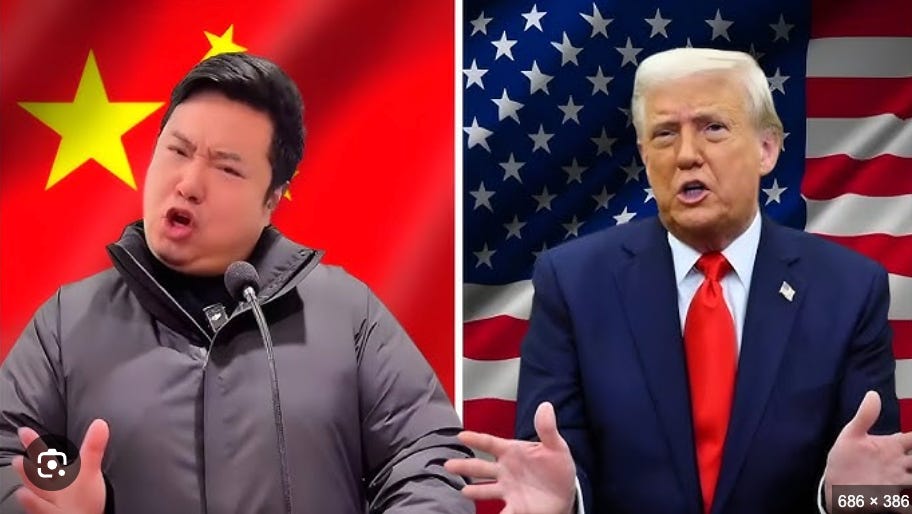
Chen has said he is visiting the United States in January 2026. That creates a small, fleeting window for one of those oddly useful spectacles: an encounter that is newsy, essentially de-politicised, and hard to spin into anything more sinister than what it is, a comic collision between a global meme and its source material.
Start with the risk calculation. Chen’s entire gimmick is built on discipline: the cadence, the gestures, the stream-of-consciousness riffs, but with an almost studied refusal to wander into policy advocacy. He has told interviewers he avoids politics and uses the persona mainly to entertain and to promote Chongqing and Chinese everyday life. That matters because it lowers the chances of the meeting turning into an unmanageable diplomatic symbol. The “Chinese Trump” brand is provocative by name, but surprisingly careful by content.
Second, Chen is not an internet phantom operating in a closed ecosystem. American mainstream outlets have already done the “who is this guy?” tour—NBC’s segment, CNN’s video package, and The New York Time’s coverage that treats him as a cross-cultural curiosity rather than a political emissary. The basic frame is set: a man who has never been to America, but has built a career on embodying its loudest export. In other words, reputational due diligence has already been done in public. That makes the marginal risk of a White House photo-op lower, not higher.
Third, it is difficult to imagine a better-fit “Trump-world” micro-event. Love him or loathe him, Donald Trump is an instinctive showman; the camera is not a side effect but the point. In the current cycle, the White House has leaned into short-form platforms—launching an official TikTok presence and treating social media reach as governing infrastructure. A meeting with the “Chinese Trump” is tailor-made for that logic: a tight clip, a handshake, a joke about “tremendous” impressions, a throwaway line about “good English”, and everyone moves on.
Fourth, it would be genuinely big news—precisely the sort of low-effort, high-attention story Trump tends to reward. The staffer, politician, influencer, or donor-adjacent operator who makes it happen would be delivering what the principal values most: headlines, clips, and a sense of domination of the news cycle. That is not lofty, but it is how incentives work.
Fifth, and most importantly for the wider temperature of the relationship, U.S.-China narratives are exhausted by permanent confrontation. “Positive” stories can be propaganda; “neutral” stories often get crushed by the next sanctions package or naval incident. Humour is one of the few categories that can slip through. Chen’s content—hotpot tours, street banter, exaggerated Trumpian praise for Chongqing—has already functioned as a small antidote to dehumanisation, precisely because it is silly. The same dynamic showed up in his viral crossover with IShowSpeed: absurd, chaotic, and oddly connective. A White House encounter would be that, scaled up.
None of this requires pretending it is “people-to-people diplomacy” in a grand sense. It is not. It is content. But content shapes priors. A safe, de-politicised, humorous story—one where nobody signs anything and nobody “represents” anything—can still puncture the sense that every U.S.-China interaction must be a threat briefing.
If the idea is to keep it clean, the format is obvious: a short, tightly managed meet-and-greet, no policy talk, no flags-as-props, no “summit” language, no side characters trying to sneak in an agenda. Just the real Trump meeting the mirror version that the internet, and global attention, helped manufacture.
In January 2026, Chen will be in America anyway. The only question is whether someone has the imagination—and the bureaucratic stamina—to turn a viral oddity into a moment of harmless levity that both publics can recognise as human.
And in the current climate, harmless levity counts as a strategic asset.
Between Trust and Tension: Wang Jisi Reflects on U.S.-China Relations

On June 26–27, 2025, the Center for International Security and Strategy (CISS) at Tsinghua University and the Penn Project on the Future of U.S.-China Relations at the University of Pennsylvania held the “U.S.-China Next-Generation Scholars Forum” in Beijing.
Wu Xinbo: Golden Memories of China–U.S. Exchanges

At a time when talk of U.S.–China relations tends to be cast in the language of rivalry and distrust, it is easy to forget the decades of human encounters that helped steady the relationship. Wu Xinbo, Professor and Dean of the Institute of International Studies
Haha can't agree more
“彼可取而代也”