


In a two-part interview with Sohu Health, Gordon G. Liu, Boya Distinguished Professor and Dean of the Institute for Global Health and Development at Peking University, explains how AI could strengthen primary care, narrow diagnostic gaps, broaden access to medical expertise, and advance interdisciplinary research. He also traces persistent medical research fraud in China to mandatory publication requirements and a promotion system that prizes academic output over clinical performance.
The interviews were published on Sohu Health on 17 and 18 June 2026, respectively.
Liu has kindly reviewed and revised the following translation.
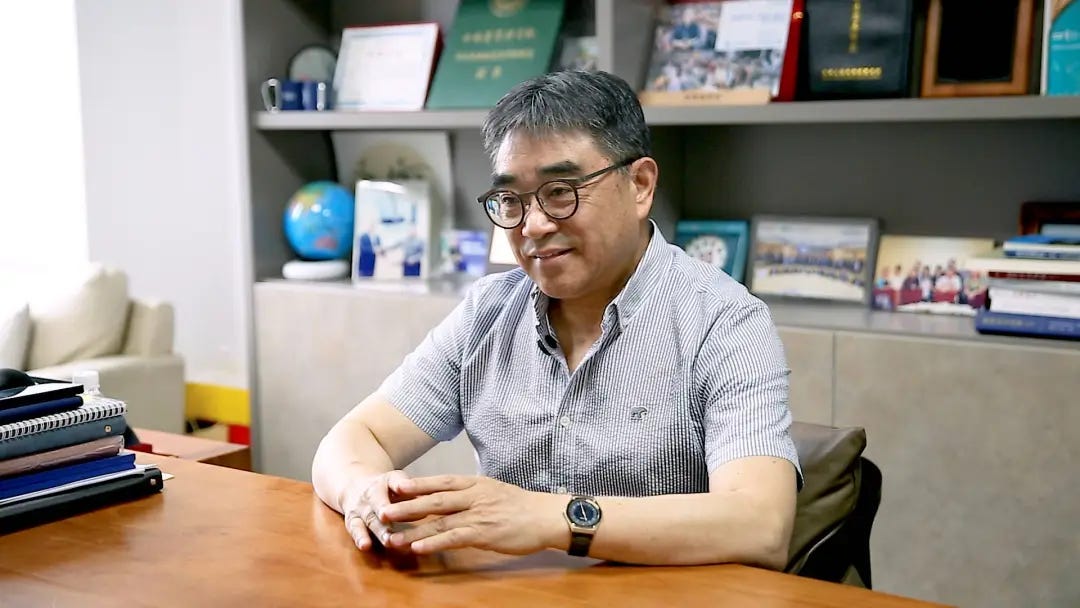
搜狐健康独家专访(上)Health Talk | 北大刘国恩:AI如何改写中国医疗未来?
Sohu Health Talk (Part I) | Peking University’s Gordon G. Liu: How AI Could Reshape the Future of Healthcare in China
Amid the AI boom, healthcare is approaching a major turning point. New concepts and applications in AI-powered healthcare are making headlines almost daily, while the public is looking for tangible improvements: faster and more accurate diagnoses, better access to primary care, and progress against complex and hard-to-treat diseases.
Beyond the hype, does AI represent a genuine leap in healthcare productivity, or is it merely another industry buzzword? Can it help address the uneven distribution of medical resources in China, reshape collaboration between doctors and patients, and open new frontiers in medical research?
To explore these questions, Health Talk spoke with Professor Gordon G. Liu of Peking University about the current state of AI in healthcare, the opportunities it presents, and the challenges that remain.
Below is Sohu Health’s conversation with Professor Liu.
Sohu Health: Is there a fundamental difference between “AI for healthcare” and “healthcare AI”?
Gordon G. Liu: In my view, there is no fundamental difference between the two.
Literally speaking, “AI for healthcare” can be understood as AI empowering healthcare: healthcare remains the focus, while AI serves as a tool that supports and strengthens it. “Healthcare AI”, by contrast, places greater emphasis on applying AI across different industries and settings. In that formulation, AI may appear to be the main subject, with healthcare serving as a field in which it is deployed.
If we always treat healthcare as the central concern, “AI for healthcare” is probably the more appropriate expression. It follows the same logic as using AI to advance science, education, or technology, and does not diminish the importance of healthcare itself.
Sohu Health: Enthusiasm for applying AI across different industries is now at an unprecedented level. Is that because AI’s capabilities have genuinely matured, or has the hype been deliberately inflated?
Gordon G. Liu: AI is already having a systemic impact on countries and industries around the world. The value it is creating far outweighs its current limitations, including problems such as AI hallucinations.
It is a fact that AI has improved productivity across a wide range of industries. The media undoubtedly hypes up certain development. This can be seen as part of the noise surrounding technological development, but it does not change the broader trend of AI transforming how people live and work.
Sohu Health: Why is healthcare considered one of the most promising areas for AI applications?
Gordon G. Liu: Healthcare is one of the fields in which AI has the greatest potential, and it may also be among the first to produce major breakthroughs.
The pursuit of better health, longer lives, cures for disease, and a higher quality of life is shared by all humanity. That is why the application of AI in healthcare attracts so much attention.
Lisa Su, chief executive officer of Advanced Micro Devices (AMD), also said in her 2026 commencement address at the Massachusetts Institute of Technology that healthcare was the area of AI application that excites her the most. Many leading AI experts also believe that AI could eventually help humanity tackle cancers and other complex diseases, while deepening our understanding of how cells mutate and how cancer develops.
The shared desire to protect life and overcome disease makes healthcare a central field for the application of AI.
Sohu Health: What tangible changes could AI bring to primary healthcare institutions?
Gordon G. Liu: Traditionally, once a medical imaging examination has been completed, an experienced doctor must review and interpret the images. This can be time-consuming and requires considerable expertise. Doctors may also need to check the images repeatedly to ensure that the diagnosis is accurate.
When it comes to making systematic and precise assessments of imaging data, AI far outperforms humans. Such tasksdo not necessarily require creative thinking. They simply involve organising and integrating existing information, then drawing conclusions based on historical data and experience. That is precisely where AI has an advantage.
This is why AI has been adopted more widely in medical imaging than in many other areas.
We are also seeing the development of remotely operated surgical robots connected through cloud platforms. These systems can be deeply integrated with AI, offering vast potentials.
AI-enabled remote surgery may offer limited additional value in regions that already have advanced healthcare systems. In less developed areas with weak medical infrastructure, however, it could be extremely important.
For a long time, efforts to reduce regional disparities in healthcare have required not only the provision of equipment, but also the deployment of medical professionals to remote and impoverished areas. That is a major challenge in every country.
AI systems do not draw a salary, take leave, or refuse to work in a region because it is remote or underdeveloped. Provided that the necessary basic infrastructure is in place, they can be deployed.
In that sense, AI could bring revolutionary improvements to healthcare services in primary-level institutions and remote, underserved areas. This transformation is still at an early stage. AI technology will continue to develop, and the models will keep being refined and improved.
Compared with its use in major hospitals and developed regions, AI is likely to have a much greater impact when deployed in primary healthcare institutions and poorer areas. It could also support the development of China’s tiered delivery healthcare system and strengthen the capabilities of primary care providers.
Sohu Health: Could AI help increase public trust in primary healthcare institutions?
Gordon G. Liu: There is a broad recognition that medical professionals at major hospitals generally have a higher level of expertise than those working in primary healthcare institutions. That is an objective reality.
There remains considerable room for improvement in the clinical capabilities of primary healthcare workers, especially in diagnosis. Getting the diagnosis right is the crucial first step: if it is wrong, everything that follows may also go off course, and the patient could miss the optimal treatment window. That is why diagnosis matters even more than treatment itself.
A key advantage of AI-assisted care today is its ability to integrate vast quantities of information, medical knowledge, and clinical guidelines. Once it has received a patient’s basic information, it can help produce a more accurate clinical assessment.
The benefit AI brings to a primary care doctor may be far greater than the marginal benefit it provides to an experienced specialist at a leading tertiary hospital.
By drawing on medical knowledge and historical clinical data from around the world, AI can help bridge the gap in the experience and expertise of primary care doctors. It can therefore narrow the diagnostic gap between primary healthcare institutions and leading tertiary hospitals.
With access to AI’s vast stores of medical knowledge and clinical data, primary care providers could draw on a knowledge base comparable in breadth to that of leading specialists at major hospitals.
Sohu Health: As doctors increasingly work with AI, will doctors remain in control, or could they eventually become tools of AI?
Gordon G. Liu: We should approach the question of which party takes the lead with a constructive mindset.
The core purpose of AI is to strengthen doctors, not replace them. Doctors may be constrained by their own abilities, working conditions, or access to information, making it difficult to achieve optimal accuracy in diagnosis and treatment. AI can help fill those gaps and improve their capabilities.
Many doctors working in primary healthcare institutions do not have the same opportunities as their counterparts at major hospitals to accumulate extensive experience and develop their skills. AI can help them become more capable.
Doctors and AI are therefore not competitors. They are complementary partners. Humans will remain at the center of the whole clinical process. Doctors retain core responsibilities and authority, including the power to prescribe medication. AI cannot exercise those responsibilities on its own.
Nvidia founder and chief executive officer Jensen Huang also addressed this question in his 2026 annual keynote. He said that we cannot yet know whether AI will one day replace human beings altogether, or when that might happen. But one thing is clear: people who know how to use AI will eventually replace those who do not.
Sohu Health: How can AI unlock the potential of interdisciplinary collaboration?
Gordon G. Liu: For many years, there have been calls for interdisciplinary collaboration, but it has been extremely difficult to put into practice. Much of it has remained at the conceptual level.
Now, it is clear that AI can enable genuinely deep integration across disciplines, moving collaboration beyond what was largely a symbolic gesture.
Over the past three years, the Institute for Global Health and Development (GHD) at Peking University has developed an AI-powered large-model platform called the Planetary Health Axis System, or PHAS. Its central purpose is to measure the state of health around the world.
The system establishes a set of health axis across human, species, nature, and societal health. It uses nearly 50,000 variables to quantify these dimensions and provide a clear, dynamic, and measurable picture of the overall state of global health.
This is the first time in human history that AI has been used to define and measure health in this way. Without AI, a project of this scale would simply not have been possible.
GHD has also linked real-time global climate datasets from the Institute of Atmospheric Physics at the Chinese Academy of Sciences (CAS) with maps of major diseases contained in the PHAS.
The project focuses on three conditions that are closely associated with climate: heatstroke, stroke, and lower respiratory tract infections. We track how the risks of these conditions change as the climate changes and produce corresponding global risk maps.
Medical research has long established that these conditions are closely linked to climate. What we lacked in the past was the ability to integrate data on a global scale and map the associated risks. AI now allows us to do both with a high degree of precision.
This collaboration between the GHD and the CAS Institute of Atmospheric Physics has produced a global public good. Such a partnership would have been difficult to imagine in the past.
AI serves as a vital bridge, breaking down barriers between disciplines and institutions. As cross-sector and interdisciplinary collaboration becomes the norm, it will unlock far greater potential across a wide range of fields.
Sohu Health: When AI assists doctors in diagnosis and treatment, how should those services be priced?
Gordon G. Liu: The pricing of AI-assisted medical services is a matter of practical policy design and implementation, rather than a purely theoretical question.
What patients ultimately want is a more accurate and efficient diagnosis, followed by an appropriate treatment plan. Their main concern is whether the quality of care has improved and whether the necessary supporting services are in place.
There is therefore little value in endlessly debating pricing rules in the abstract. The central question is how relevant authorities design and implement appropriate policies.
From a physician’s perspective, diagnosis without AI assistance has traditionally been more time-consuming and uncertain. With AI support, the same patient may receive higher-quality care in less time. If the authorities allow a modest increase in fees to reflect that improvement, that would be reasonable and justified.
In the past, a consultation fee covered the doctor’s diagnostic service. Without AI assistance, reaching a diagnosis might also require several diagnostic tests, each carrying an additional charge.
Once a patient’s basic information has been collected, AI may be able to assist with the diagnosis, allowing some of the fees for equipment-based examinations to be reduced accordingly.
Consider an example. Suppose a consultation with a general practitioner previously cost RMB 100, while a consultation with a leading specialist at a top tertiary hospital cost RMB 500.
With AI assistance, the general doctor might be able to provide care approaching the standard of the leading specialist. If the consultation fee were set at RMB 300, the patient could receive high-quality care without paying the full cost of seeing the top specialist. At the same time, the value of the general doctor’s work would be more appropriately recognized.
Would that not benefit both sides? In economic terms, it would be a Pareto improvement: both parties would gain, while the patient would still pay less than the cost of consulting the leading specialist directly.
搜狐健康独家专访(下)Health Talk | 北大刘国恩:医学论文造假为何刹不住车?
Sohu Health Talk (Part II) | Peking University’s Gordon G. Liu: Why Is Medical Research Fraud So Hard to Stop?
Academic fraud continues to come to light in the life sciences and medicine, with each new case briefly reigniting debate within the research community. More recently, public allegations made by a Bilibili [Chinese equivalent of YouTube] creator known as “Geng Tongxue Tells Stories” triggered widespread outrage and once again placed the persistent problem of misconduct in medical research firmly in the public spotlight. The case has exposed deeper structural problems that should serve as a wake-up call for the entire medical research community.
Why does medical research fraud persist despite strict oversight? At its root, does the problem lie in the erosion of academic integrity among individual researchers, or in flaws within the current system of professional assessment, promotion, and institutional governance?
To explore these questions, Sohu Health spoke with Professor Gordon G. Liu, Dean of the Institute for Global Health and Development at Peking University. Liu discussed how institutional reform, changes to the healthcare sector, and improvements in professional training could help restore a healthy medical research environment and support the development of a more modern medical research system.
The Systemic Roots of Medical Research Fraud Lies in Institutions
In recent years, data falsification and the growing number of subsequent retractions have become pressing problems facing China’s medical research community. In 2025, Nature published its first analysis of withdrawn research papers by institution. It found that seven of the ten institutions with the highest numbers of retractions worldwide were hospitals or medical schools in China.
The findings brought the problems of research misconduct and uneven paper quality in biomedical research in China into sharper focus, prompting public reflection on the systemic forces behind them.
Commenting on the recent wave of exposed cases, Liu said:
“I can never believe that Chinese medical professionals, as a group, have inherently lower ethical standards or professional integrity than their counterparts in other countries. I do not accept the idea that medical research fraud can simply be blamed on doctors’ lack of professionalism or academic ethics.”
In his view, when a problem becomes widespread across such a large professional group, it cannot be adequately explained by individual misconduct alone.
To understand the roots of medical research fraud, Liu argued, it is first necessary to take an objective and comprehensive view of the development and distinctive characteristics of China’s healthcare sector.
As Liu explained, after more than a decade of sustained healthcare reform, China’s health system has undergone substantial upgrades, and the healthcare sector has developed at one of the fastest rates in the world. At the same time, the country’s vast population and diverse healthcare needs have made medical services in China exceptionally complex and placed them under immense pressure.
Beneath these achievements, a misaligned system of assessment and promotion has increasingly become an obstacle to doctors’ professional development. It has also indirectly contributed to research misconduct by placing clinicians in an untenable position.
“Many doctors have strong clinical skills and are committed to treating patients, but they may neither be suited to nor interested in academic research,” Liu said. “Under the current system, however, the number of papers they publish remains a mandatory requirement for promotion and the attainment of professional titles.”
Liu further contrasted China’s system of medical training and promotion with those in Europe and the United States.
In many countries with mature healthcare systems, medical professionals can choose between different career paths. Some concentrate on clinical practice, while others pursue research. The two paths operate independently, with clearly defined responsibilities, comparable access to resources, and neither regarded as inherently superior.
Each has its own independent promotion structure, remuneration system, and professional resources. Such an arrangement respects doctors’ individual strengths while reflecting the increasingly specialized nature of modern medicine.
China, however, has yet to establish a genuinely parallel, dual-track promotion system for doctors, particularly within a healthcare sector dominated by public institutions.
For rank-and file clinicians, opportunities for promotion, transfers, salary increases, and long-term professional advancement remain tied to the requirement to publish academic papers.
“When the rules impose the same research targets on everyone, regardless of their professional strengths or the nature of their work, problems are bound to arise,” Liu said.
Resource Imbalances Are Holding Back Private Healthcare
The overreliance on academic publications as the sole measure of professional performance is only the tip of the iceberg when it comes to the structural problems in China’s healthcare system. Another symptom of the same underlying imbalance is the stunted growth of private healthcare providers.
For a long time, rigid barriers have separated public hospitals and private medical institutions, with limited movement of staff and resources between the two. Liu argued that this divide is not accidental, but the result of systemic imbalances in the distribution of healthcare resources.
According to Liu, China’s leading medical research platforms, dedicated research funds, eligibility for professional awards, and promotion channels are overwhelmingly concentrated within the public healthcare system. Leading public tertiary hospitals, in particular, control the lion’s share of the highest-quality resources.
This entrenched distribution of resources imposes a clear ceiling on the development of private healthcare. Once doctors leave the public hospital system, they may lose not only a steady patient base institutional credibility, but also access to research funding, participation in the formulation of professional standards, and eligibility for major industry awards.
At the same time, the excessive concentration of resources within the public system also undermines the internal environment of public hospitals.
When the best promotion opportunities and research resources are tied to a single assessment track, medical professionals have little choice but to compete against one another for the same limited opportunities. Everyone is driven towards the same mandatory indicators, including academic papers and research projects.
This model intensifies unhealthy competition within public hospitals and magnifies the harmful effects of an assessment system that values papers over clinical work. It also creates incentives for misconduct, including data manipulation, ghostwriting, and buying authorship or publication slots.
In Liu’s view, these structural pressures are the fundamental reasons why medical research fraud remains so persistent.
Let Doctors Choose Their Own Career Paths
To address the interconnected problems of research fraud, narrow career pathways for doctors, and the weak development of private healthcare, Liu proposed targeted reforms grounded in the realities of the sector. His central argument was clear: healthcare professionals should be given a genuine choice over their career development. The sector should move beyond a single-track evaluation system and create a promotion framework that supports distinct career paths, allows multiple tracks to develop in parallel, and gives doctors a fair opportunity to move between them.
“Doctors who focus on clinical practice should be able to advance professionally and earn social recognition based on their clinical abilities and reputation among patients,” Liu said. “Those who are genuinely interested in research should be able to concentrate on academic work. Doctors with the ability and interest to pursue both should also be free to do so. Different career tracks should enjoy broadly equal access to resources, policy support and professional standing.”
More broadly, Liu argued that revitalizing the healthcare sector will require continued reform and the steady development of a more diverse range of medical institutions.
Doctors should be able to choose where they work and how their careers develop according to their professional goals, personal strengths and interests. Once they are no longer constrained by rigid publication requirements and a single route to promotion, the practical incentives that drive some doctors towards research misconduct will begin to disappear.
Liu remains optimistic about the long-term prospects for China’s healthcare sector.
As healthcare reform moves into a more difficult and substantive phase, he expects policymakers to continue improving the supporting institutional framework and gradually build a modern healthcare system that recognizes different forms of professional development, encourages diverse forms of innovation, and evaluates performance more rationally.
Such reforms, he argued, could do more than address persistent problems such as fraudulent papers and improve academic standards. They could also unlock the full professional and innovative potential of medical workers, placing the wider healthcare system on a healthier and more sustainable path.


Dr. Liu speaks of "the stunted growth of private healthcare providers." Socialists around the world have documented over and over the outrages of private healthcare and private health insurance. On the other side, one of the main activities of the American Chamber of Commerce in the People’s Republic of China is to bring U.S. healthcare corporations into China. Socialized healthcare or capitalist healthcare – we see which side Dr. Liu is on.