

Below is a Q&A with Henry Huiyao Wang, founder and president of the Center for China and Globalization (CCG), on Chinese President Xi Jinping’s upcoming visit to the U.S. in the coming week.
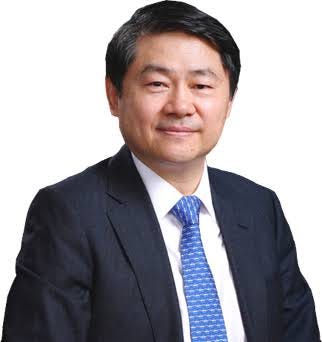
Q: How important is President Xi Jinping’s upcoming visit to the United States?
Wang Huiyao: I think the visit is very timely and important. China and the United States are the world’s two largest economies, and head-of-state diplomacy has always played an important role in guiding the bilateral relationship.
The most important task now is to consolidate strategic stability. China and the United States will continue to have differences, but direct communication between the two presidents can help both sides better understand each other’s intentions, clarify differences and prevent disagreements from getting out of control.
I see the visit as an important anchor for the relationship. At a time of considerable global uncertainty, maintaining regular dialogue between the two leaders sends a positive signal not only to the two countries, but also to the rest of the world.
Q: What concrete outcomes should the two sides try to achieve?
Wang Huiyao: The emphasis should be on practical cooperation. Trade and investment are obvious areas where progress can be made.
The two countries have very deep economic ties, and American companies still want to do business with China. A prolonged trade war ultimately hurts businesses and consumers on both sides. If China and the United States can expand tariff reductions in selected areas and build effective trade and investment mechanisms, even relatively modest initial steps could generate confidence and lead to broader cooperation.
Investment is another area with considerable potential. Chinese companies investing in the United States can create jobs, generate tax revenues and contribute to local economies. At the same time, China can continue to welcome American companies and expand imports from the United States. The goal should be to find practical arrangements from which both economies benefit.
Q: You have said that artificial intelligence could become one of the most important issues in the summit. Why?
Wang Huiyao: AI may be one of the most consequential areas for China-U.S. relations in the coming years. China and the United States are the two leading AI powers, and both have a major responsibility to prevent technological competition from turning into an uncontrolled arms race.
The two countries also have complementary strengths. The United States remains very strong in frontier models, advanced computing and innovation. China has enormous application scenarios, a large industrial base, extensive digital infrastructure and substantial energy capacity. There is therefore considerable room for cooperation in applying AI to industry, healthcare, education and other productive sectors.
The most important question is whether AI becomes primarily a force for economic and social progress, or increasingly a tool of confrontation.
Q: What kind of China-U.S. cooperation on AI would you like to see?
Wang Huiyao: The first priority should be risk management. China and the United States should establish a serious dialogue on AI safety, security and governance.
We should explore whether the two sides can reach some basic understandings on preventing the uncontrolled weaponization of AI and on maintaining meaningful human control over the most consequential uses of these technologies. The principle does not have to be identical to nuclear arms control, but the experience of establishing restraints and confidence-building measures between major powers is worth studying.
At the global level, we should also avoid creating completely separate AI governance systems. China, the United States and other countries should work through the United Nations and other inclusive international frameworks to develop common principles and safeguards.
There is also an economic dimension. Enormous amounts of capital are flowing into AI, particularly in the United States. Ultimately, the technology needs productive applications and sustainable business models. China’s large market and industrial ecosystem can contribute to that process. Cooperation on “AI for good” would benefit both economies and the wider world.
The economic stakes are also enormous. The United States has committed extraordinary amounts of capital to AI, but investment on this scale ultimately has to be supported by real applications, productivity gains and sustainable business models. If expectations continue to run far ahead of commercialization, there is a risk of a major correction, and a serious AI downturn would not affect the technology sector alone—it could have broader consequences for the U.S. economy and, given America’s weight in global financial markets, for the world economy as well.
That is another reason why China and the United States have a shared interest in making AI work for the real economy. China has a very large market, a wide range of application scenarios, strong manufacturing capabilities and substantial infrastructure to support AI deployment. The two countries should therefore focus not only on competing over who has the most advanced technology, but also on how to turn AI into useful products, services and productivity. In other words, we should make AI a force for good rather than a source of instability. Successful commercialization and responsible governance are in the interests of both countries.
Q: Beyond bilateral issues, could China and the United States cooperate on global security challenges?
Wang Huiyao: Yes. This is an area that deserves much more attention.
Both countries have an interest in preventing major regional conflicts from escalating. China has important economic and diplomatic relationships with countries in the Middle East, Russia, Europe and the developing world, while the United States remains the most influential global power.
On issues such as Ukraine, the Middle East and other regional crises, China and the United States do not necessarily have identical positions. But they can still communicate, coordinate where possible and make greater use of the United Nations and other multilateral mechanisms.
The world would benefit greatly if the two largest powers could demonstrate that strategic competition does not exclude cooperation on peace and global stability.
More broadly, both countries have a strong interest in peace and stability. The United States wants to see progress on conflicts such as Ukraine and tensions in the Middle East, while China also attaches great importance to maintaining peace and stability in its surrounding region, including across the Taiwan Strait.
The two countries do not have to agree on every issue to recognize that avoiding war and preventing escalation serve both of their interests. If Beijing and Washington can better understand each other’s core concerns and cooperate where their interests overlap, they can contribute not only to a more stable bilateral relationship but also to a more stable international environment.
Q: Taiwan remains one of the most sensitive issues in the relationship. How should the two sides manage it?
Wang Huiyao: Taiwan is undoubtedly one of the most sensitive issues in China-U.S. relations, which is precisely why both sides need to handle it with great care.
Beijing’s position on sovereignty and national reunification is very clear. At the same time, maintaining peace and stability across the Taiwan Strait is in the interest of China, the United States and the wider region.
The priority should therefore be to avoid miscalculation, maintain communication and prevent unilateral actions that could sharply increase tensions. A stable China-U.S. relationship provides a much better environment for managing this difficult issue than one dominated by confrontation.
Q: What about people-to-people exchanges? They have declined considerably in recent years.
Wang Huiyao: This is one of the areas where relatively straightforward progress can be made.
The number of Chinese students in the United States remains far larger than the number of American students studying in China. We should encourage more young Americans to come to China, expand academic exchanges and make travel easier in both directions.
China could also consider further facilitating short-term visits by American citizens. The two sides could eventually revisit some of the diplomatic and consular arrangements that were suspended during the earlier deterioration in relations.
Governments will inevitably have disagreements, but societies should not become disconnected from each other. Greater contact between students, scholars, businesses and ordinary citizens can provide an important stabilizing force in the relationship.
Media exchanges should also be part of this effort. Journalists play an important role in helping both societies understand each other more accurately, yet media access has become more restricted in recent years. The two governments could take practical steps to facilitate visas, accreditation, and reporting for journalists from both countries, and gradually create a more open environment for media exchanges.
At a time when public perceptions are often shaped by geopolitical tensions, allowing more journalists to see the other country directly and report from the ground can help reduce misunderstanding and make the relationship less vulnerable to stereotypes and misperceptions.
Q: Are you optimistic about the future of China-U.S. relations?
Wang Huiyao: I am cautiously optimistic, because both sides have strong practical reasons to stabilize the relationship.
China and the United States will continue to compete, and many differences will remain. But neither country can simply remove the other from the international system, and neither side benefits from permanent confrontation.
The challenge is therefore to build a framework in which competition is managed, differences are controlled and cooperation is expanded wherever interests overlap.
If the two presidents can establish that direction—and if their governments can translate it into progress on trade, investment, AI, global security and people-to-people exchanges—the upcoming visit could become an important step toward a more stable and constructive phase in China-U.S. relations.