

Xie Na may or may not be a good singer. That is not the issue. Nor is it especially important whether her concert would have been elegant, moving, embarrassing or merely loud. A society that allows markets to function must also allow people to spend money on things others consider foolish. Bad taste is not a public emergency. A disappointing concert should end in complaints, mockery and weaker sales next time. It should not become a test of political weather.
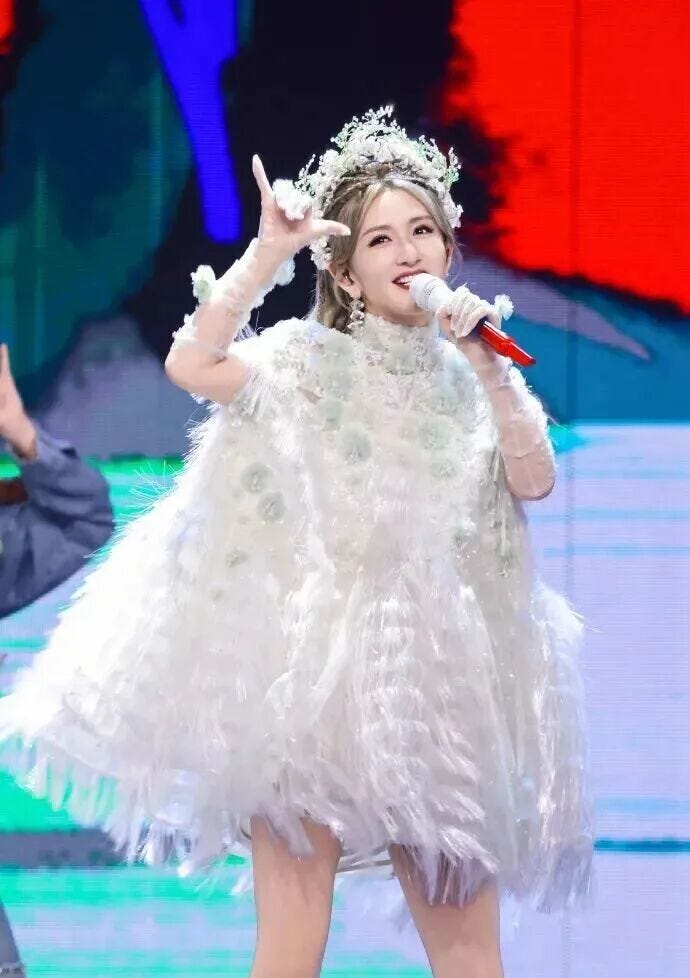
Ms Xie, one of China’s best-known television hosts, was due to hold the Beijing stop of her concert tour on July 11th. Tickets were priced from 380 yuan to 1,180 yuan. They sold quickly. That does not prove artistic merit. It does prove demand. Thousands of people were willing to spend their own money, arrange their own time and attend a show that promised music, nostalgia, celebrity and spectacle. They were not conscripts. They were consumers.
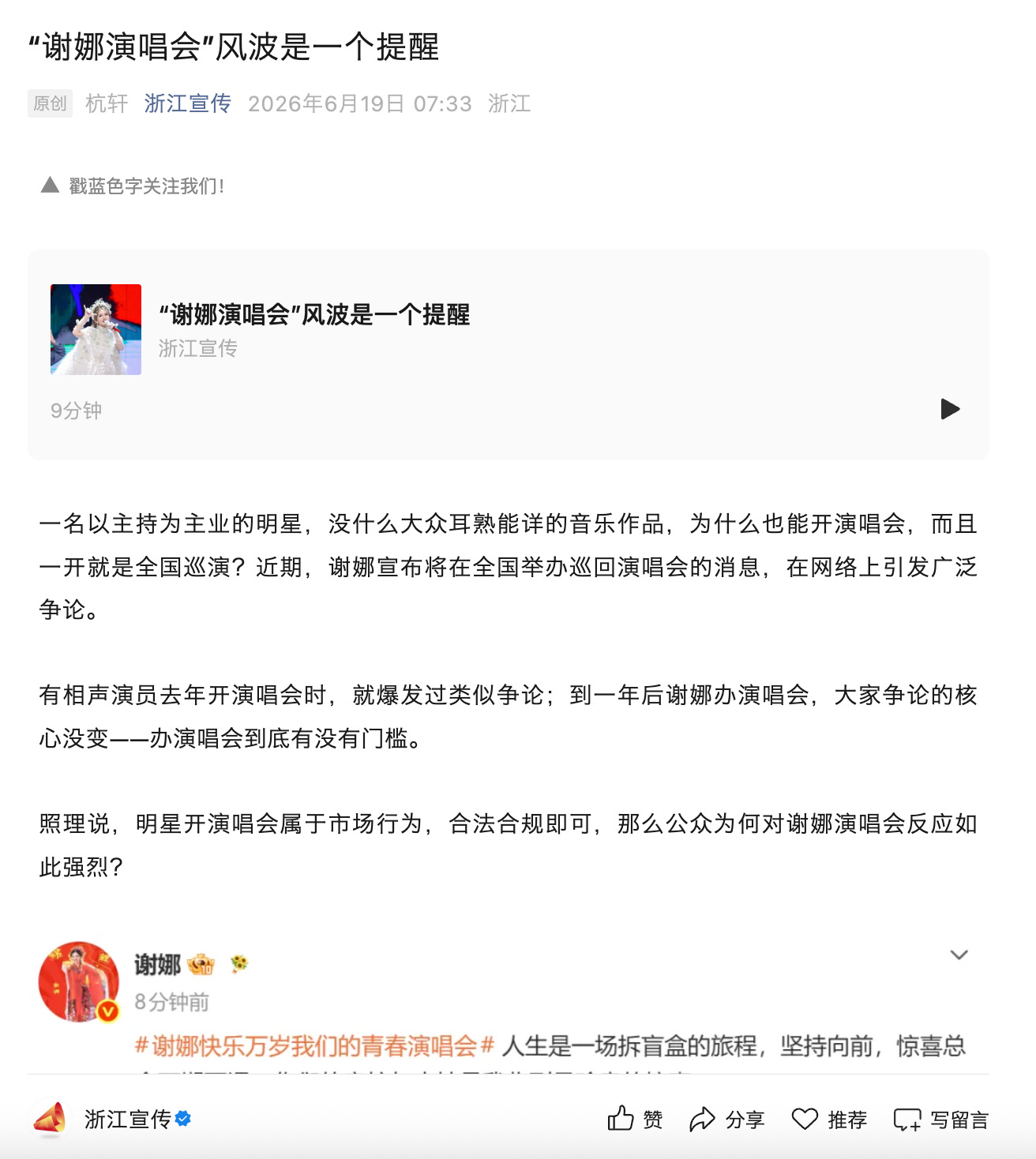
Yet after the tickets were sold, the concert became something else. On June 19th Zhejiang Publicity, an account run by the Zhejiang provincial party committee’s publicity department, published an essay on the controversy. It asked why a host with few widely known songs should be able to hold a national concert tour. It worried about nostalgia being monetised, traffic replacing talent and cross-over performers lowering the standards of the concert industry.
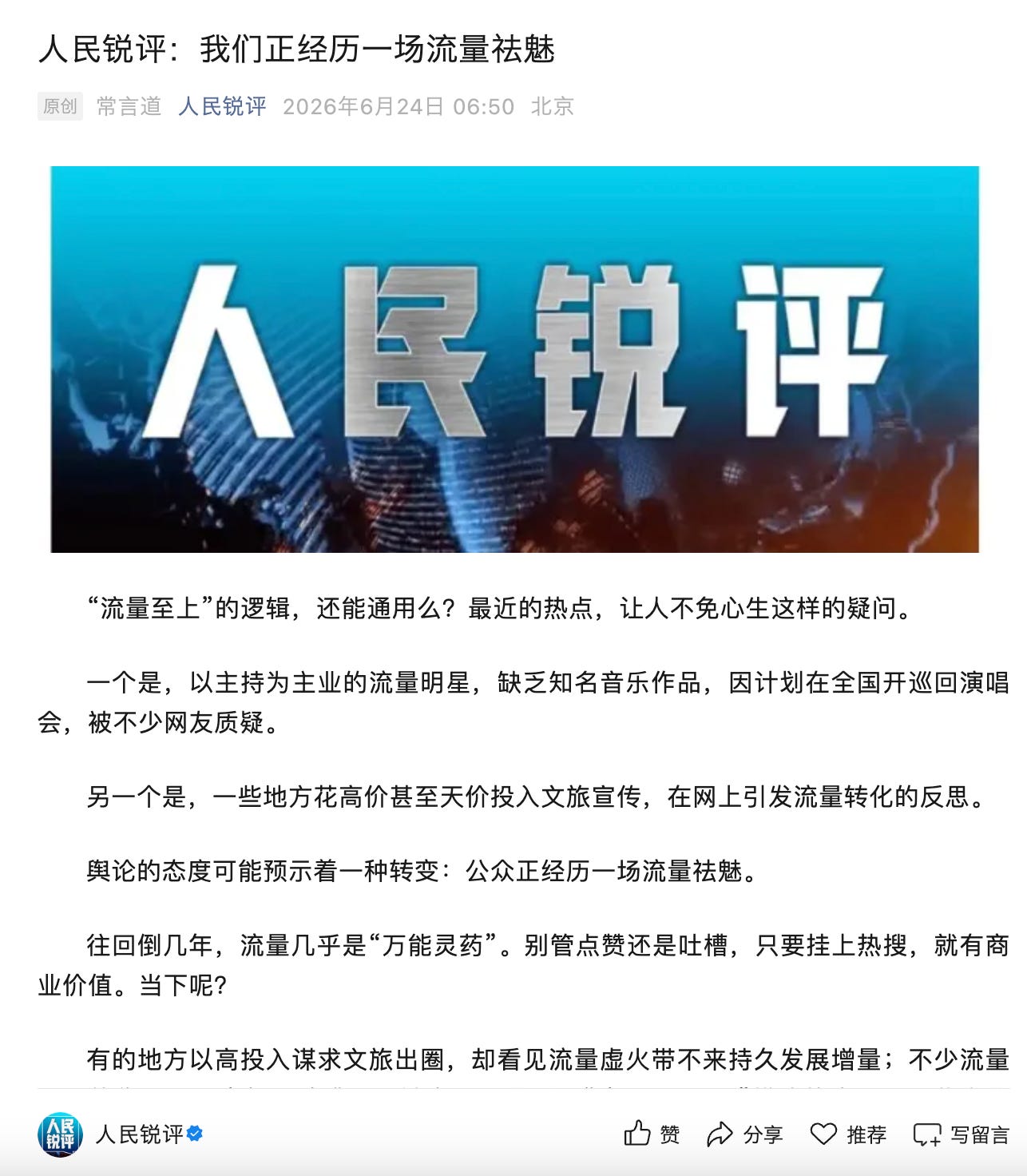
Five days later People’s Daily’s online commentary platform published a broader essay about the “disenchantment of traffic”. It did not name Ms Xie, but it did not have to. A few days later, the Beijing concert was cancelled.
Perhaps no official order was issued. That is almost beside the point. Power often works without paperwork. A signal from an authoritative outlet can be enough. A venue becomes cautious. A platform recalculates. A sponsor goes quiet. A local department, even after granting approval, discovers that approval is not the same as safety. No one needs to declare a ban. Everyone understands the risk of proceeding.
This is why the episode matters. It is not about whether Ms Xie deserves a stage. It is about whether rules mean what they appear to mean. The very idea that a pop concert must pass layers of official approval would already seem intrusive. Safety rules are normal. Fire checks are normal. Crowd-control plans are normal. Content rules narrowly aimed at incitement or illegality are at least understandable. But requiring advance permission for an ordinary commercial performance is already a heavy burden on cultural life. If, after all that, an approved and ticketed concert can still be undone because official opinion turns sour, then permission is not protection. It is only the first round of uncertainty.
That is a poor basis for business. Markets depend not only on demand, capital and talent, but also on a certain modesty from power. Officials and official media must know where their authority ends. They may criticise. They may warn against fraud. They may expose abuse. They should not casually convert their aesthetic dislike into commercial risk for others. A commentary published from within the orbit of power is not just another opinion. It changes incentives. It affects venues, companies, local governments and investors. It can make lawful activity suddenly look unsafe.
The Zhejiang essay began with a reasonable sentence: concerts are market activities and should be allowed if they are legal and compliant. It then drained that sentence of force. Legal compliance, it argued, does not equal public recognition. That is true. But it is also a dangerous half-truth. Legal compliance does not require applause. It does require restraint from the state. A government need not admire every legal business. It should, however, avoid making lawful commerce contingent on later approval by commentators, mobs or officials with refined tastes.
The most troubling phrase in the Zhejiang essay was its call for “cultural standards” in approval. The phrase sounds responsible. It is not. Who sets such standards? A bureau? A party newspaper? A committee of experts? A trending hashtag? How many famous songs must a person have before she may sell a ticket? May a host sing? May an actor dance? May a comedian stage a musical performance? May a celebrity sell nostalgia if adults freely choose to buy it? Once “taste” enters the licensing logic, no one knows where the boundary lies.
That uncertainty is itself a cost. It is paid not only by famous performers. Around every concert is a small economy: organisers, ticketing platforms, stage designers, lighting engineers, security guards, drivers, hotels, restaurants, merchandise sellers and temporary workers. A cancellation after approval does not merely embarrass a celebrity. It disrupts schedules, wastes sunk costs and threatens livelihoods. Thousands of consumers also lose. They may have arranged travel, accommodation, annual leave and family plans. To speak grandly of cultural standards while ignoring these ordinary losses is not high-minded. It is careless.
Official commentary should therefore be humble. It should remember that most of the people it lectures are taking risks it does not take. Many state-funded media institutions enjoy security, hierarchy and access to power. Their staff do not usually have to raise capital, rent venues, manage contractors, sell tickets or absorb losses when a show is cancelled. Yet they often speak as if they alone understand what society should value. They tell performers to cultivate real skill, platforms to reject traffic, fans to spend rationally and businesses to serve culture rather than profit. Some of this advice may be sensible. But when it comes from institutions protected by public money and political authority, the tone matters. A scolding can become a sanction.
The same attitude appears far beyond entertainment. Private entrepreneurs are often told to be confident, innovative and socially responsible. They are also expected to read signals, avoid invisible lines and accept that formal rules may be supplemented at any moment by campaigns, public anger or official displeasure. That is not a healthy business environment. It teaches firms that obeying the rules is not enough. They must also guess the mood of those who can redefine the rules after the fact.
Earlier this year, another high-profile concert showed the same problem in a different form. Hua Chenyu, a popular singer, saw a planned performance near Fuxian Lake in Yunnan abruptly cancelled or postponed shortly before it was to take place. Public discussion focused on ecological concerns. Such concerns can be legitimate. But legitimacy is not the only question. If a venue is unsuitable because of environmental protection, that should be determined before approvals are granted, tickets are sold and large sums are spent. When the state or the system around it changes its mind late, the private actor pays for public indecision.
This is what makes the Xie Na case larger than show business. China says it wants domestic demand. It wants households to consume, services to grow, cities to attract visitors and private firms to create jobs. Concerts are exactly the sort of activity that should serve that goal. They fill trains, hotels and restaurants. They bring young people into cities. They turn affection, memory and fandom into spending. Local governments know this, which is why the “concert economy” has become a fashionable phrase.
But consumption requires tolerance. People do not spend only on what officials consider noble. They spend on hobbies, idols, snacks, games, gossip, travel, fashion, sentimentality and sometimes nonsense. That is what a consumer society is. If every purchase must be justified by cultural elevation, there will be less consumption, not better consumption. If every private event must survive official moral instruction, there will be fewer events.
A tolerant official opinion environment is therefore not a luxury. It is part of the infrastructure of a market economy. Roads and venues matter. So do contracts, expectations and the confidence that legal approval will not be casually undermined. A businessperson must be able to believe that, after following the rules, signing contracts and selling tickets, he will not be ruined because someone with a platform and political backing decides that the product lacks taste.
The public, too, deserves more respect. “Public opinion” is often invoked as if it were a single voice asking to be protected from vulgarity. But the public is plural. Some mocked Ms Xie. Some bought tickets. Some may have thought the concert silly but harmless. Some may have wanted to go precisely because it was not a serious musical event. In a diverse society, taste differs. The task of governance is not to eliminate such differences. It is to make room for them.
The alternative is paternalism dressed as culture. It assumes that commentators close to power can tell consumers what is worth buying, tell performers what they are qualified to perform, and tell businesses when profit becomes morally suspect. That attitude may appeal to those who dislike celebrity excess. But it is a poor guide to public policy.
The rule of law is tested not only in grand political cases. It is tested in ordinary commercial life. It is tested when an approved concert becomes unpopular online. It is tested when officials dislike what consumers like. It is tested when the temptation to intervene is strong but the legal basis is weak. A system committed to rules must sometimes permit things that its guardians find vulgar.
A poor concert should end in poor reviews. An overpriced one should end in weaker demand. A cynical one should damage the performer’s reputation. Those are market punishments, and they are often severe. What should not happen is that official opinion becomes a second licence, issued after the first licence has already been granted.
China does not need more people telling consumers what they should admire. It needs more confidence that lawful activity will be protected, even when it is tacky, profitable or unpopular with commentators. The question raised by Ms Xie’s cancelled concert is not whether she can sing. It is whether a market can breathe when taste itself becomes a matter of state. (Enditem)

The Vanishing Craft of Journalism in China

The following article, from a year and a half ago, completes my recent rant on legacy media and journalism in China.
Monopoly without market, subsidies without subscribers: Guo Quanzhong on state media

The buzzword in China’s state media industry now is 系统性变革 systemic transformation, a full year after the word was included in the Resolution of the 3rd Plenum of the 20th Central Committee of the Communist Party of China on further deepening reform comprehensively to advance Chinese modernization
Veteran commmentator slams Chinese media's meaningless "transformation"

Cao Lin is now a professor at the Journalism and Information Communication School of Huazhong University of Science and Technology in Wuhan. Before returning to his alma mater, Cao was a two-decade-long in-house commentator of the influential China Youth Daily
i think there may be very good reasons for controlling taste. look at the state of western pop music. do I need to say more? and you have overlooked that in China the market is encompassed by a greater value than purely the market. this is what makes China different and so crucially important for moving beyond the excesses of the neoliberal Empire.
In my view, a media outlet or social media account, even if state-run, can express an opinion on art, culture, etc. Letting business-run media express opinions while preventing the state-run media to do it will end up in giving all the power to the market, which is Elon Musk’s or Peter Thiel’s wet dream. Here, the real problem seems to be something else, namely the link between the opinion and the cancellation, which we don’t know. We should break this link, in case, not forbid the opinion