Wang Yi signals China's welcome to Trump's visit soon
China's top diplomat asks both sides to "make thorough preparations, foster a conducive atmosphere, manage existing differences, and remove unnecessary distractions"
On Friday, March 6th, amid increasing speculation in the U.S., I wrote that no signal has emerged in Beijing that China will delay Trump’s visit to Beijing due to the U.S.-Israeli attack on Iran.
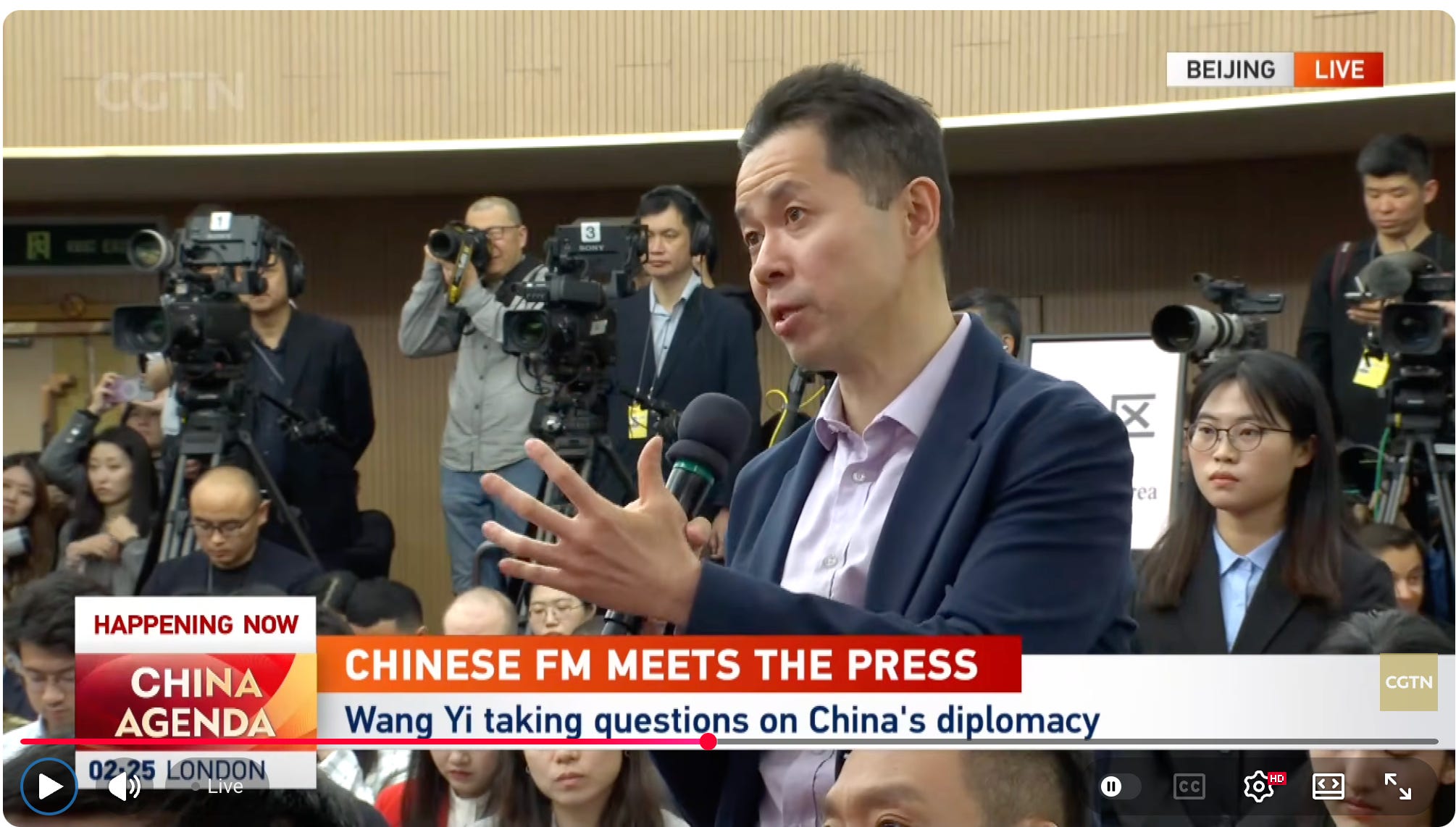
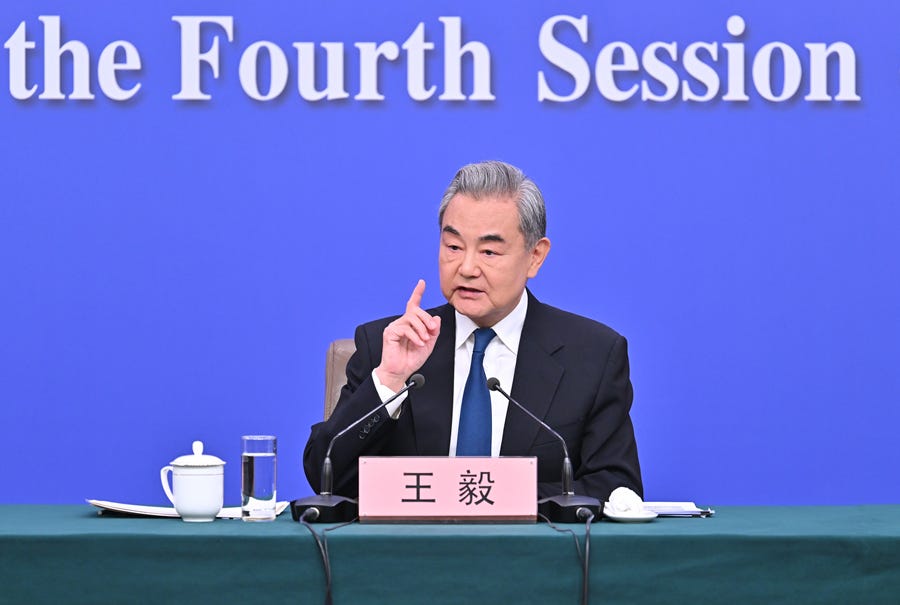
Just now, on the morning of Sunday, March 8, Chinese Foreign Minister Wang Yi answered a question from CNN on the subject in a televised press conference as part of the ongoing annual session of the National People’s Congress, China’s legislature.
I believe Wang Yi made it clear that China welcomes and anticipates Trump’s upcoming visit.
Steven Jiang of CNN:
Since Donald Trump’s return to the White House, U.S.-China relations have been tumultuous. So his planned visit to Beijing later this month has been highly anticipated. Given this, how will the ongoing U.S.-Israeli strikes on Iran affect this trip? And also, ahead of this trip, he seems to be pursuing a detence with China. Notably, he did not mention China directly even once in his latest State of the Union address, so there are concerns in Washington that he might make concessions to China on issues such as Taiwan during the visit because of his focus on reaching trade and commercial deals. How do you respond to this view? And what does China want out of this visit? And what are your expectations of bilateral ties after this visit?
U.S.-China relations affect all parties and have a global impact. If the two countries do not engage with each other, the result will only be misunderstanding and miscalculation; if they move toward conflict and confrontation, the whole world will suffer even more. China and the United States are both major powers. Neither can change the other, but we can change the way we interact. That means upholding an attitude of mutual respect, safeguarding the bottom line of peaceful coexistence, and striving for the prospect of win-win cooperation. This serves the interests of the peoples of both countries and meets the expectations of the international community.
What is reassuring is that the two heads of state have led by personal example and maintained sound interactions at the highest level, providing an important strategic guarantee for the improvement and development of U.S.-China relations, and helping the relationship, despite its ups and downs, achieve overall stability.
This year is indeed a pivotal one for U.S.-China relations, and the agenda for high-level exchanges is already on the table. What is needed now is for both sides to make thorough preparations, foster a conducive atmosphere, manage existing differences, and remove unnecessary distractions. China’s position has always been positive and open. The key is for the U.S. side to move in the same direction. I believe that as long as both sides treat each other with sincerity and engage each other in good faith, we will be able to keep lengthening the list of cooperation and shortening the list of problems.
Under the strategic guidance of the two heads of state, we will be able to achieve outcomes that satisfy the peoples of both countries, reach understandings welcomed by the international community, and make 2026 a landmark year in the move toward a healthy, stable, and sustainable U.S.-China relationship. Thank you.
One helpful background is this extraordinary report from Mark Magnier of the South China Morning Post in New York, quoting U.S. - not Chinese - sources and analysts, basically blasting the Trump administration for doing a poor job in preparing the upcoming trip.
Less than six weeks ahead of a likely summit between US President Donald Trump and Chinese leader Xi Jinping, preparations are inadequate, bilateral contacts anaemic and outcomes diminished, according to analysts and former government officials familiar with planning.
The shortfall reflected in part Trump’s reluctance to delegate, disdain for process and focus on quick wins, banking instead on personal magnetism and his “gut” as summit organising principles, they said.
The planning deficit also speaks to differences in US and Chinese political culture, with Beijing inclined towards heavily staged events free of missteps, especially involving its president, and Washington more tolerant of spontaneity, particularly under Trump.
“You have a handful of people who have never done this before, putting together what may be the most consequential trip in the president’s administration on a wing and a prayer,” said a former US official close to planning details. “The Chinese are beyond worried. They’re apoplectic.”
“They see this as an opportunity, and the US doesn’t.”
A call between Trump and Xi earlier this month eased fears that the summit might not happen, but that has still left months of work compressed into weeks.
……
Driving much of this is a president who ploughs through protocol, goes off script and enters summits unencumbered by briefing notes or teleprompters, confident that his personal magnetism will craft breakthrough deals.
“This is the worst I’ve ever seen,” said the former official, a veteran of several summits.
“We’d be having, by this time, probably two meetings a week led by the NSC, with every agency showing up saying, ‘What’s our strategy for deliverables?’ But it’s not even happening.”