

The Times published an opinion column on 25 February 2026, questioning why Britain is educating China’s scientists, suggesting that the growing number of Chinese STEM students—coming from a “hostile regime”—in UK universities could pose a threat to national security.
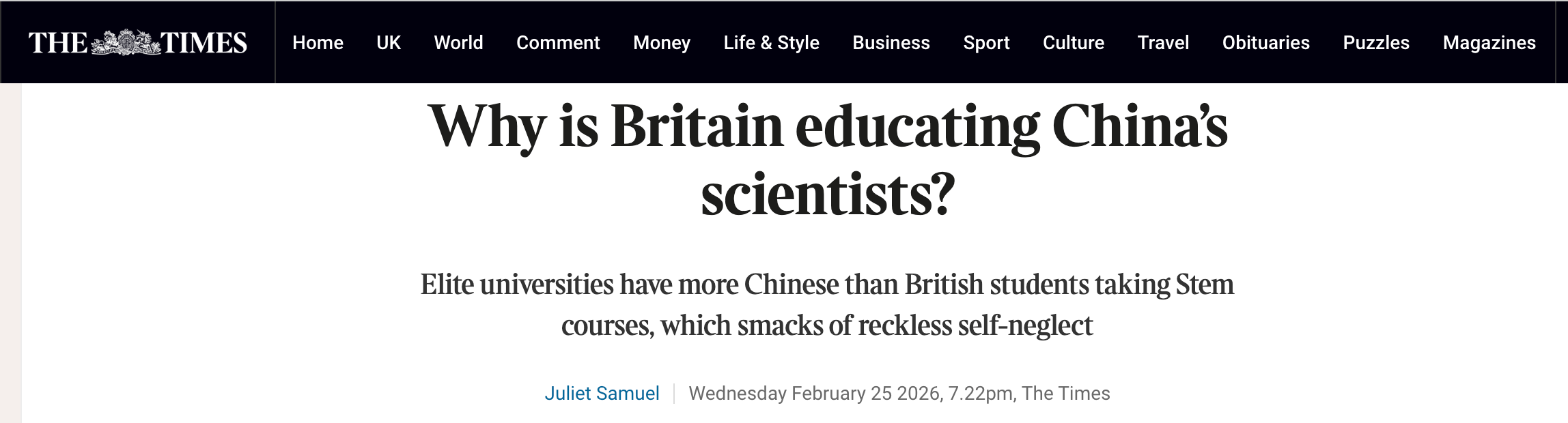
Michael Jinghan ZENG, a professor at the Department of Public and International Affairs at City University of Hong Kong, offered a rebuttal today in an article on FTChinese, arguing that if international students are seen as “strategic threats” and panic-driven narratives foster an inward-looking mindset, the true damage will not be to China, but to UK universities themselves. He warns that the real danger to the UK’s academic future lies in its retreat from being an open, global intellectual hub.

Before joining City University of Hong Kong, Zeng spent 13 years in the UK, where he built his academic career. At 31, he was appointed Professor of China and International Studies at Lancaster University, becoming one of the youngest full professors in Britain. Simultaneously, he served as Director of its Confucius Institute, leading a team of nearly 30 staff in the university. These experiences are chronicled in his three-volume memoir, Memoirs of a Confucius Institute Director, Volume 1: Challenges, Controversies, and Realities. The first volume was released in English in London in 2025, followed by the Chinese edition published in Hong Kong in 2026. As the first insider account of China’s most controversial overseas activity, his memoir has been featured in The East is Read and Pekingnology.
Zeng currently serves as the Founding Editor-in-Chief of the Cambridge Forum on Technology and Global Affairs (Cambridge University Press). He is also a Fellow of the Royal Society of Arts and the Higher Education Academy (UK). He has been named in the World’s Top 2% Scientists list by Stanford University and Elsevier for five consecutive years since 2021.
A native of mainland China, Zeng received his PhD from the University of Warwick and holds a Master of Public Administration from the University of Pittsburgh.
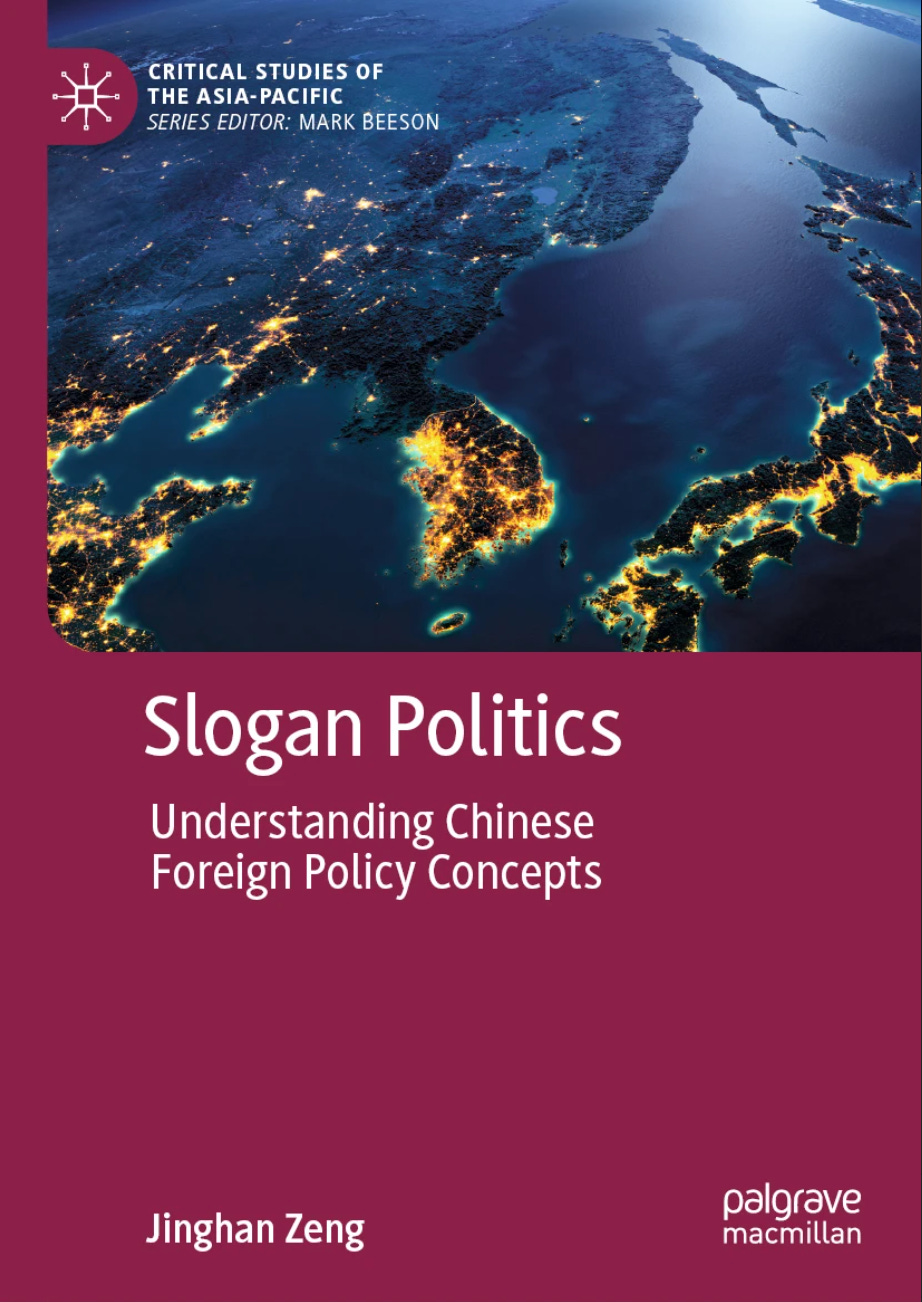
Zeng is the author of Slogan Politics: Understanding Chinese Foreign Policy Concepts, a book Zichen Wang cannot stop recommending.
当英国媒体问“为什么要培养中国科学家”时,它真正忽略了什么?
When British Media Asked, “Why is Britain Educating China’s Scientists?” What Did They Really Overlook?
A recent opinion piece in The Times, titled “Why is Britain educating China’s scientists?” has sparked significant debate in the UK public sphere. The article references data from UK-China Transparency (UKCT), which shows that:
Britain’s elite universities now have more Chinese than British students enrolled in advanced science, technology, engineering and maths (Stem) courses. Russell Group institutions are training about as many Chinese Stem postgrads as Brits. But our top science hubs - Oxford, Cambridge, Imperial, Manchester and University College London - are collectively enrolling about five Chinese Stem postgrads for every four Brits. In engineering, there are some 3,300 Chinese postgrads versus 1,900 Brits; in maths, 700 Chinese versus 500 Brits.
These statistics are not false. However, the narrative constructed around them raises significant issues: the next generation of UK scientific talent, it claims, is largely coming from a “hostile regime”; UK universities, it asserts, are turning away British students while welcoming Chinese ones; China’s “military-civil fusion” policy implies that all technologies will serve military purposes, thus posing a security threat to the UK; and the article even ended with a dismissal of the humanities, urging the government to concentrate resources on STEM “to ensure Britain’s next generation of scientists are actually British.”
Such rhetoric is not an isolated incident, but part of a long-standing structural suspicion and demonisation of China’s role in the higher education sector by parts of the British media. Chinese students are often depicted as potential threats rather than regular international students. As someone who has studied in the UK and worked within the UK university system for 13 years, I feel it is necessary to clarify a few points.
First, the large influx of Chinese students into UK universities is fundamentally driven by commercial logic, not sentiment. Over the past decade, UK higher education has become highly reliant on the tuition fees of international students. Chinese students, whose fees are often three to four times higher than those of British students, have become a crucial source of cross-subsidy. Without this income, UK universities would not “free up more places” for British students; rather, it would lead to a more severe financial crisis. In fact, the recent decline in international student numbers, including Chinese students, has led to staff layoffs, department mergers, recruitment freezes, and frequent union protests. The core issue lies not in Chinese students “taking the place” of the Brits, but in the insufficient public funding for UK universities.
Second, the relative decline in the UK’s STEM appeal reflects a structural trend. Many British students have limited interest in the high-intensity, long-duration nature of STEM research. If the number of Chinese students were to decrease, it would not be the “Chinese places” that shrink first, but rather the overall size of the disciplines and the research capacity. The global competitiveness of the UK’s top universities relies heavily on the influx of international talent. Without international students, the UK’s position in research competition, both in Europe and globally, would be weakened.
More importantly, structural changes in the choices of Chinese students to study in the UK are already underway. For a long time, including during my own period as a student, the UK and the U.S. were virtually the “only options” for top Chinese students to pursue higher education abroad. Whether in research resources, academic reputation, or social recognition, universities in the UK and the U.S. held a dominant position. However, today, the landscape is being reshaped. Universities in the Chinese mainland, Hong Kong, and Singapore have rapidly risen, altering the global competitive map of higher education.
Take Hong Kong as an example. In a city with a population of just over 7 million, there are five universities in the global top 100. A more concrete comparison is that Royal Holloway, University of London, where I previously worked, and a historic UK institution with over 150 years of history, was once ranked in the global top 100 but has now fallen out of the top 400. In contrast, City University of Hong Kong, where I currently work, was founded just 30 years ago but has rapidly climbed the global rankings, now sitting at 63rd in the world.
This comparison is not simply about ranking; it reflects deeper shifts in the global higher education landscape. History and tradition are undoubtedly important, but when it comes to resource investment, institutional efficiency, and regional development momentum, the coordinates of global competition are being redrawn. Asian universities are increasingly focusing on research investment, academic program expansion, and internationalisation, significantly enhancing their appeal in local and regional markets. For many Chinese students, studying abroad is no longer a singular “pilgrimage to the West,” but rather a diversified and rational choice. Therefore, from a structural perspective, the issue of “too many” Chinese students in UK universities is unlikely to persist in the long term. As alternative options mature and the global educational competition rebalances, the proportion of Chinese students going to the UK will naturally adjust. When this happens, the real crisis for UK universities in STEM will emerge.
Third, equating all Chinese students with national strategic tools is a misunderstanding of the academic community. Universities are neither intelligence agencies nor military units. Scientific collaboration and talent mobility are inherent to the modern scientific system. Labelling students of a specific nationality as “potential risks” ultimately harms the principles of academic openness. What the UK has long prided itself on is its open academic tradition and institutional confidence, not a closed security logic.
As for the humanities, Chinese students are not only coming to the UK for STEM fields. Business, media, and social sciences are also popular. Many choose the UK because of its history, culture, and intellectual traditions. The UK’s soft power—its literature, political thought, and historical academic traditions—forms a crucial part of its global influence. If the future of the nation is reduced to simply “training more British STEM talent” while neglecting the value of the humanities and social sciences, it will erode the UK’s most distinctive strengths.
When I chose to pursue a PhD in Politics and International Studies in the UK, it was not due to its engineering or laboratory facilities, but because I trusted in the UK’s rich tradition in the humanities. The UK’s deep-rooted foundations in political thought, international relations theory, historical research, and diplomatic practice form its unique academic allure. From the tradition of parliamentary politics to its diplomatic institutional experience, from realism and the British school to ongoing reflections on global order, these are not “hard powers” that can be replicated through short-term investments; they are the result of long-term accumulation of institutional and intellectual capital.
The historical practice of British diplomacy, its involvement in international law and multilateralism, and London’s role as a global political and financial centre have long provided fertile ground for social science research. It is this soft power that gives the UK its global appeal in the humanities and social sciences. If today’s discussion focuses solely on how “to ensure Britain’s next generation of scientists are actually British,” while overlooking the importance of thought production and value shaping, what the UK stands to lose is not simply the proportion of students in a particular discipline, but its position as a centre for intellectual thought and norm-setting.
A country’s long-term competitiveness is not solely determined by the number of laboratories or patents; it also lies in its ability to understand, interpret, and influence the world. For the UK, the humanities and social sciences are central to this capability. In other words, while the UK is no longer the centre of the British Empire, its higher education system remains attractive because of its openness, diversity, and intellectual freedom. If international students are viewed as “strategic threats” and the narrative of panic leads to a more inward-looking approach, the real damage will not be to China, but to UK universities themselves. When The Times asks, “Why is Britain educating China’s scientists?” perhaps the real question should be: In a globalised knowledge system, is the UK still willing to be an open academic centre, or is it preparing to retreat from its global role, driven by security anxieties?
Slogan Politics: Understanding Chinese Foreign Policy Concepts (Book excerpt)

Trust me when I say I have read enough discussion of “Belt and Road Initiative” (BRI), “New Type of Great Power Relations,” and “Community of Shared Future for Mankind” in both Chinese and English. So also trust me when I say the book Slogan Politics: Understanding Chinese Foreign Policy Concepts

Transcript: China’s propaganda machine? The controversies and reality around the Confucius Institute
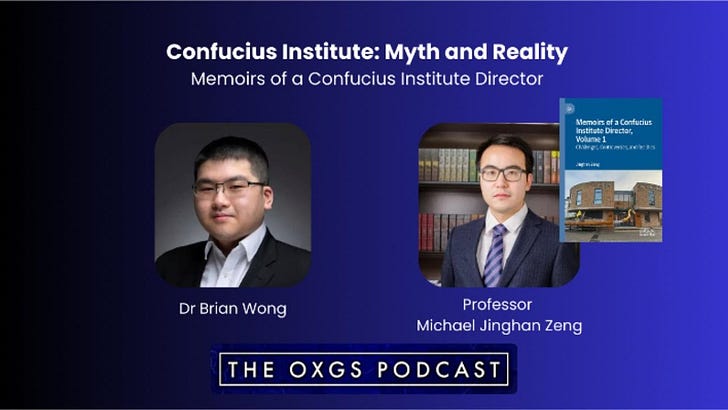
From 2019 to 2025, Michael Jinghan ZENG was Professor of China and International Studies at Lancaster University and Director of Lancaster’s Confucius Institute, leading a team of nearly 30 staff. His work once sat at the centre of a widening debate in global higher education over language teaching, cultural influence, and the governance of academic exc…
Prof. Jinghan Zeng on Confucius Institute and China’s Soft Power
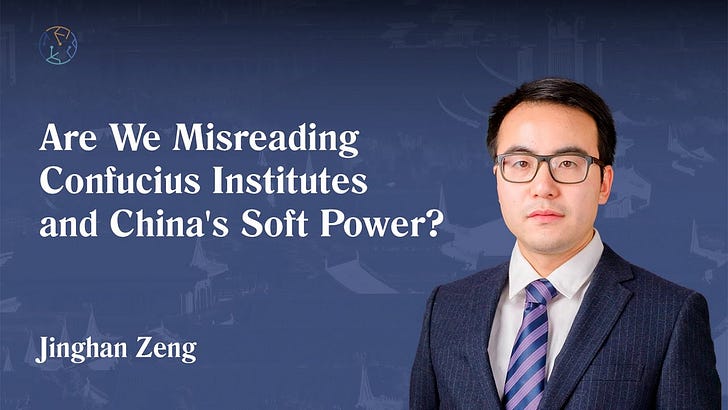
Palgrave Macmillan has recently published Memoirs of a Confucius Institute Director, Volume 1: Challenges, Controversies, and Realities, the first insider memoir from a Confucius Institute director during a time of growing global controversy, by Michael Jinghan ZENG

The question presuppose that Britain is the pinnacle of knowledge going forward or that its eminent position on knowledge is the result of itself and not of the infusion / creation of knowledge by students from all over the world ...
There is a substantial cultural divide now between Western views of scholarship and those views about intellectual pursuits held traditionally in China. The disintegration of the scholarly ideal has been underway for some time in the West, reaching back to the disintegration of the Roman empire. Tacitus comments on the situation in Rome 2,000 years ago - "Idque apud imperitos humanitas vocabatur, cum pars servitutis esset." "Among the naive, this was called civilization, when in fact it was part of their enslavement." His words could well apply to culture in the U.S. and Britain at this time. The following comparison between the Chinese ideal and the current American ideal make clear that the search for higher truth will reside in China for some time to come, while it holds no interest for the average Westerner.
劝学 (Quàn Xué) — An Exhortation to Study
by 颜真卿 Yán Zhēnqīng (709–785 AD, Tang Dynasty)
________________________________________
三更灯火五更鸡,
正是男儿读书时。
黑发不知勤学早,
白首方悔读书迟。
________________________________________
The midnight lamp burns through the cock's first crow,
This is the hour a scholar's mind should glow.
In youth's black hair we seldom prize the book,
In age's white head we grieve we did not look.
American Ganster Hip Hop song lyrics follow concerning “using your brain instead of your back” – reflecting the current intellectual aspirations of American and British youth.
"If I call you a nappy-headed ho,
Ain't nothin' to it, gangsta rap made me do it.
Use your brain, not your back.
Use your brain, not a gat; it's a party, not a jack.
I never forgot Van Ness and imperial.
Look at my life, Ice Cube is a miracle."