

In January 2025, Xiaohongshu briefly joined two internet worlds. As an American ban on TikTok loomed, hundreds of thousands of self-described “TikTok refugees” piled into RedNote, as it’s known in English. Eighteen months later, it is illustrating the opposite phenomenon. A controversy that crowds Chinese-language search results for its reported Hong Kong initial public offering (IPO) has barely registered in English. It concerns a former employee, canceled share options, and the corporate structure on which the listing may depend.
On June 15, Bloomberg reported that Xiaohongshu was preparing to file confidentially in Hong Kong by month-end. It had hired Goldman Sachs and CICC and could list in the second half of 2026, Reuters reported a day later. China’s Instagram, as it’s often referred to, could be worth $70bn, according to the Wall Street Journal. Mainland regulatory clearance was still needed.
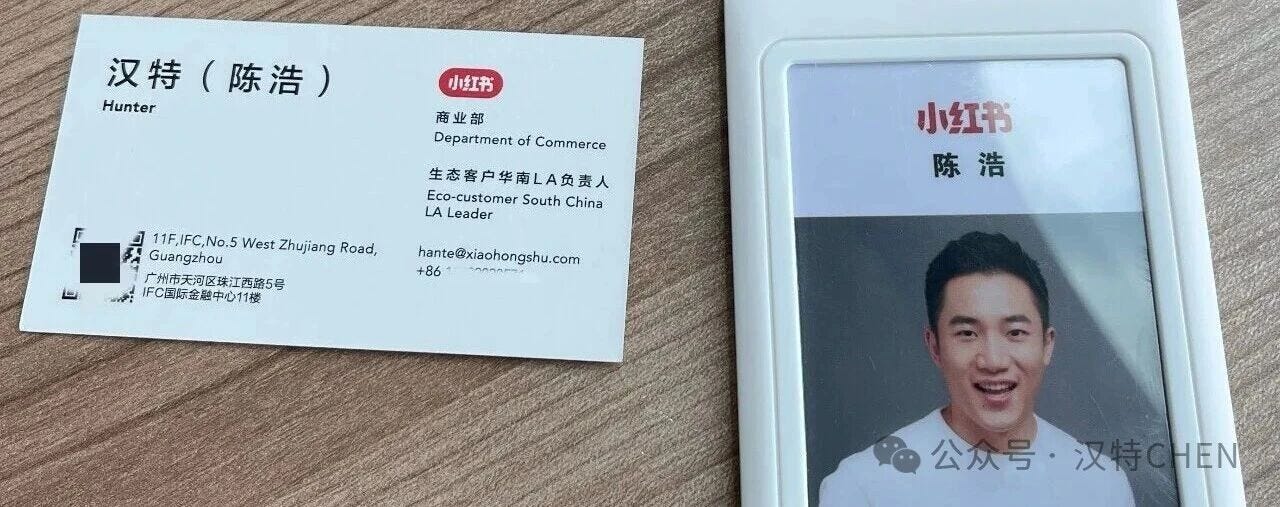
Then came Chen Hao, a former employee who had been battling the social networking giant for several years for alleged wrongful termination and insufficient compensation. Mr Chen said he joined Xiaohongshu in 2022. His employment contract was with a mainland entity, while 30,000 options—roughly a third of his promised annual package—were granted by an offshore entity of Xiaohongshu. He said the mainland employer dismissed him for alleged incompetence (which he disputes) in December 2023, five months before his first options were due to vest.
Mr Chen sued. One ruling found the dismissal unlawful and awarded him about 190,000 yuan ($26,500) in compensation and other pay, according to Mr. Chen’s account that was widely cited by Chinese media outlets. In a separate options case, a court of first instance awarded him 730,500 yuan. The company appealed; the parties then settled under court mediation for 661,545 yuan, plus a revised termination certificate that made no mention of incompetence. Had he not been fired, the options would have been worth much more.
Although the appeal ended in a settlement, leaving no final appellate ruling on the point, the first-instance decision showed that a mainland court may treat an offshore option grant as part of the employment bargain tied to the mainland entity, particularly when it is presented as compensation and tied to continued service.
The more consequential part of his complaint concerns Xiaohongshu’s variable-interest-entity, or VIE, structure. Since Sina’s Nasdaq debut in 2000, Chinese internet firms have used VIEs to raise foreign capital while navigating restrictions on foreign ownership. Investors buy shares in an offshore holding company. Its Chinese subsidiary signs contracts with a domestically owned operating company, securing economic benefits and effective control without owning its shares. This permits consolidation in the offshore group’s accounts. It also creates legal risk: as America’s securities regulator explains, contractual control is not equity ownership.
Hong Kong permits such arrangements case by case and requires extensive disclosure. China’s securities regulator has likewise said that compliant VIE listings can be registered. The structure is a response to China’s regulatory reality, not evidence of wrongdoing.
Mr Chen said, citing Xiaohongshu’s appeal, that the mainland entity argued that they were not parties to his option agreement, had no relevant relationship with its offshore grantor and should not answer for the options in a mainland court. Mr Chen argues that this sits uneasily with the control Xiaohongshu must demonstrate when it places domestic operations beneath an offshore listing vehicle: no connection when an employee claims, close connection when investors pay.
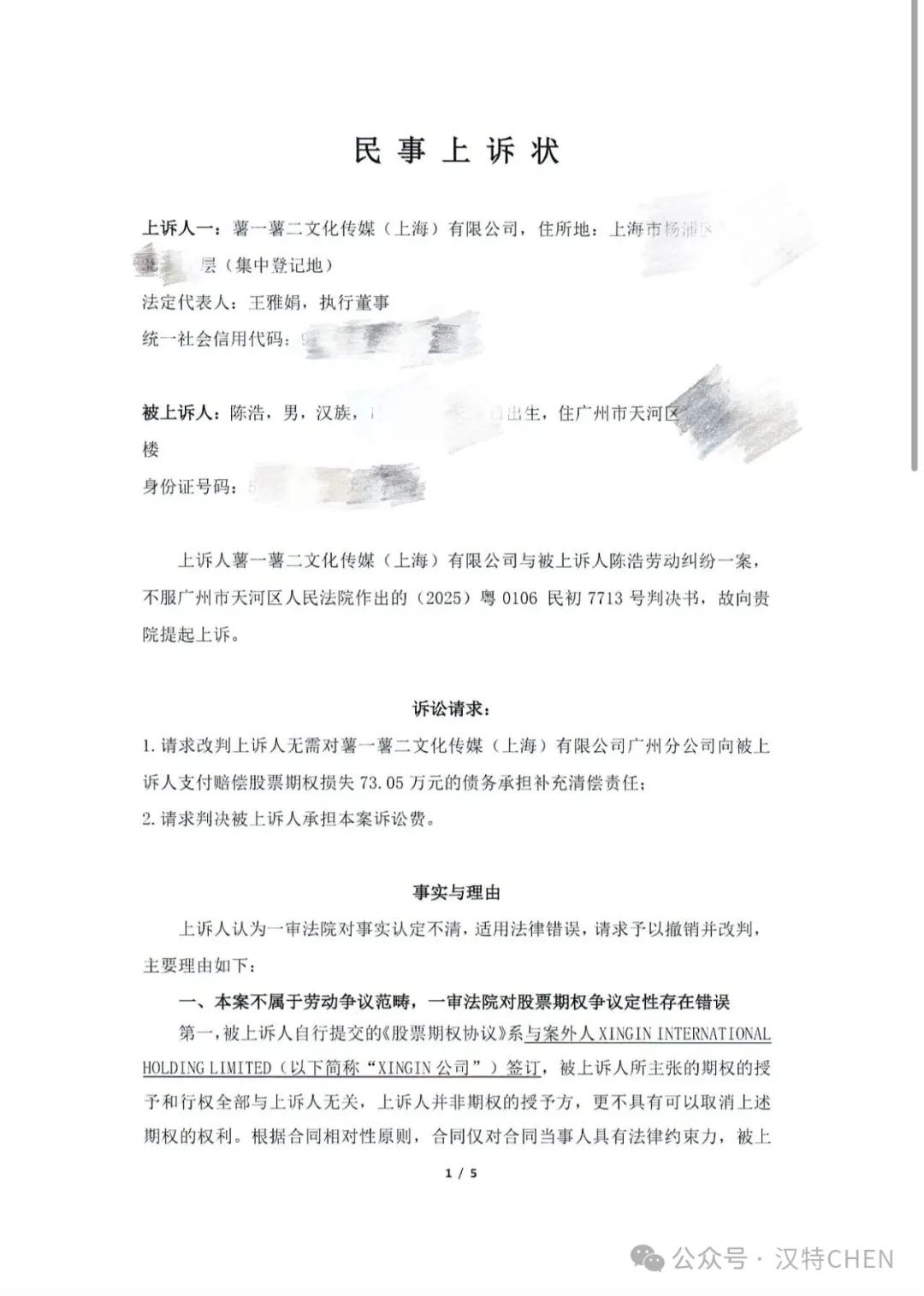
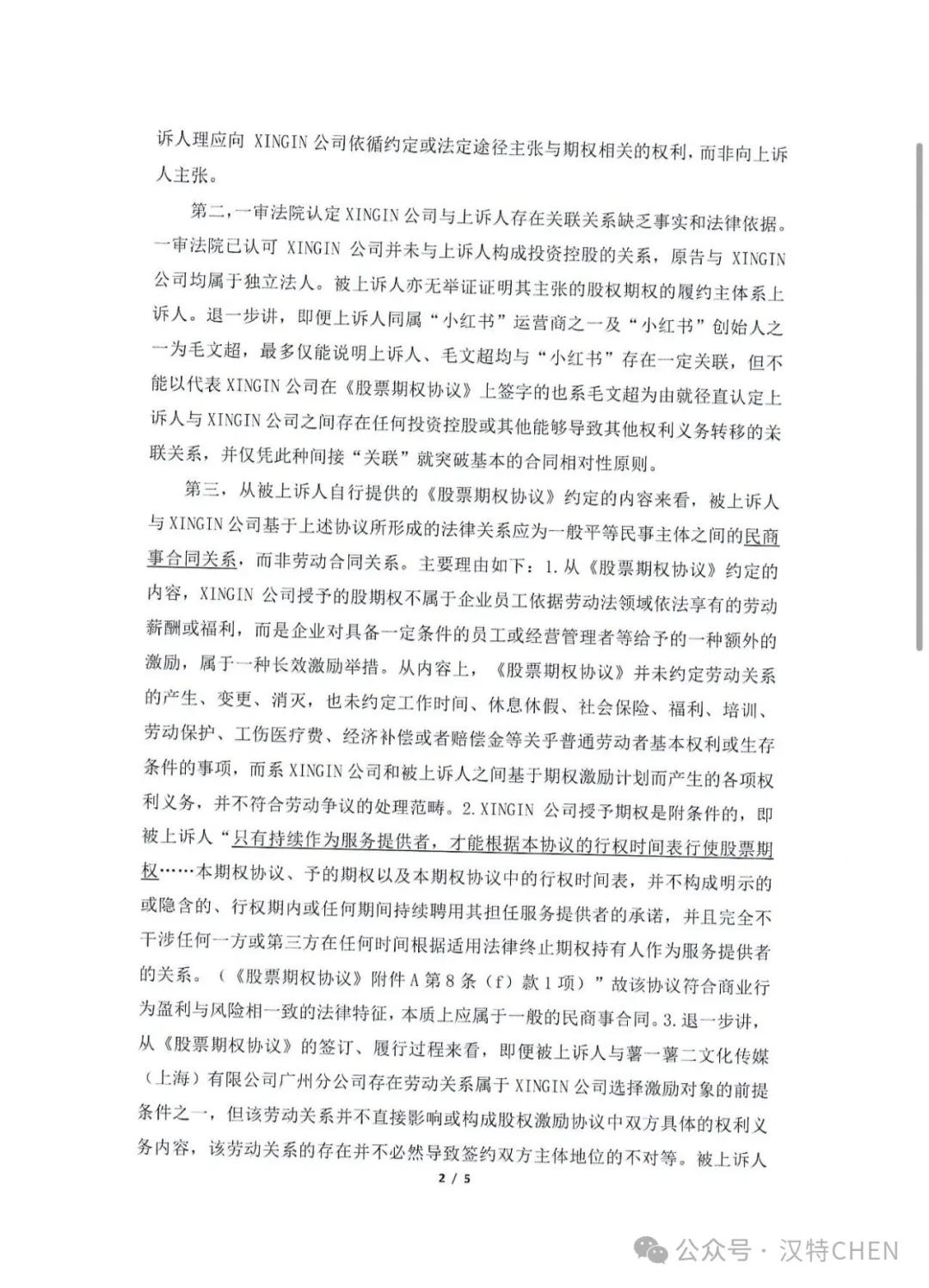
On June 29th, Mr Chen said he sent the rulings, pleadings, and testimony from other former staff to Hong Kong Exchanges and Clearing and the Securities and Futures Commission (SFC). On July 7th, he complained to the China Securities Regulatory Commission. The SFC told BBC Chinese only that complaints are handled under established procedures; receipt is not a judgment on the merits. Mr Chen alleged that nearly 50 other former employees contacted him with similar stories of dismissal around vesting dates. That is a serious claim, but so far it is his claim; the underlying cases have not been independently established.
The charge is embarrassing, but not yet conclusive. Separate legal personality and the absence of direct shareholding are features of a VIE, not defects. A Shanghai lawyer said that liability under an employment contract and control under a VIE are different legal questions and do not necessarily conflict. The decisive facts are which entities signed which VIE agreements, how the option grantor fits into the chain and what Xiaohongshu has told—or will tell—regulators. No public prospectus is available against which the pleading can be tested.
Nor is there public evidence that the complaint has halted the IPO. The reported timetable was provisional and, if the company proceeded confidentially as reported, hard for outsiders to observe. Claims in mainland media that the absence of a public hearing date proves “stagnation”, or that a 2027 delay is already “market consensus”, appear to trace back to outside commentators taking Mr Chen’s side rather than regulators, bankers or Xiaohongshu. A complaint may prompt questions for the company, its sponsors and lawyers. If the alleged pattern of option-related dismissals is substantiated, it could require fuller disclosure and an estimate of liabilities. One resolved dispute worth 850,000 yuan, however, is unlikely by itself to sink a company valued in the tens of billions of dollars.
Xiaohongshu itself has issued no public, on-record response despite extensive discussion at home. Its only seemingly authoritative answer came through an unnamed person “close to Xiaohongshu”, who told Sina Tech that Mr Chen’s litigation had concluded, was an ordinary labour dispute and had nothing to do with the listing. That is not a company statement.
This sustained silence is presumably a considered choice. It may display corporate sangfroid: lawyers and bankers may regard a settled personnel dispute as too minor to dignify. Managers may also be frustrated by the poor quality of much of the online Chinese discussion. It’s an open secret in the mainland that many Chinese influencers and outlets want to make money off IPOs by injecting themselves into disputes on the eve of an IPO. Many of the reports reviewed for this article rely principally on Mr Chen and the documents he supplied, with little substantive analysis; several then leap, without citing named sources or other evidence, to the conclusion that the IPO has already been delayed. Xiaohongshu may believe that responding would merely lend credence to an inflated story.
Yet the story has traveled from mainland media to Singapore’s Lianhe Zaobao, influential among Chinese elites, and BBC Chinese. No original account could be found in the large international outlets that covered Xiaohongshu’s IPO plans and its TikTok moment. The controversy has crossed borders, if not yet the language barrier.
That makes continued silence increasingly peculiar. Xiaohongshu is a platform built to host public discussion, and its success rests heavily on a reputation for authentic sharing. Investors need not accept the most lurid Chinese headlines. But they may ask whether offshore options are genuine compensation, whether dismissal close to vesting is a pattern, and whether the group’s entities become one company only when convenient. Mr Chen has not proved that the listing is in peril. He has raised a red flag. Xiaohongshu would be wiser to explain why it is small than to pretend it is invisible. (Enditem)

Fascinating angle. The silence is the story — and it reveals a structural tension in Xiaohongshu's brand identity.
Platforms built on "authentic sharing" (小红书's founding proposition) cannot easily absorb corporate opacity. The IPO pressure has exposed this contradiction sharply.
From a civilisational governance lens: this is also a microcosm of the broader Chinese tech compliance regime. Companies must simultaneously project authenticity outward and opacity inward — a legitimacy cost that compounds over time.
Interested how the HK IPO structure plays out. The VIE question is the real structural bomb underneath.