


Zhou Yongmei, a former World Bank official who led the Fragiles States Group of the World Bank, examines how the Bank’s role in post-conflict reconstruction is evolving. Drawing on first-hand experience, she compares earlier cases such as Afghanistan and Iraq—where the Bank acted as a “gatekeeper” of governance standards—with the emerging Gaza model, in which it plays a more limited financial role.
Rather than a simple institutional retreat, Zhou argues that this shift reflects a broader transformation in global governance: as great-power politics intensify, key decisions are increasingly made outside multilateral institutions, leaving them to provide financing rather than set the rules.
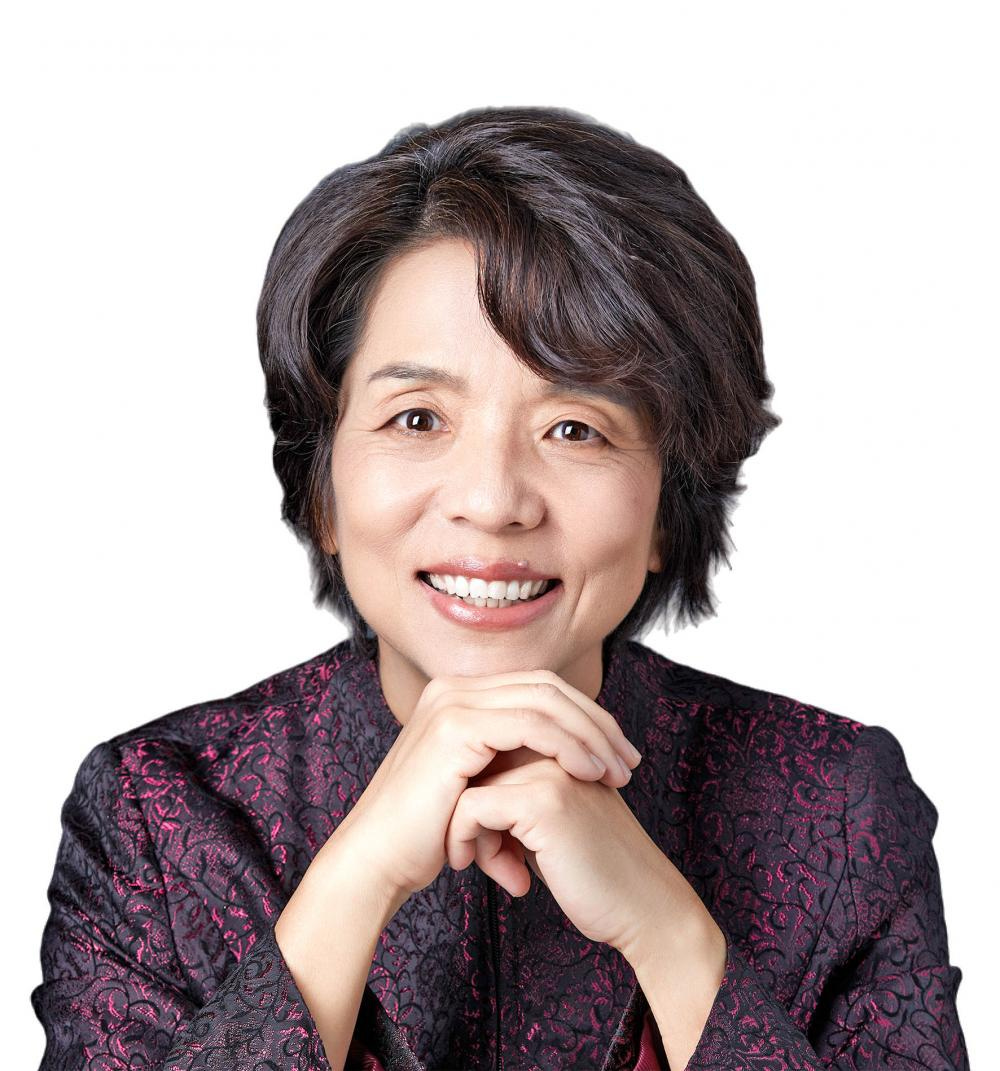
Zhou Yongmei is now Professor of Practice in Institutional Development at the Institute of South–South Cooperation and Development (ISSCAD) and the National School of Development (NSD), Peking University, a role she has held since 2020. She received her PhD in economics from the University of California, Berkeley, in 1999, specialising in new institutional and development economics. From 1999 to 2020, she worked at the World Bank, advising leaders in Africa and South Asia, managing the Fragility, Conflict and Violence Group, and co-directing the 2017 World Development Report.
The article was published on Zhou’s personal WeChat blog on 17 March 2026.
Zhou has kindly authorised, reviewed, and revised the translation.
从“守门人”到“转账员”:世界银行在战后重建中的角色转变
From “gatekeeper” to “handler of funds”: the World Bank’s shifting role in post-war reconstruction
Recently, World Bank President Ajay Banga accepted an invitation to join the “Board of Peace” initiated by Donald Trump. The body has been controversial from the outset: Trump serves as its lifetime chair, his son-in-law holds key roles in both the Board and the Executive Board, and the entry fee for members can reach as high as $1 billion.
Consider a simple thought experiment: if China were to lead the creation of a similar body, with its leader serving as lifetime chair, relatives occupying key positions, and the Asian Infrastructure Investment Bank invited to create a financing platform for post-war reconstruction, how would international opinion respond? One can reasonably expect immediate outcry over political alignment, nepotism, and the erosion of the independence of multilateral institutions.
Yet when the same arrangement is led by Trump, it is accepted by more than twenty countries. Even the World Bank—my former employer—has been drawn into it. Such double standards are, unfortunately, hardly new in international politics.
There are also small but telling signs of unease within the Bank over the President’s decision to join the Board of Peace. In normal circumstances, an appointment to a body presented as central to peacebuilding and reconstruction would warrant a formal announcement. Yet the Bank has not even issued a press release. An international development institution that once prided itself on neutrality has, in recent years, appeared increasingly responsive to the preferences of its largest shareholder, the United States. Boardroom debate and staff concerns have done little to arrest this broader drift towards politicisation.
Nor is the Bank the only institution placed in an awkward position. The UN Security Council, effectively sidelined by Trump’s Board of Peace, nonetheless adopted Resolution 2803 in November 2025 by 13 votes to none, with two abstentions, approving a U.S.-backed “Comprehensive Plan to End the Gaza Conflict”. That resolution provided formal international authorisation for the Board to assume responsibilities for post-war governance and reconstruction in Gaza.
The World Bank has since established a Financial Intermediary Fund for Gaza reconstruction and development. Yet the announcement appeared only on the regional webpage for the West Bank and Gaza. That deliberately low-profile handling reflects, in part, the Bank’s discomfort and the internal debate.
Under the Gaza Reconstruction and Development Fund, the Bank’s role is explicitly confined to that of a limited trustee. In practice, this means receiving donor contributions and transferring funds to the Board of Peace. Project design, contract allocation, implementation, and oversight all lie within the remit of the Board of Peace, not the World Bank.
What is particularly striking is that, although President Banga is an Executive Committee member of the Board of Peace, the World Bank has repeatedly stressed on its website that it does not participate in the Board’s decision-making and bears no responsibility for implementation or supervision. This careful insistence on boundaries appears designed to establish an institutional firewall: once funds leave the World Bank account, responsibility for how projects are run, contracts are awarded, and money is used no longer rests with the Bank.
The “gatekeeper” role of the World Bank that I knew
For decades, post-war reconstruction was typically led by multilateral institutions. The United Nations provided political legitimacy, governments and donors supplied financing, and the World Bank—sometimes alongside UN agencies—offered professional management.
The Bank’s role in reconstruction was never simply to finance projects or transfer money. Its more important function was to ensure that funds were used professionally and transparently in complex political environments. In post-conflict countries, absent strong institutional safeguards, reconstruction finance can easily become a political resource rather than a public one. That is why the Bank’s role was, in a very real sense, that of an institutional gatekeeper. It was responsible for a full suite of governance functions, including project appraisal, procurement review, financial management, implementation supervision, regular audits, and disclosure.
During the reconstruction of Iraq and Afghanistan, the U.S. government had sought to align the Bank more directly with American political arrangements. Yet under President James Wolfensohn, the Bank insisted on operating through multi-donor trust fund structures to preserve the independence and professional management of reconstruction finance.
The Afghanistan Reconstruction Trust Fund, established in 2002, is a clear example. More than thirty donor countries pooled over $10 billion into a single financing mechanism. I worked in the World Bank Afghanistan country team, which managed this large fund.
The fund’s core institutional design was to treat the Afghan government as a genuine partner rather than a passive recipient. The World Bank and Afghanistan’s Ministry of Finance co-chaired the steering committee. Strategic decisions and funding allocations were agreed jointly by donors, the Bank, and the Afghan government. Core budget expenditures, such as salaries for roughly 250,000 civilian personnel, were supported through performance-based incentives, with disbursements contingent on institutional progress verified by the Bank. This model of “co-governance plus incentives” recognised the legitimate role of the sovereign government while ensuring transparency and performance through institutional rules.
The International Reconstruction Fund Facility for Iraq, established in 2003, presented a different picture. With no sovereign government in place, the design leaned more heavily on international oversight. The UN and the World Bank managed separate trust funds, with resource allocations guided by joint UN-World Bank needs assessments. Iraq also established two oversight bodies—the Strategic Review Board and the Ministry of Planning and Development Cooperation—to guide donor decisions and help ensure fair distribution of funds. In parallel, under the UN-authorised Development Fund for Iraq, an International Advisory and Monitoring Board composed of the UN, the Arab League, the IMF, and the World Bank provided independent audit oversight of oil revenues and public expenditures.
What these two cases had in common was the Bank’s commitment to verifiable institutional procedures: joint assessment, shared decision-making, independent audit, and performance-based review. Whether or not a sovereign government was fully in place, the Bank maintained its role as an institutional gatekeeper. That role gave donors confidence, while also helping recipient countries rebuild institutions and state capacity.
A global governance system in transition
Why was President Wolfensohn able to uphold the Bank’s role as an institutional gatekeeper in Afghanistan and Iraq, while under Banga, the Bank in Gaza appears to have been reduced to a provider of financing and transfers?
Some would attribute the difference to personal authority. Before becoming World Bank President, Wolfensohn was already a towering figure in international finance, with extensive standing on Wall Street and across European financial circles. That personal stature gave him considerable room for independent judgement in dealing with governments. Although Banga also came from the global corporate world, he has had far less time to establish equivalent authority within the multilateral development system.
But at a more macro level, the Bank’s shift from “institutional gatekeeper” to “handler of funds” reflects changes in the wider political environment and the structure of global governance.
Wolfensohn’s presidency coincided with the post-Cold War high point of multilateralism. The United States, although dominant within the international system, still sought to work through multilateral institutions to advance international cooperation. In that context, defending the professional governance norms of multilateral institutions aligned with the prevailing consensus. Today, the landscape is very different. Against a backdrop of great-power competition, the space for multilateral institutions to preserve genuine independence has narrowed sharply.
The Bank now finds itself in a dilemma. Refusing to engage risks accusations of abandoning Gaza; deep involvement risks becoming a political instrument and exposing itself to significant reputational and legal liabilities. In that sense, the Financial Intermediary Fund is a compromise. It allows the Bank to signal support for reconstruction finance while keeping its distance from project decision-making and implementation.
But once the “gatekeeper” is reduced to a “limited trustee”, a broader question arises: if governance functions increasingly sit outside multilateral institutions, how will standards in post-conflict reconstruction be maintained—and by whom?
Transcript: Zhou Yongmei on why “good governance” may not be a prerequisite for development

Zhou Yongmei is Professor of Practice in Institutional Development at the Institute of South–South Cooperation and Development (ISSCAD) and the National School of Development (NSD), Peking University, a role she has held since 2020. She received her PhD in economics from the University of California, Berkeley, in 1999, specialising in new institutional …
Zhou Yongmei: Containing violent conflict is the foremost priority of state governance

Ethiopia’s rapid rise under a tightly managed “developmental state” has given way to protracted internal armed conflicts—a reminder, argues Zhou Yongmei, that in ethnically diverse countries, cohesion is the first order of business.


Interesting citing of Afghanistan reconstruction as an example. Where is that reconstruction now...