

Former Chinese premier Zhu Rongji died of illness at the age of 98 in Beijing on August 12, 2026. His body was cremated on August 18, when the Chinese flag at Tiananmen Square flew at half-mast in memory of him.
Zhu was a member of the Standing Committee of the Political Bureau of the 14th and 15th Central Committees of the Communist Party of China (CPC). He was vice premier from 1991 to 1998 and premier from 1998 to 2003 of the State Council, China’s government cabinet.
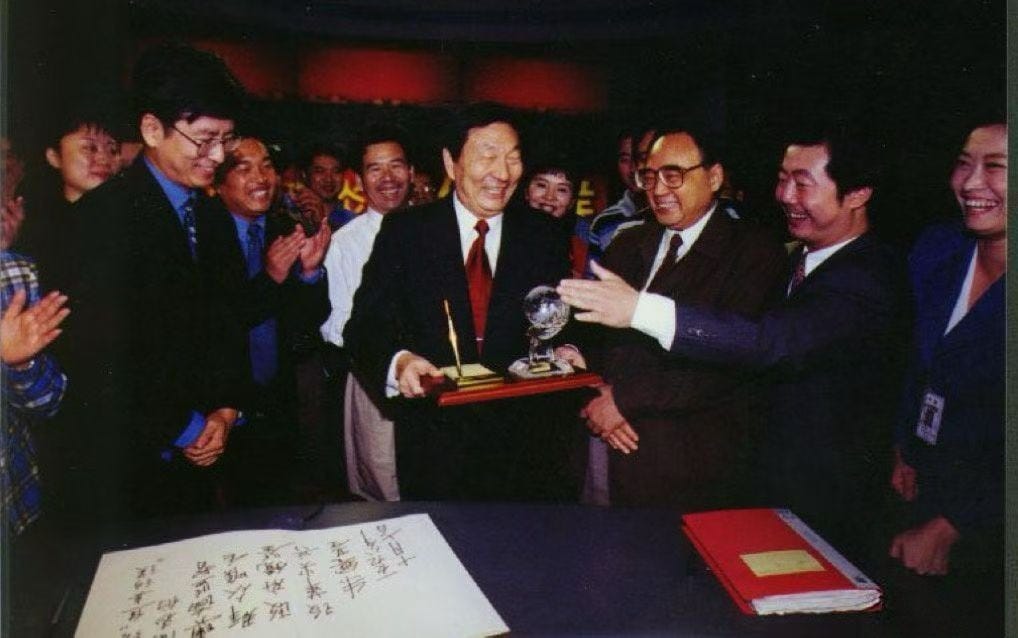
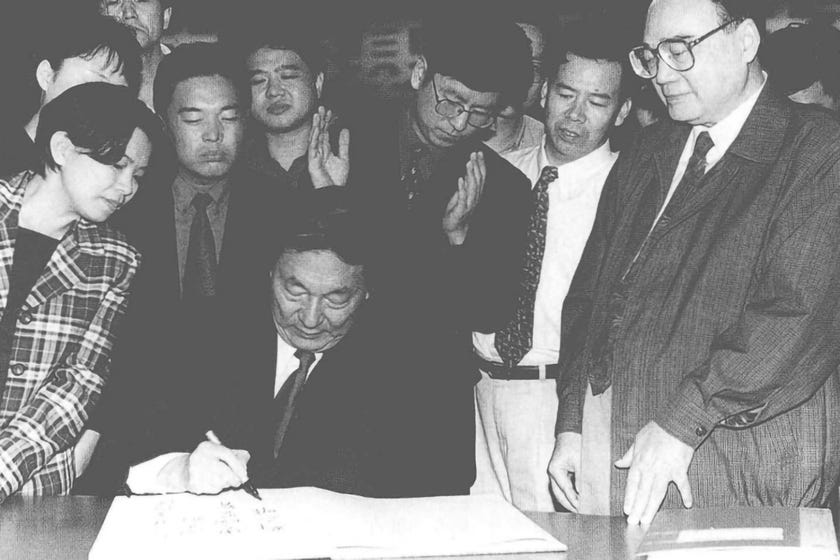
Below is a translation of his remarks at a discussion with the 焦点访谈 Focus Report production team of China Central Television (CCTV), the state broadcaster, on October 7, 1998.
At the time, Focus Report was a prime-time TV program on China’s flagship news channel, widely celebrated for exposing lower-level official corruption, bureaucratic abuse, and local administrative wrongdoings. Zhu was the Premier.
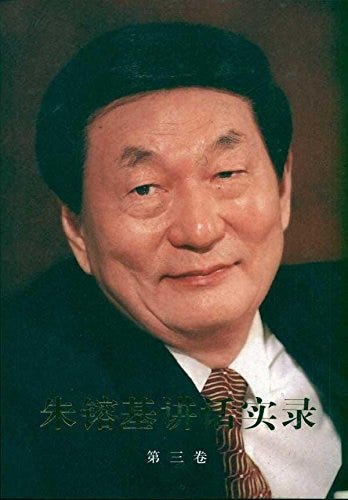
The remarks were recorded in《朱镕基讲话实录》第三卷 Selected Speeches of Zhu Rongji, Vol. III, People’s Publishing House, 2011, pp. 130–136.
和焦点访谈节目组座谈时的讲话
Remarks at a Discussion with the Focus Report Production Team
October 7, 1998
On October 7, 1998, Comrade Zhu Rongji visited China Central Television (CCTV) and held a discussion with leading officials of CCTV as well as editors and reporters from the production team of Focus Report (Jiaodian Fangtan). The following is the main part of Comrade Zhu Rongji’s remarks at the discussion.
Since Focus Report first went on air, I would not dare say that I have been its most enthusiastic viewer, but I have certainly been a very enthusiastic one. I have also been an active supporter and a volunteer publicist for the program. I often promote Focus Report on various occasions. Many ministers used to watch the program, but when they come to meetings that I chair, they worry that I might ask whether they watched Focus Report the night before. So they make sure to watch it the evening before the meeting.
Focus Report has been getting better and better and is increasingly popular with the general public. Those who are exposed by the program naturally do not feel very comfortable after watching it. So when you produce and broadcast the program, it is understandable that you encounter all kinds of resistance and unpleasant experiences. But the broad masses of the people support you. To show my support, I have long wanted to come to CCTV to visit you and thank you for the tremendous amount of work you have done to publicize the policies of the CPC Central Committee and the State Council. You have overcome many difficulties. It has not been easy, and you deserve our thanks. I would also like to offer a few hopes for your future work.
I have not come to CCTV today just to talk about Focus Report. The work of the entire radio and television sector has been improving at an ever faster pace. In particular, during the recent struggle against the floods and in emergency relief, the publicity front played an enormous role, raising the cohesion of the Chinese people to an unprecedented level: millions united as one, their hearts joined together. The facts have shown that the breadth of influence of public opinion has also been unprecedented. The central leadership fully affirmed this at a meeting of the Standing Committee of the Political Bureau of the CPC Central Committee. Reporters wore life jackets and worked amid the floodwaters, putting genuine emotion into their work. Soldiers and civilians on the flood-fighting front all liked the reporters very much. So I should also thank all comrades on the publicity front for their strong support for the work of the State Council.
In the past, we often said that publicity work should “give priority to positive reporting and to publicizing achievements.” That is the correct principle, but this way of thinking has also constrained us. What does it mean to give priority to positive reporting? Does it mean that 99 percent of reports should be positive? Would 98 percent or 80 percent not do? I think even 51 percent would do. If most programs focus on publicizing achievements, while one or two programs point out the problems we encounter in the course of moving forward and mobilize the strength of the entire Party to resolve them, the effect is much better than simply publicizing achievements. Without programs like this, the voices of the people cannot be heard. In that case, what democracy is there? What oversight is there?
Through its own record and practical results, Focus Report has now demonstrated that people across the country accept the program. The fact that it carries criticism and reports problems does not leave everyone demoralized. Instead, people accept criticism through it, improve their work, see hope and prospects, and become more determined. That is the role Focus Report has played. The “Focus Report phenomenon” is now becoming increasingly widespread. It is no longer just CCTV that has a Focus Report; many radio and television stations now have similar programs.
I watched an episode of Economic Half Hour about the logging of virgin forests somewhere in Sichuan. It seemed to have been influenced by Focus Report, and its approach was quite similar. That report had a very good effect. I ordered Sichuan Province to completely halt the logging of natural forests and to turn logging teams into tree-planting teams. The provincial Party and government leadership took the matter very seriously and showed great determination. Logging was stopped in many areas. But it was still continuing in the Meishan area. Reporters discovered this and reported on it. At first, the provincial authorities said it was a World Bank-supported project and could not be stopped. Later, it became clear that this was not the case. The project had indeed been supported by the World Bank in the 1980s, but its main purpose was to help the local area establish plantations, not to cut down forests. Once this information was relayed back to the province, they immediately convened a meeting and decided to halt the logging. The government showed a very firm attitude toward accepting supervision. I would say that program was a “near-Focus Report,” and in some respects even “beyond Focus Report.” Its impact was enormous.
Beijing Television also has a similar program. This is a very good phenomenon: bringing the hardships of ordinary people to light, exposing problems in government, and then correcting them immediately. Correcting mistakes when mistakes are made—that is the attitude Communists should have. It is enormously encouraging to the people. Otherwise, if all people ever hear about is corruption, the more they hear, the more hopeless they will feel. But if problems are exposed and then corrected, that gives the people tremendous hope, genuinely brings them together, and gives them confidence. I am pleased by the “Focus Report phenomenon” now spreading across the country. It gives television and radio journalists a broad arena in which to exercise their talents and to play a greater role in promoting national reform and development and in advancing socialist democracy and the rule of law.
Everyone should get used to this kind of criticism. If one day you discover something wrong with me and come to interview me, I will certainly accept the criticism and correct my mistakes. We make many decisions. All major decisions of the State Council pass through me, so inevitably there may be flaws in some of them. Find them, point them out, and we will correct them.
I have four phrases for Focus Report: “舆论监督,群众喉舌,政府镜鉴,改革尖兵” “media oversight, the voice of the people, a mirror for the government, and a vanguard of reform.” That is my assessment of your work.
First, media oversight. Focus Report has fully performed the role of media oversight. Its subject matter is broad and covers almost every aspect of State Council policy. Practically every area I am working on now falls within the subjects you cover. Your reporting is very helpful to our work.
This morning, the State Council held an executive meeting to study the issue of “replacing fees with taxes.” At present, fees exceed taxes, and public resentment is boiling over. The first thing we need to reform is the system of road charges. This, too, was inspired by your program. The episode of Focus Report that impressed me most was “Penalties Must Be Imposed According to Law.” In replacing fees with taxes, we cannot proceed arbitrarily; we have to begin with road charges. So the State Council drafted proposals on replacing road fees with taxes and recommended amending the Highway Law. Before this morning’s meeting, I gathered together the relevant Focus Report reports and screened them for the ministers. After everyone had watched them, it became much easier to adopt the document.
I cannot say that all the reforms I am now working on were inspired by Focus Report, but I have certainly obtained many ideas from it. Take, for example, reform of the grain purchasing and marketing system. We have devoted great effort to this over the past several years, because agriculture is the foundation. The favorable situation we have today exists because grain output has been growing steadily: “With grain in hand, there is no need to panic.” Prices are now experiencing negative growth precisely because there is so much grain. When there is plenty of grain, it becomes difficult for the prices of other goods to rise.
But at the same time, the state has borne a very heavy burden. Last year, the central government provided 50 billion yuan in subsidies to grain enterprises, but the money did not reach the farmers. Much of it ended up in the pockets of lawbreakers. What could 50 billion yuan do? It would be enough to raise the salaries of all civil servants nationwide by three grades. Some grain administration departments are extremely corrupt. They buy grain cheaply from farmers, sell it at higher prices, and still receive state subsidies. The most typical example was Cao Hong’s report, “Grain Purchases Must Not Go into Private Warehouses.” While the program was still being broadcast, the Party secretary and governor of Hebei Province could no longer sit still. The very next day they sent a telegram saying they had held an overnight meeting, explaining the work they had done in the past and how they would strengthen and improve it in the future. After I saw it, I forwarded it with comments to Comrade Hu Jintao and Comrade Ding Guangen and asked them to take a look as well.
This shows how influential that episode was. Its impact was greater than that of one of my speeches. It made a major contribution to reforming the grain purchasing and marketing system. It was not only the leaders of Hebei Province who watched it. The entire national grain system, as well as provincial Party secretaries and governors around the country, drew lessons from it. The program’s presentation was also very good. It interviewed many people and let the facts speak for themselves. Television journalists used journalistic techniques to let the facts speak and let the people directly involved speak. They moved from the concrete to the general, and in a very short report managed to incorporate the state’s grain purchasing and marketing policies. It was highly policy-oriented and very compelling.
A few months ago, at a meeting attended by provincial and municipal leaders, I had them watch Focus Report while the meeting was underway. It was more vivid, more powerful, and more persuasive through facts than our own speeches. The 1996 program “Illegal Logging Threatens a Major Lifeline” portrayed a situation that was genuinely heartbreaking. Thinking about the recent floods, of course the floods were a natural disaster, but we cannot deny that too many trees had been cut down and sediment had silted up the rivers. Our policies on soil and water conservation, improving the ecological environment, and protecting forests had never been properly implemented. This time we saw how serious the consequences were. In Hubei, people were still encroaching on lakes. What was especially infuriating was that some cadres even argued self-righteously that there was nothing wrong with building houses there.
Your media oversight has covered many areas and consistently seized on the priorities of current policy. Rural electricity prices are another problem. In some places there is no power grid, so electricity cannot be delivered even when it is available. And even in rural areas that do have grids, electricity prices are exorbitant. When there is no electricity, people long for it; when there is electricity, they are afraid to use it. Farmers buy washing machines and refrigerators, only to leave them sitting there as decorations. The rural grids are in terrible condition, even using iron wire in place of proper power lines. Transmission losses are too high, making electricity extremely expensive.
Your programs gave me ideas on this as well. The central government has now made up its mind to renovate rural power grids, reform rural electricity prices, and institute equal prices on the same grid. Urban residents now pay 0.47 yuan per kilowatt-hour; rural residents should pay the same. The state will invest 140 billion yuan and complete the renovation of rural power grids within three years, allowing farmers to use affordable electricity. Once they have electricity, washing machines and refrigerators can be sold. Once products can be sold, factory machinery can run faster. Once factories are operating at higher capacity, state-owned enterprises can turn losses into profits. So renovating rural power grids and introducing equal prices on the same grid are of enormous significance. When I put forward this proposal, the State Power Corporation was delighted, localities were delighted, and the farmers were even more delighted.
In short, Focus Report has played an extremely important role in media oversight.
Second, the voice of the people. What is said on your program is what ordinary people themselves are saying. That is why the program is popular. Nowadays, when villagers deal with cadres, there is a common saying: “Are you going to listen or not? If not, we’ll see you on Focus Report.” This shows the influence Focus Report has among farmers. Farmers feel that they now have somewhere to speak, that someone will speak for them, and that once they speak, cadres cannot simply refuse to listen. The program has authority. For Focus Report to have achieved this is remarkable. You have made a major contribution to national reform and development and have played a very positive role.
Third, a mirror for the government. We really do learn from Focus Report about situations we otherwise could not learn about. It is like a mirror, showing us whether our policies are actually being implemented properly. When we go on inspection tours, we often cannot learn the true situation. Everything has been prepared in advance. They take you wherever they have arranged for you to inspect. Then you sit down and listen to reports. Who is going to tell you what they really think? On Focus Report, I can see many real situations. I believe that governments at all levels, if they genuinely want to serve the people and implement the principles and policies of the CPC Central Committee and the State Council, can learn a great deal from this program. I hope editors and reporters will go precisely to the places where the work is most difficult. The material obtained under such circumstances is the most valuable and the most authentic.
Fourth, a vanguard of reform. Most Focus Report programs now deal with difficulties encountered by the Party and government in carrying out reforms and implementing policies, including cases where policies cannot be put into effect. You go out in front, identify the various problems in policy implementation, and press governments at all levels to carry the policies through to the end.
We are now implementing reform of the grain purchasing and marketing system. It sounds easy, but in practice it is extremely difficult. Today the State Council adopted another document on the subject. The CPC Central Committee and the State Council had already issued a document in April. After six months of implementation, there has been some progress. The reports submitted by localities all say that the State Council’s policy is absolutely correct, but the reality is that it has not truly taken effect. I hope Focus Report will continue to play the role of a vanguard of reform and serve as a good assistant to the Party and government.
In addition, I think there are many good features in Focus Report’s journalistic presentation that are worth summarizing. Above all, it lets facts speak and lets the people directly involved speak. This makes the program very vivid.
Of course, we should also treat people with goodwill. The overwhelming majority of cadres are good. We should reason with them, appeal to their feelings, and hold them to the law. When dealing with those who are unreasonable, who have done something wrong but still refuse to admit it, you must argue the case clearly. Reporters should prepare in advance so that, with one or two sentences, they can counter such arguments. Then appeal to reason and feeling. Get them to think about how much loss their actions have caused the state, how much additional burden they have placed on farmers, and how much damage they have done to the natural environment.
Finally, hold them to the law. If they have done something wrong, it must be corrected. Everything must be handled according to law, and you must pursue the matter to the end. I suggest that you strengthen your follow-up work. Everything you have reported should have an outcome. You need to see whether the problem has actually been corrected. Only in this way can you establish credibility. Of course, follow-up reports do not necessarily have to be broadcast on Focus Report itself; they can be carried in other news programs. This will also help strengthen the confidence of the people.
Does Focus Report have any shortcomings? I really have not seen any major ones. There was only one report, concerning a lawsuit between China Unicom in Tianjin and the posts and telecommunications authorities. There was nothing wrong with reporting the matter, but these issues are extremely complicated. We should not too readily believe only one side of the story, nor should we reach conclusions too early. The presenter of that episode seemed to be acting like a referee, having already decided in advance that the posts and telecommunications authorities were wrong and China Unicom was right. That may not necessarily have been the case.
Many matters are intricate and complicated. When drawing conclusions, one must be careful and develop a comprehensive understanding of their origins, historical entanglements, and current circumstances. It is best to invite someone who understands the situation well and is also responsible and reliable to draw the conclusion—to serve as the referee. The program presenter should not act as the referee, because if the presenter does so, it will be difficult to convince people.
Finally, on behalf of the CPC Central Committee and the State Council, I would once again like to express my heartfelt thanks to all the staff of China Central Television. You have done excellent work. Thank you.
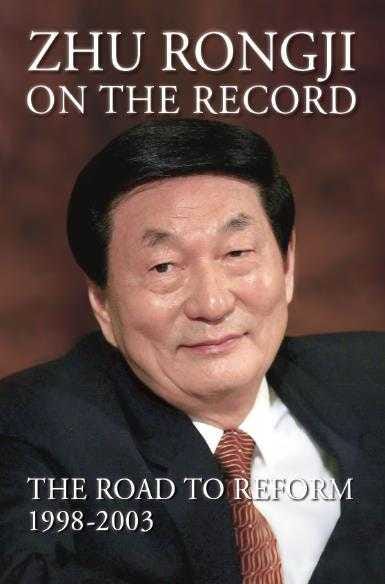
Another English translation should be available in “A Talk with the Producers of Topics in Focus” in Zhu Rongji on the Record: The Road to Reform: 1998-2003 available in the United States via Brookings Institution Press
Are the processes described here still happening in China today, because I constantly read in western media stories about Xi JinPing's "crackdown on China's media"?