


Yan Xuetong, University Distinguished Professor of Tsinghua University and Director of its Institute of International Studies, has grown visibly frustrated with some Chinese youth in recent years.
In a 2022 video that’s been circulating in Chinese social media, which is also available on YouTube
Yan summarized the worldview of Chinese students born after 2000:
Strong sense of superiority, looking down on the world from above (all other countries are backward)
Strong self-confidence, wishful thinking about the future (unification with Taiwan is imminent)
China-Foreign Bifurcation, seeing universal values as Chinese traditions (peace, morality, fairness)
Blindly following online rhetoric, viewing opinions of influencers as common sense (economic determinism, conspiracy theories, China’s holding of Treasuries could be a weapon, blockade promotes technological innovation)

Yan has also tried to sound the alarm through China’s mainstream media. From a January 2023 report by the China Youth Daily newspaper that Tsinghua University’s official website reposted:
Since 2010, China's economy has been the second largest in the world, and the post-2000 generation has grown up in the world's second-largest economy. Such an environment has shaped their sense of superiority to some extent, as if they were 'looking down on the world from a high position.' This sense of superiority, built on a specific historical context rather than the young people's own abilities, can sometimes affect their observation and judgment of the objective world and may also overlook the significance of personal struggle.
Combining specific observations from the classroom, Yan Xuetong finds that many young people use a 'China versus foreign countries' approach to understanding the world, thinking that 'all good values are Chinese, and all bad ones are foreign,' unaware that loving peace, moral values, advocating fairness, and seeking justice are common to all human civilization. Some young people might even subconsciously view the concept of the 'West' as a synonym for 'evil,' not realizing that the cultural 'West' and the political 'West' are not the same. They also lack a deep understanding that the political 'West' is a product of Cold War thinking and thus are easily influenced by online rhetoric.
For some time, social media has frequently seen manifestations of 'narrow-minded nationalism' under the guise of patriotism. 'This is an ignorant political notion,' Yan Xuetong believes. 'Narrow-minded nationalism' misinterprets patriotic sentiment as a political doctrine of political consciousness to argue its rationality. In fact, in the long history of thousands of years, our country has experienced various types of social systems, and the patriotic sentiments of the people under any system are the same. 'Wen Yiduo and Zhu Ziqing both criticized the government of the Republic of China, but their patriotic sentiments were no less than others. Simply put, 'narrow-minded nationalism' is a combination of some people's innate vindictiveness and their cowardice in covering up their faults.' He says, 'To rid oneself of the influence of 'narrow-minded nationalism,' it is necessary to increase understanding of the history of human civilization's progress and cultivate a broad-minded personal character.'
He encourages young people who want to enter the field of international relations in the future to learn to observe and judge the current trend of changes in our country's international status from a historical perspective. 'The rise and fall of great powers is a regular phenomenon in international relations. Since ancient times, few have risen to become the dominant power in the system, and none has been able to maintain its dominant position forever. Since modern times, the rise and fall of great powers have accelerated, and the dominant position is generally difficult to maintain for more than a hundred years.' Yan Xuetong reminds researchers of international relations to observe several basic facts about China's rise: our country's comprehensive national power has not yet reached the world's first, and there is still a significant gap with the United States; whether our country can continue to narrow the gap with the United States mainly depends on whether the speed of reform is faster than that of the United States, and so on.
Yan Xuetong repeatedly mentions that he hopes young people will realize that the world is complex, history is tumultuous, and not as simple as they imagine.
Which leads to the main part of our post today - a brief article that Yan published on December 8 in the 中国社会科学报 Chinese Social Sciences Today newspaper.
What he offers would be sound advice for many other people - inside and outside China - as well.

如何提高国际关系专业学生判断力
How to Improve the Judgment of Students Majoring in International Relations
Emphasizing stance over facts has become an emerging trend in the analysis of international relations (IR) in recent years. A common sentence we hear is, "Let's set the facts aside for a second and discuss our stance first." This mindset has adversely affected students majoring in IR, leading many to mistakenly believe that they can adopt an informed stance without understanding the facts.
Guided by the principle of seeking truth from facts in scientific education, the IR teaching team at Tsinghua University, where I work, adjusted the teaching goals for the fall semester of 2022. The focus has shifted from developing students' independent analytical skills to emphasizing their ability to discern the authenticity of information. This change reflects the understanding that analysis based on false information does not align with the objective world.
In the digital media era, we are often bombarded with an overwhelming amount of information, not all of which is accurate. Humans, whether children or adults, naturally prefer praise over criticism. This preference can lead to a subconscious rejection of disagreeable information and an acceptance of what confirms our pre-existing beliefs. In diplomatic decision-making theories in IR, this is known as "cognitive distortion." Over time, being engulfed in a sea of falsehoods can lead to what's termed the "information cocoon effect." This effect significantly hampers our ability to make correct judgments, especially in the field of IR analysis. Addressing this challenge in educational settings begins with enhancing students' capacity to evaluate the truthfulness of information. This is a crucial first step in improving their independent analytical skills.
Enhancing the skill to identify the truth in information is crucial. It does more than just develop analytical abilities; it also fosters a commitment to seeking truth from facts. This approach is vital for students' academic and moral growth. In today's world, where the internet is often flooded with misinformation, instilling this spirit of truth-seeking in students has become an urgent need.
To achieve this goal, our team has adopted the following three methods:
(1) Encourage students to read articles and academic works published under real names in professional journals and to avoid, as much as possible, anonymous or pseudonymous opinion pieces that lack clear sources.
In IR research, using real names is a standard practice to ensure credibility and prevent misinformation. For the authenticity of information in published works, authors must use notes to indicate reliable sources for each piece of information. Articles or books using anonymity or pseudonyms often lack credibility, as the authors aren't held accountable for spreading false information or making incorrect statements. Reading such materials can mislead students and impair their ability to discern the truth.
To counter this, students can be assigned to write reading reports, delving into the details of the article to identify unsupported opinions, weak arguments, and problems of misinformation, including questionable data. This exercise enhances their ability to discern factual information. Similarly, we require students to make good use of notes in their writing. They should strive to find sources for every quoted statement, to pay attention to the reliability of information sources, and steer clear of subjective assumptions.
Additionally, we suggest that students use objective and precise language when describing IR events. This includes accurately stating the names of entities involved, the time, geographic scope, and intensity of events. Caution is advised in using media terminology. Terms like "in the near future" are ambiguous, as it is unclear whether they refer to a few months or years. Similarly, "ultimately" does not specify whether the end of an event is a hundred or a thousand years away. "Since ancient times" is equally vague, as it does not define whether it refers to hundreds or thousands of years ago.
(2) Differentiate between historical facts and popular opinions, avoiding automatically accepting popular views as correct.
This principle addresses a common cognitive bias in which individuals might judge the validity of information, especially outside their expertise, based on its popularity or the number of people who believe it. This bias is encapsulated in the Chinese idiom "三人成虎" (san ren cheng hu), which literally translates to "three men make a tiger." The idiom suggests that if a piece of false information, such as "there is a tiger in the city," is repeated enough times by people, it begins to be accepted as true. A common scenario in our daily lives is using "all the others say so" to prove one's opinion or judgment is right.
Given the popular view that multilateralism benefits international cooperation, our team used the comparison of unilateralism and multilateralism as a case study for discussion. We examined the foreign policies of the Biden administration's multilateralism and the Trump administration's unilateralism towards China, assessing which diplomatic strategy had a more significant negative impact on China-US relations. Through comparison, students found that Biden's multilateralism policy worsened China-US relations more severely than Trump's unilateralism, leading them to understand that the role of multilateralism and unilateralism in promoting international cooperation or conflict is conditional and not necessarily positively or negatively correlated.
When analyzing IR, people often use the opinions of influencers to support their views. However, an individual's popularity doesn't necessarily correlate with the accuracy or objectivity of their opinions. Influencers can be very persuasive, and without careful judgment, students might be "brainwashed" by their viewpoints.
The theory of the Clash of Civilizations, proposed by the late American scholar Samuel P. Huntington, is very popular in China. Therefore, we encouraged students to compare this theory with major wars that occurred after the Cold War. In this comparison, students examined objective historical facts and found that during the 1999 Kosovo War, predominantly Christian NATO countries supported the Muslim Albanians. In the 2003 Iraq War, Muslim Gulf countries sided with Christian America. Furthermore, in the 2011 Syrian War, the conflict was between the Shia and Sunni branches of Islam. Through these comparisons, students realized that post-Cold War international relations involve as much conflict within civilizations as between them.
(3) Learn from vivid historical facts and be cautious not to be misled by written history.
Most people acquire their understanding of history, including the history of IR, through reading books and articles. Due to various reasons, authors might misrepresent or even make errors in their descriptions and judgments when writing historical articles or books. Therefore, we suggest that students pay more attention to vivid historical information, learn from eyewitnesses of the era, and acquire historical information from multiple sources to enhance their ability to verify the information they read.
At the same time, we suggest that students introduce specific aspects of China's foreign relations to the people around them. For example, when was the Soviet Union referred to as the 老大哥 "big brother" since the founding of New China? During the same historical period, when was the United States called the 美帝 "American Empire," and when did this term change to 'America'? In summary, discarding falsehood and improving students' judgment is a vital task in teaching IR.
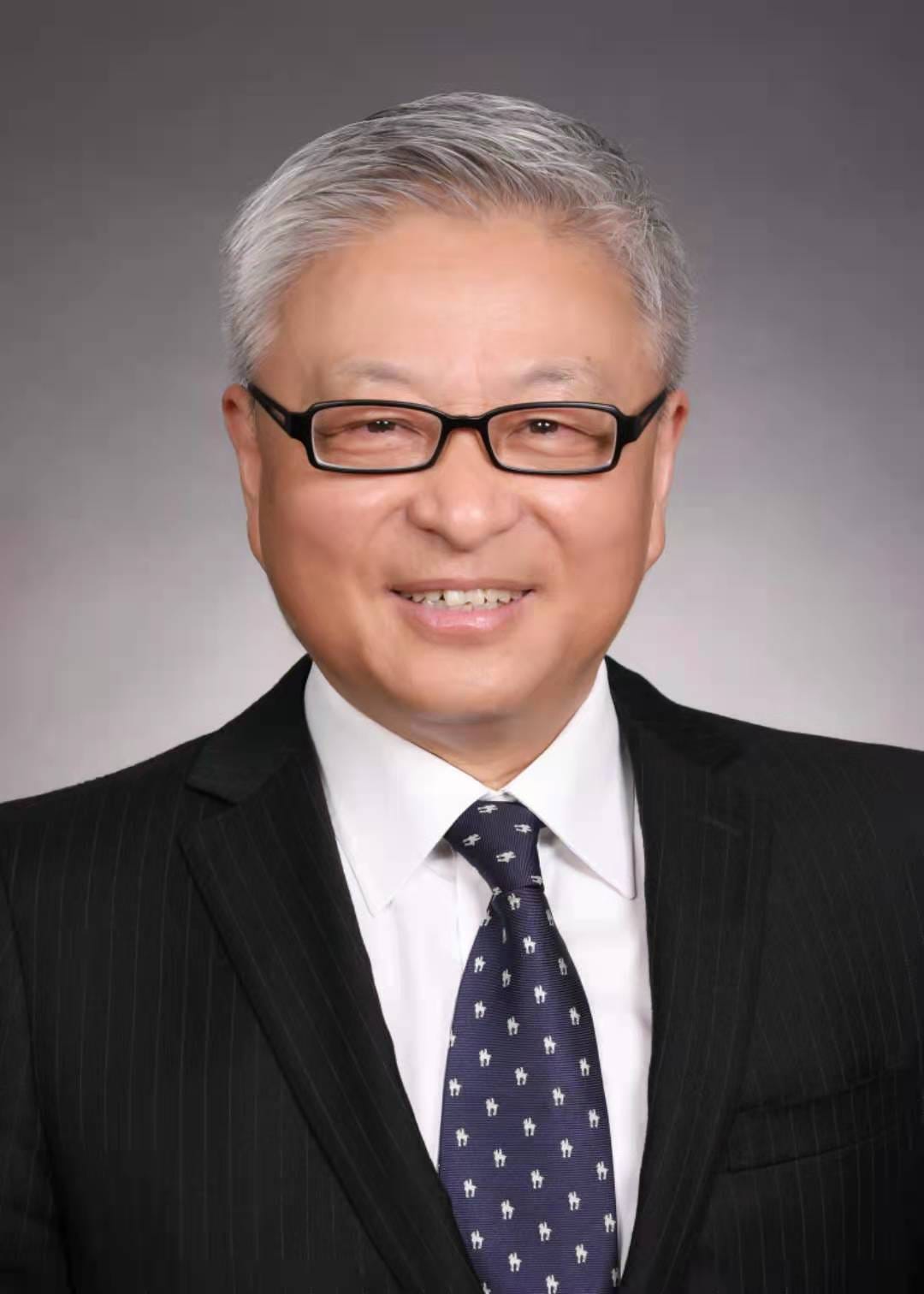
Yan Xuetong's criticism & suggestions on China's international relations studies

Yan Xuetong, Professor and Director of the Institute of International Studies at Tsinghua University, published a brief critique of China’s international relations discipline last week. Yan’s article on Chinese Social Sciences Today under the Chinese Academy of Sciences is in fact the speech he gave on July 6, 2021, at the conclusion of the
Yan Xuetong: Trajectory of China-U.S. Relations in New International Order

China announced today (Friday, June 30) that Vice President Han Zheng will attend the opening ceremony of the 11th World Peace Forum and deliver a keynote speech to the forum on July 2. The forum will be held at Tsinghua University with this year’s theme being “Stabilizing an Unstable World through Consensus and Cooperation.”

Yan Xuetong on Blinken's China visit, Taiwan, the war in Ukraine, etc.

Yan Xuetong, Director of The Institute of International Studies, Tsinghua University is one of China’s preeminent scholars on international relations. Every July, his institute organizes the World Peace Forum, the first high-level international security forum initiated by a Chinese institution.
Yan's argument is, at its core, a program of cognitive hygiene, and on its own terms it is hard to fault. He is right that stance has colonized fact—that the reflexive "let's set the facts aside and discuss our position first" produces analysts who hold views they cannot ground—and right that the digital environment manufactures exactly the cognitive distortion and information-cocoon effect he names. His three correctives are sound and, in their modesty, almost unfashionable: privilege real-name, sourced scholarship over anonymous opinion; refuse to let popularity substitute for truth (三人成虎); and prefer vivid, eyewitness testimony to the tidied-up written record. His case studies are well chosen—that Biden's multilateralism strained Beijing more than Trump's unilateralism, that the post–Cold War wars ran as often within civilizations as between them, quietly puncturing Huntington. As preventive medicine for the student's mind—cleaning the lens before observation begins—this is unimpeachable.
But notice that Yan's own justification is medical, and medicine does not study the body to inventory its molecules; it studies pathology to anticipate the catastrophic failure of the organism. Seen that way, his reductionism—stripping out influencers, pundits, false idols—is necessary but insufficient: it polishes the instrument while leaving the true object out of focus. The recurring subject of international life is not a soluble puzzle of causes and effects to be accurately enumerated, but the periodic eruption of collective violence and the dissolution of the commons. So one might trade the Thucydides Trap—that neat, almost actuarial mechanism of power transition—for the Bacchae: the thin civic skin stretched over Dionysian frenzy, the polis that ends with Agave cradling the head of the son she has torn apart, certain she is carrying home a lion. Strategic studies is already the masked code for precisely this; it marks the route to the cliff and optimizes the descent. A discipline honest about its object would assume the bloodletting recurs, and build its science around charting and managing that recurrence rather than around the consoling fiction that fact-discipline alone can avert it.
And the witnesses to this are not scarce. Thucydides' durable lesson is not the "Trap"—a modern coinage—but Corcyra, where civil war made words change their meaning and every restraint dissolved; he was diagnosing stasis, the degeneration of the commons itself. Hobbes wrote the war of all against all with the English Civil War at his back, and called the life it yields nasty, brutish, and short. Ibn Khaldun, who buried his parents in the Black Death and watched Maghrebi dynasties rot on a roughly three-generation clock, located the engine in the rise and exhaustion of asabiyya. The Chinese tradition needs no Western tutor here: 天下大势,分久必合,合久必分—what is long united must divide—is the same admission that order is a phase and not a destination, and that the Mandate is forfeited in blood. Simone Weil, reading the Iliad on the lip of her own catastrophe, named force the real protagonist, the thing that turns a living man into a corpse while he still breathes. Yan's charge to discard falsehood is the threshold, not the room. The discipline matures not when it is finally surprised by nothing, but when it stops promising to hold off the storm and learns instead to read its rhythm.
Interesting! I often think that IR is one of the worst disciplines, tending to exacerbate conflict and rivalry rather than promote peace and development. “Clash of civilisations” and the “Thucydides Trap” are examples of ideas that, on its face, don’t necessarily foster conflicts but often interpreted in ways that legitimise conflict.