


Something unusual has been happening in the cross-Strait debate over the past few weeks.
On 29 August, Ci-Ze Li, an associate professor at National Changhua University of Education in Taiwan, published the first of three essays on the mainland WeChat blog Zhengdangshi (正当石), asking a question rarely discussed seriously in Taiwan: if cross-Strait unification were actually negotiated under “One Country, Two Systems”, what should Taiwan demand?
It is not clear who runs Zhengdangshi. The blog has become a platform for a series of exchanges on the concrete meaning of a “One Country, Two Systems” Taiwan solution, including contributions from both sides of the Strait. Given the political sensitivity of the subject and the unusually wide latitude of the discussion, it is difficult to regard this particular mainland setting as incidental. But there is no publicly available evidence establishing who is behind the account or what institutional connections, if any, it has.
Li’s answer is far removed from what many outsiders would normally associate with “One Country, Two Systems”. He proposes that Taiwan retain democratic elections, final judicial authority, extensive fiscal and economic autonomy, a locally controlled defence force and, at least in the early stages, no permanent PLA deployment. He also proposes legal and constitutional mechanisms intended to prevent Beijing from later reducing Taiwan’s autonomy without Taiwan’s consent.
He is also bluntly critical of Hong Kong’s experience. Rather than treating Hong Kong as a model for Taiwan, Li argues that Taiwan would need much stronger safeguards precisely to avoid what he sees as the problems exposed by Hong Kong’s implementation of “One Country, Two Systems”.
Then the discussion moved beyond Zhengdangshi.
At the mainland’s Taiwan Affairs Office’s 9 September press conference, a People’s Daily reporter specifically raised Li’s essays and the broader online discussion they had triggered.
The response welcomed the discussion but did not comment on Li’s specific proposals. Spokesperson Chen Binhua said Beijing welcomes more people in Taiwan beginning to understand and discuss the concrete content of a “Two Systems” Taiwan solution, adding that disagreement and debate in that process were normal.
Taiwan’s Mainland Affairs Council then responded.
On 10 September, Vice Chairman and spokesperson Liang Wen-chieh said he had read Li’s article and found it “quite interesting”. He pointed specifically to Li’s proposals that Taiwan retain democratic elections and final judicial authority, that mainland troops not be stationed in Taiwan, and that Taiwan retain its own self-defence capability. His conclusion was straightforward: “I think the CCP (Chinese Communist Party) would agree to none of these.”
Liang also addressed what is perhaps the central problem raised in Li’s essay: whether any institutional guarantee could actually constrain Beijing in the future. Liang argued that as long as the Communist Party maintained absolute leadership, constitutional or institutional guarantees would be unable to bind it, making attempts to obtain such guarantees, in his words, “like climbing a tree to catch a fish”.
The exchange did not end there.
At the Taiwan Affairs Office’s 16 September press conference in Beijing, another state media reporter asked: “[Taiwan’s] Mainland Affairs Council said that the mainland would agree to none of the several conditions proposed in the article. What is your comment?”
Spokesperson Zhu Fenglian did not say which of Li’s conditions Beijing would or would not accept. Instead, she again welcomed Taiwan compatriots “expressing their respective views and pooling their wisdom” to offer concrete opinions and proposals for a “Two Systems” Taiwan solution.
There is nothing particularly surprising about Beijing welcoming a Taiwan scholar willing to engage with “One Country, Two Systems”. The mainland has long wanted people in Taiwan to discuss the idea rather than reject it outright.
The much more interesting question is what “One Country, Two Systems” for Taiwan would actually mean.
The phrase is often understood through Hong Kong, by far its most prominent existing application. But Beijing has never said that Taiwan would simply be placed under the Hong Kong model. Even Hong Kong and Macao, also under “One Country, Two Systems,” do not have identical arrangements. And Beijing has consistently presented “One Country, Two Systems” for Taiwan as a broader principle rather than a ready-made institutional blueprint.
Beijing’s 2000 white paper on Taiwan, for example, explicitly said that because Beijing recognised the differences between Taiwan and Hong Kong and Macao, the content of “One Country, Two Systems” in Taiwan could be “more flexible” than in Hong Kong and Macao. The 2022 white paper again said that the specific form of a Taiwan arrangement would take Taiwan’s actual conditions into account and absorb views and proposals from both sides.
But those formulations leave an enormous space between principle and institutional design. Also, no one is sure if the 2022 white paper has replaced the 2000 one.
If the two sides ever actually negotiated a settlement under “One Country, Two Systems”, what would Beijing’s version look like? Which powers would Taiwan retain? What would be negotiable? What would Beijing regard as non-negotiable? And how far could a Taiwan arrangement differ from Hong Kong and Macao?
No one really knows.
That is what makes Li’s proposal particularly interesting. His version lies well outside what many observers would ordinarily assume Beijing might accept. It is explicitly shaped by his criticism of the Hong Kong experience and attempts to create institutional safeguards that are significantly stronger than those found in Hong Kong.
The Mainland Affairs Council has now publicly predicted that Beijing would reject the central elements of his proposal outright.
Beijing, so far, has not said whether that prediction is correct. What it has done is make the discussion visible.
But it does make the question behind Li’s essays considerably more interesting:
Would Beijing accept Taiwan on anything resembling these terms?
The article below is the first of Li’s three essays, originally published on 29 August, 2026.
—Zichen Wang
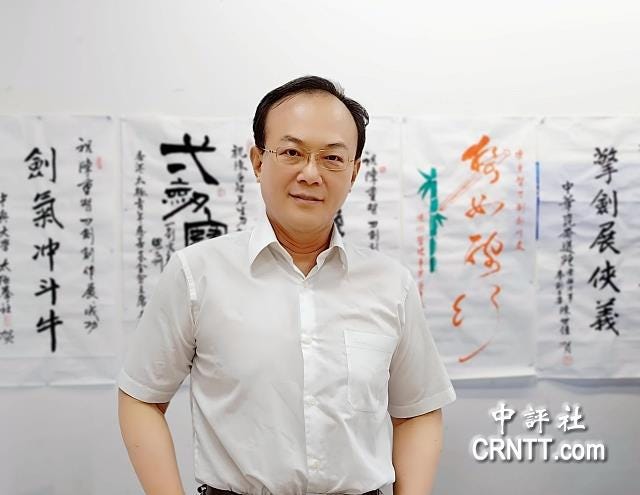
如果真要談「一國兩制台灣方案」,台灣應該談什麼?
If Taiwan Is Really Going to Discuss a “One Country, Two Systems” Solution, What Should It Ask For?
Zhengdangshi’s Editor’s note: Discussion of a “One Country, Two Systems” solution for the Taiwan question on the Zhengdangshi platform has grown increasingly substantive, and we receive letters and submissions from readers on both sides of the Strait every day. Yesterday, we were pleased to receive a submission from Dr Ci-Ze Li, an associate professor at National Changhua University of Education in Taiwan. Compared with previous reader submissions, this article offers a more systematic and comprehensive set of views and proposals on what a “One Country, Two Systems” solution for the Taiwan question might entail.
Zhengdangshi’s publication of this article does not imply full agreement with or endorsement of the views expressed in it. The precise form of any “two systems” solution would ultimately depend on the outcome of future cross-Strait consultations and negotiations. Nevertheless, Dr Li’s willingness to articulate, in the context of reunification, the demands Taiwan might put to the mainland regarding such a solution deserves full recognition and support.
In his important address on 2 January 2019, General Secretary Xi Jinping said:
“We should explore a ‘two systems’ solution to the Taiwan question and enrich practical efforts toward peaceful reunification…The principle of ‘one country, two systems’ was proposed precisely to accommodate Taiwan’s actual conditions and to safeguard the interests and wellbeing of our compatriots in Taiwan. In terms of how the principle should be carried out in Taiwan, we will fully consider Taiwan’s reality, give full consideration to the views and proposals from all walks of life on both sides and fully accommodate the interests and sentiments of our compatriots in Taiwan.”
Publishing Dr Li’s submission is itself an effort to hear views and suggestions from across the Strait. We also hope that more Taiwan compatriots will, like Dr Li, articulate their concerns and demands, so that the discussion can deepen and the “two systems” solution can more fully reflect the wishes of the people of Taiwan.
Today we publish Dr Li Qize’s submission, the eleventh in our series of letters from readers on both sides of the Strait.
What Should Taiwan Demand in a “Two Systems” Solution?
In Taiwan, “One Country, Two Systems” is almost impossible to discuss calmly. Concerns arising from Hong Kong’s experience have led many people in Taiwan to instinctively assume that even entertaining the concept amounts to accepting every condition Beijing might impose.
But serious discussion of institutional design cannot stop at simply being for or against the idea. In 2019, Xi Jinping proposed exploring a “two systems” solution for the Taiwan question and said Beijing was willing to draw on views from all walks of life on both sides and accommodate the interests and sentiments of compatriots in Taiwan. Since Beijing itself has invited such exploration, it is worth taking that invitation seriously and examining what such an arrangement might actually look like.
This article therefore conducts a conditional stress test. Suppose the two sides of the Strait were to enter peace talks on the premise of “one China, with national sovereignty exercised uniformly by the central government”. What should Taiwan demand to preserve, to the greatest extent possible, its elected government, final judicial authority, basic rights, fiscal and economic system, and capacity for self-protection? And how far might Beijing realistically be willing to compromise?
This article does not presume that the people of Taiwan accept “One Country, Two Systems”, nor does it assume that Taiwanese society has reached any consensus on the issue. It examines a more fundamental question: if Beijing is unwilling to provide Taiwan with the greatest possible safeguards for its autonomy, then the solution will not be credible to Taiwan. Only if Beijing is willing to do so can there be a genuine basis for discussion across the Strait.
The key issues are as follows.
Sovereignty and Governing Authority Must Be Discussed Separately
Accepting a “One Country, Two Systems” framework would mean that Taiwan could no longer maintain that “the Republic of China and the People’s Republic of China are two sovereign states, neither subordinate to the other”. Nor could it demand two United Nations seats, foreign troop deployments, military alliances, or a unilateral right to leave China. All of these would cross Beijing’s one-China red line; including them would be self-deception.
But unified national sovereignty does not mean that all governing authority must belong to Beijing. Taiwan’s elections, legislature, judiciary, public finances, currency, education, media, public security, and social system need not, simply because sovereignty is unified, come under Beijing’s direct control.
“One country” concerns the question of national belonging, formal diplomacy, and overall national defence. “Two systems” concerns how the people of Taiwan live, who governs them, and whether Beijing may unilaterally alter Taiwan’s institutions. Once these two questions are conflated, “two systems” exists in name only.
Taiwan’s maximum institutional demand should therefore be:
One country, one sovereignty; two systems, two legal jurisdictions.
The powers exercised directly by the central government should be expressly enumerated, while all other powers should be exercised by Taiwan.
Taiwan should retain democracy, final judicial authority within Taiwan, and a local defence capability.
Any change that diminishes Taiwan’s autonomy must require the consent of the people of Taiwan.
This would not be a confederation or “two Chinas”. It would establish, under a single national sovereignty, two highly distinct and internally coherent systems of governance.
The requirement that Beijing’s powers be “expressly enumerated” is especially important. Those powers would have to be listed one by one, while matters outside that list would remain under Taiwan’s authority. This would be the first safeguard against the unchecked expansion of Beijing’s power.
What Has Beijing Historically Offered?
The autonomy terms Beijing has historically offered Taiwan have in fact been more generous than many people remember. But the differences between successive versions are themselves significant and need to be taken seriously.
The 1993 white paper The Taiwan Question and Reunification of China offered the most specific vision of a high degree of autonomy to date. After reunification, Taiwan could exercise administrative and legislative powers, retain independent judicial power and final adjudication, and manage its own party, governmental, military, economic, and financial affairs. It could retain its own armed forces; the mainland would not station troops or administrative personnel in Taiwan; and Taiwan would enjoy a degree of authority over external affairs, including the ability to sign commercial and cultural agreements with foreign countries.
The 2000 white paper went further, stating that the form of “One Country, Two Systems” implemented in Taiwan could be more flexible than that in Hong Kong and Macao.
In 2019, Xi Jinping proposed exploring a “two systems” solution for the Taiwan question, saying its specific form “will fully consider Taiwan’s reality, give full consideration to the views and proposals from all walks of life on both sides and fully accommodate the interests and sentiments of our compatriots in Taiwan.” At the same time, he placed this within the broader requirement that “China’s sovereignty, security, and development interests are ensured.”
The 2022 white paper reaffirmed that Taiwan could maintain a social system distinct from that of the mainland and that the two systems “will develop side by side for a long time to come.” But it also more explicitly stressed that “Two Systems is subordinate to and derives from One Country; and the two are integrated under the one-China principle.” Notably, the specific provisions set out in 1993 — Taiwan retaining its own armed forces, no mainland troops being stationed there, final judicial authority remaining in Taiwan, and Taiwan managing its own party, governmental, military, economic, and financial affairs — were not individually restated in 2022.
This cannot simply be read as Beijing formally withdrawing its earlier commitments. But nor should the 1993 high-water mark be assumed to remain Beijing’s offer today.
There is, therefore, only one sensible negotiating strategy for Taiwan: ask Beijing to reaffirm, in explicit terms, the conditions it has previously set out in black and white, and convert them into legal provisions that are enforceable, backed by legal remedies, and difficult to alter unilaterally. Whether Beijing is willing to repeat what it once said — and to put it into law — would itself be the best test of sincerity.
Six Sets of Powers Are the Real Core of the Negotiation
A state’s name and flag carry dignity and historical meaning. But judged against the outer limits of what Beijing might conceivably accept, the continued existence of the “Republic of China” as a separate sovereign state title is clearly beyond what Beijing would agree to.
Taiwan might instead seek to retain a special designation, flag, calendar, and holidays during a transitional period, or preserve them as local historical and regional symbols.
The real bargaining effort should focus on six sets of powers that directly shape people’s lives.
First, the Democratic System Must Not Be Changed
Taiwan’s chief executive, legislature, and local government leaders should continue to be directly elected by Taiwan’s residents. Multi-party competition, peaceful transfers of power, and the existence of opposition parties should be fully preserved.
Beijing may require public officials to pledge allegiance to the state and to Taiwan’s autonomous constitutional order. But the determination of who qualifies as a “patriot” should not be left to the unfettered discretion of political bodies.
Only specific conduct — such as participation in violent secession, espionage, or accepting foreign military command — should constitute grounds for disqualification, and any such determination should be made by Taiwan’s courts in accordance with law.
The central government could retain a formal confirmation procedure, but confirmation must not become a veto capable of overturning the results of Taiwan’s elections. Otherwise, elections would become merely ceremonial and democracy would not truly have been preserved.
Second, Final Judicial Authority Must Remain in Taiwan
The 1993 white paper already provided that Taiwan would retain an independent judiciary and the power of final adjudication. On that basis, Taiwan should demand that, as a general rule, cases arising in Taiwan be tried and finally resolved by Taiwan’s courts. Residents should not be transferred to the mainland, and mainland public security, state security, or procuratorial authorities should not be permitted to carry out arrests, searches, or investigations unilaterally in Taiwan.
National security legislation may exist, but the crucial questions are: who makes the law, who investigates, who adjudicates, and how offences are defined.
Taiwan should enact its own national security legislation applicable within Taiwan. Offences should be clearly defined, laws should not apply retroactively, and any offence should require proof of concrete and substantial harm. Peaceful political speech, journalism, academic research, and ordinary electoral activity should not readily be classified as crimes of secession.
Pre-reunification national identities, political views, and ordinary military or government service should be covered by political reconciliation and amnesty rather than become grounds for reprisals after the institutional transition.
Third, Basic Rights Must Have a “No-Regression” Floor
Taiwan’s existing protections for freedom of speech, the press, publication, internet access, academic freedom, religion, assembly, association, privacy, labour rights, gender equality, family rights, indigenous rights, and property rights should be treated as the minimum floor as of the date reunification takes effect. Those protections could only be strengthened, not weakened.
These rights cannot simply be described as “protected in accordance with law”, because the critical question is always who makes that law.
A more reliable arrangement would be to incorporate the list of rights directly into a Taiwan Basic Law and a Taiwan Charter of Autonomy, while expressly empowering Taiwan’s courts to invalidate unlawful administrative measures on that basis.
Rights without judicial remedies are merely political declarations; and the durability of a political declaration ultimately depends on the will of whoever made it.
Fourth, No Permanent PLA Troop Deployment in the Early Stages, While Taiwan Retains a Regional Defence Capability
Military arrangements in the early stages after reunification would be a key factor in whether Taiwan could trust the overall solution.
Taiwan could undertake not to join foreign military alliances, host foreign military bases, deploy nuclear weapons, or maintain long-range offensive weapons capable of threatening the mainland.
In return, Beijing should undertake not to establish a permanent PLA troop presence in Taiwan, Penghu, Kinmen, or Matsu, and not to allow mainland administrative or national security organs to take over Taiwan’s governance.
Taiwan would retain a locally organised, funded, and commanded “Regional Defence Force” responsible for territorial waters, airspace, disaster relief, and local security.
Taiwanese forces should not be redeployed away from Taiwan without approval through Taiwan’s democratic procedures. Still less should Taiwan be required to disarm first and wait for Beijing to fulfil its commitments later.
The reasonable bargain would be: Taiwan’s armed forces do not threaten the mainland, and mainland armed forces do not enter Taiwan. Requiring Taiwan to disarm completely would amount to asking it to entrust the entire guarantee of compliance to the other side’s goodwill. No rational negotiator would accept that.
Fifth, the Currency, Taxation, and Population Systems Must Not Be Absorbed
For the people, the most immediate consequences of institutional change are often felt not through the name of the state but through money, housing, jobs, taxation, healthcare, education, and the movement of people.
Taiwan should retain the New Taiwan Dollar and its central bank, foreign exchange reserves, an independent taxation system and budget, a separate customs territory, financial regulation, its land regime, health insurance, pensions, and social welfare system.
The central government should not levy taxes directly in Taiwan or compel Taiwan to adopt the renminbi.
Mainland residents wishing to settle in Taiwan, obtain household registration, purchase land, or acquire voting rights should be subject to Taiwan’s laws and quota system. Otherwise, even if not a single word of the electoral system were changed, population and capital flows could reshape Taiwan’s social structure within a generation. That would be a quieter — and much harder to reverse — form of institutional change than formal legislation.
Fiscal and economic autonomy cannot consist merely of free movement of capital. It must also include Taiwan’s ability to regulate population flows, land, data, and public resources.
Sixth, Diplomacy May Be Unified, but Taiwan’s International Functions Must Not Be Reduced to Zero
Accepting one China would mean that Beijing would handle formal diplomatic recognition and represent the state internationally. But that does not mean Taiwan must be cut off from the world.
Taiwan should retain its overseas Taipei Economic and Cultural Representative Offices (TECRO), its travel documents, and existing visa-free arrangements. It should also be able to conclude functional agreements in areas such as trade, aviation, shipping, technology, culture, and judicial assistance. It should also continue to participate in non-sovereign capacities in organisations and events such as the WTO, APEC, and the Olympic Games.
For organisations concerned with public health and aviation safety, such as the WHO and ICAO, Taiwan should be able to participate substantively as an observer, a regional delegation, or a Taiwan component of a Chinese delegation.
The 2022 white paper already stated that, “After reunification, foreign countries can continue to develop economic and cultural relations with Taiwan. With the approval of the central government of China, they may set up consulates or other official and quasi-official institutions in Taiwan, international organisations and agencies may establish offices.”
What Taiwan should seek is to turn “central government approval” from a discretionary, case-by-case favour into an institutional process governed by clear criteria and deadlines.
The Hardest Part Is Preventing Beijing from Reneging
If one party to an agreement holds the power to amend and interpret it, as well as to adjudicate alleged breaches, then however carefully the agreement is drafted, it remains vulnerable to unilateral revision.
This is the deepest structural conundrum facing “One Country, Two Systems” — what institutional analysis calls the credible commitment problem. The question is not simply how much the other side is willing to offer today, but whether those concessions can be withdrawn in the future.
Article 31 of the Constitution of the People’s Republic of China provides that the systems instituted in special administrative regions shall be prescribed by laws enacted by the National People’s Congress (NPC).
The NPC is the highest organ of state power, while the NPC Standing Committee holds legislative interpretive authority. Under the Basic Law of Hong Kong, the NPC Standing Committee likewise retains ultimate interpretive authority, while the NPC retains the power to amend the law.
Therefore, under China’s current constitutional order, no one can honestly guarantee that a future NPC would be legally “forever unable” to alter Taiwan’s system.
The strongest protection Taiwan could realistically seek would be to make unilateral change by Beijing difficult, slow, transparent, and costly in clear political and institutional terms.
Turning Political Commitments into Four Legal Locks
The first lock: the two sides of the Strait would jointly sign an 《和平統一與台灣高度自治協議》Agreement on Peaceful Reunification and Taiwan’s High Degree of Autonomy, setting out in full the powers of the central government, Taiwan’s powers, rights protections, military arrangements, and implementation procedures.
The purpose would be to place the commitments in a text signed by both sides rather than in a unilateral declaration.
The second lock: China’s Constitution would include a dedicated chapter on Taiwan, giving Taiwan’s special status constitutional protection rather than leaving it to rest solely on ordinary legislation.
The third lock: the NPC would enact a Basic Law of Taiwan, accompanied by a list of powers reserved exclusively to the central government, a list of national laws applicable in Taiwan, and a timetable for military and administrative transition.
Ordinary legislation or administrative orders should not be permitted to alter these arrangements by implication.
The fourth lock: Taiwan would enact a Charter of Autonomy carrying forward its existing democratic, judicial, and rights-based institutions, subject to approval by the people of Taiwan.
On top of these four locks, a general rule should be established: any amendment that diminishes democratic elections, final judicial authority in Taiwan, basic rights, the commitment against permanent troop deployment in the early stages, fiscal autonomy, or the allocation of powers should require an absolute majority in Taiwan’s legislature, approval in a referendum by Taiwan’s residents, and approval by the NPC. Three keys — all would be required.
Even if the NPC Standing Committee formally retained ultimate interpretive authority, that power should be subject to procedural constraints: prior notification of Taiwan’s institutions; consultation with a Basic Law Committee composed equally of members from both sides of the Strait; public disclosure of legal reasoning; a general rule against retroactive effect; and a prohibition on creating new central powers under the guise of “interpretation”. Any interpretation that substantively changes the institutional arrangement should proceed through formal amendment and the required dual-approval process.
Reunification Cannot Happen All at Once — Compliance Must Be Phased and Reciprocal
Taiwan could not realistically accept an irreversible transfer of power on day one and then wait for Beijing to honour its promises later. In bargaining terms, that would amount to “disarming first and negotiating peace afterwards”.
A more reasonable sequence would be for Beijing first to cease military coercion, put political reconciliation measures in place, establish legal safeguards for rights, and confirm that there would be no permanent troop deployment or dispatch of mainland administrative personnel in the early stages of reunification.
Only after these commitments had been jointly verified would Taiwan gradually transfer the agreed state powers.
If a material breach occurred, a notice of breach should first be issued, followed by a 60- to 90-day cure period. A Compliance Committee composed equally of representatives from both sides would verify performance. The next uncompleted stage would automatically be suspended. Administrative arrangements already affected by the breach could be restored where possible, with compensation and renegotiation undertaken where necessary.
Such “institutional restoration” would not mean that Taiwan could unilaterally declare independence. Its purpose would be to ensure that Taiwan need not surrender all irreversible defence and governing capabilities before Beijing has performed its own obligations.
Article 7 of the Anti-Secession Law of the People’s Republic of China already recognises that cross-Strait consultations and negotiations may be conducted in steps and phases. Phased implementation would therefore constitute a serious application of a principle already recognised in existing law.
Which Demands Should Taiwan Not Expect Beijing to Accept?
Any serious attempt to define the outer limits of negotiation cannot begin with an open-ended wish list.
Taiwan must understand that Beijing would not accept the two sides of the Strait being treated as two sovereign states or members of a confederation; Taiwan retaining a UN seat, formal diplomatic relations, foreign troops, military alliances, or a unilateral right of withdrawal. Nor would Beijing accept a foreign government, the United Nations, or the International Court of Justice as the ultimate political guarantor of a reunification agreement.
Still less would it accept Taiwan’s courts overturning decisions of the NPC or Taiwan holding a permanent veto over China’s diplomacy, defence, and national security affairs.
A more plausible compromise would be to allow outside professionals to take part in technical verification on matters such as elections, finance, or personnel appointments, without internationalising cross-Strait political relations. Taiwan could also seek a substantive right of consent over measures that directly diminish its autonomy, without claiming a role in the mainland’s general internal affairs.
Serious negotiation means setting demands at the limits of what may realistically be achievable, rather than simply making political statements.
On Taiwan’s Side, a Government Signature Alone Would Not Be Enough
Even if all of this article’s hypothetical premises were accepted, Taiwan’s current law would still impose an unavoidable legal threshold.
Article 5-3 of the Act Governing Relations between the People of the Taiwan Area and the Mainland Area expressly provides that “The destruction or change of the nation’s sovereign status or the free and democratic constitutional order shall not be the subject of a negotiation or an agreement involving political issues.”
Any “One Country, Two Systems” solution for the Taiwan question therefore could not be concluded by the executive branch alone, much less under conditions of non-transparency or military coercion.
Such a solution would first require constitutional-level authorisation for negotiations, full disclosure of the agreement, and then approval by an absolute majority of the legislature and a free and informed vote of the people of Taiwan.
The vote by Taiwan’s residents would be on a specific agreement that had already been negotiated and finalised. On Beijing’s side, national-level approval would be completed through the NPC.
The result would be democratic confirmation on both sides. Any arrangement that excluded the people of Taiwan from determining their own future would lack both legitimacy and stability.
Conclusion: A Credible Commitment Is the Real Starting Point
The real test in designing and implementing a “One Country, Two Systems” solution for the Taiwan question is not whether Beijing is willing to utter the words “a high degree of autonomy”. It is whether Beijing is willing to accept institutions that constrain its own power.
If “One Country” has binding constitutional force while “Two Systems” depends entirely on the goodwill of the central government, then “One Country” is hard law, while “Two Systems” is merely a policy that can be changed at any time. Such an arrangement could not command the long-term trust of Taiwanese society. Hong Kong’s experience has already shown why.
Conversely, if Beijing were prepared to accept democratic approval by the people of Taiwan, final judicial authority in Taiwan, no permanent PLA deployment in Taiwan, Taiwan retaining a regional defence capability, a no-regression guarantee for basic rights, and constraints on the central government’s ability to arbitrarily change Taiwan’s institutions through ordinary legislation or ad hoc legal interpretation, then a “Two Systems” solution for the Taiwan question could move beyond a political slogan and become an institutional arrangement that could be tested clause by clause.
In such negotiations, Taiwan could accept unified national sovereignty, but it could not allow democracy, the rule of law, and its capacity for self-protection all to disappear at once.
Beijing’s sincerity should therefore be measured not only by how much autonomy it is prepared to grant Taiwan, but also by whether it is willing to constrain its own future ability to take that autonomy back by force.
Equally important, peace cannot be merely a promise for after reunification. It must be sustained throughout the entire process of negotiation, ratification, and implementation.
A peaceful reunification genuinely capable of avoiding war, protecting the people, and preserving differences must follow the principle of “peace through integration, and unification through peace”. Institutional commitments must become credible before any political choice can become viable.
Otherwise, reunification without credible commitments is not integration but absorption; and peace without the consent of the people is not genuine peace, but only temporary submission.
Record of the Press Conference of the Taiwan Affairs Office 2026-09-09

The Taiwan Strait is widely regarded as one of the world’s most dangerous geopolitical flashpoints. Within China’s central party-state apparatus, the Taiwan Work Office of the Communist Party of China Central Committee and the Taiwan Affairs Office of the State Council operate as “one
Peng Weixue on Cross-Strait Situation

On 7 August 2026, the 12th Cross-Strait Think Tank Academic Forum, themed “Changing Times and the Future of Cross-Strait Relations,” was held in Wuxi, Jiangsu Province. The forum was jointly hosted by the Institute of Taiwan Studies at the Chinese Academy of Social Sciences (CASS), the
Surveying The U.S. Debate on Taiwan Policy

Two Chinese scholars have traced the shifting balance in U.S. strategic thinking on Taiwan since 2020: under Biden, the resurgence of arguments for a clearer U.S. commitment to defend Taiwan alongside persistent support for strategic ambiguity and restraint; and under Trump, the growing influence of gradual Taiwan-abandonment arguments. The authors ulti…
Record of the Press Conference of the Taiwan Affairs Office 2026-09-02

The Taiwan Strait is widely regarded as one of the world’s most dangerous geopolitical flashpoints. Within China’s central party-state apparatus, the Taiwan Work Office of the Communist Party of China Central Committee and the Taiwan Affairs Office of the State Council operate as “one


Great article! I think it’s well past time to have the conversation.
The question is not…can you trust China? But can you trust the United States? A small political entity like Taiwan cannot be without a sponsor in the coming multipolar.
As it is, our ability to secure any deal is a wasting asset.
In terms of reneging, it’s true there is no higher power for Taiwan to appeal to if Beijing should renege.
Therefore, Taiwan and Beijing should work out a deal that makes sense for both.
I’ve had a mainland friend say to me, the best thing Taiwan can do for its continued autonomy is to be really well-governed. Giving Beijing no reason to interfere is the best security guarantee.
I don’t believe in the comic book evil version of Beijing. I really don’t think they mind if Taiwan has free speech or gay pride parades. The amount of control appropriate for 1.4 billion may be higher than for 23 million. However, we should have good discussion prior to a deal to find out where Beijings red lines are. Probably no succession, no chaos and of course no foreign collusion. If we can do that Beijing will be happy enough to let the cow eat the grass.
What does 國 really mean? Country is a very loose translation.