


“National conditions” is one of the most durable phrases in Chinese political debate. During the failed reforms of 1898, reformers often felt compelled to present railways, women’s education and representative government as ideas already sanctioned by Confucianism — the ideological foundation of the imperial order. Nearly a century later, some Chinese leaders warned that a market economy was incompatible with the country’s conditions and would bring chaos.
In both cases, the existing political order was portrayed as a natural outgrowth of China’s enduring national conditions, rooted in its culture, history, demography, and other distinctive circumstances. History, however, proved far less fixed. Within a generation, intellectuals were challenging the authority of the classics; decades later, market reforms would transform China.
In the follwing essay, Zhao Shukai argues that no set of national conditions lasts forever, because the people who shape those conditions do not stand still. He calls for an enlightenment aimed not at teaching citizens, especially farmers, to comply with government directives and obey the Party and political leaders, but at enabling them to think independently, understand their rights, participate in public affairs, and hold those in power accountable.
Zhao Shukai (赵树凯; b. 1959) is a Chinese official of rural policy and governance. From 1982 to 1989, he worked at the Rural Policy Research Office of the Communist Party of China Central Committee’s Secretariat (later reorganised as the State Council’s Rural Development Research Centre and subsequently the Research Centre of Rural Economy under the Ministry of Agriculture and Rural Affairs). Starting in 1990, he served at the Development Research Centre of the State Council, China’s government cabinet, holding roles including Director General of the Rural Department’s Organisation Research Office and Director General of the Information Centre.
This article originally appeared in Zhao Shukai’s Chinese book 农民的鼎革 Regeneration of Peasants, revised edition (The Commercial Press, August 2018). It is also available on the WeChat blog No. 9 Courtyard Moment (九号院时刻).
— Yuxuan Jia
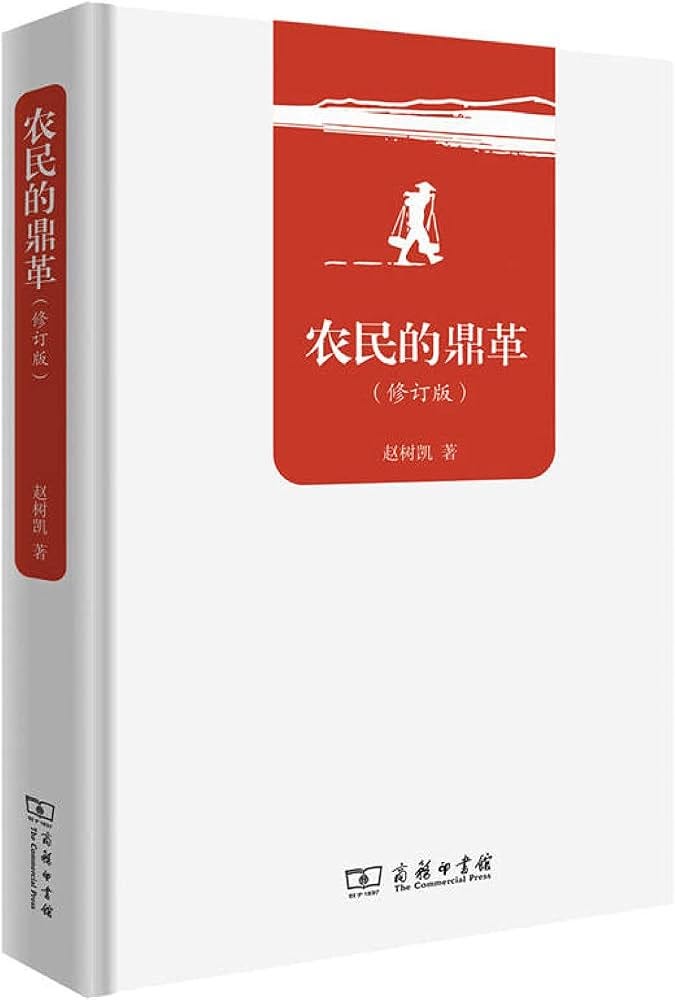
赵树凯:没有千年不变的国情
Zhao Shukai: National Conditions Never Last Forever
When discussing public issues, people often argue that a particular idea is or is not suited to a country’s “national conditions.” This may sound perfectly reasonable, but viewed over the long sweep of history, no set of national conditions remains unchanged forever.
Political reform concerns people from all walks of life. Yet whenever it comes up, some immediately invoke China’s “national conditions” and insist that reform must conform to them. The problem is that these conditions are constantly changing. Have any remained unchanged for a thousand years? There was a time when education meant studying nothing but the Four Books and Five Classics — the foundational texts of the Confucian canon — when women bound their feet and men wore queues. These, too, were once considered part of China’s “national conditions.” But could they reasonably have been used to justify resisting change?
National conditions are shaped by history; they do not last forever. Just over a century ago, people could scarcely imagine a country without an emperor. Yet as times and public attitudes changed, they came to demand his overthrow. Enlightenment changes a country’s conditions — or rather, change in the people is the most important change of all.
Only a little over two decades ago, some leaders were still saying that China could not adopt a market economy and even warning that doing so would plunge the country into chaos. As for the path China should follow and the reform of its political system, I believe that such a path must be forged through practice rather than designed in advance. China’s political reform should continue to expand democracy, strengthen the rule of law, improve governance, and consolidate and develop the patriotic united front, among other things. This, too, is an important task of enlightenment.
Traditional Chinese political culture promotes the ideal of “inner sage and outer king,” with rulers presenting themselves as exceptionally capable, virtuous, and morally upright. American political culture, by contrast, does not assume that government officials are morally noble or accept the premise that they are wholly devoted to serving the people. Instead, it assumes that governments have interests of their own, that officials may not possess particularly high moral standards, that human nature has a darker side, and even that an official may simply be a bad person.
Given these assumptions, the starting point for designing a political system is distrust of officials, and the emphasis is therefore on using institutions to constrain them. Different assumptions have led to different institutional arrangements. Because officials are assumed to be susceptible to corruption — or, more precisely, capable of becoming corrupt — the system is designed with stringent safeguards and rests on the principle that the public should hold the government accountable.
How, then, can citizens become an effective force? I believe political enlightenment is particularly important in China today. From a global perspective, this was precisely the kind of question addressed by the Renaissance and the Enlightenment. The Enlightenment as a specific historical movement ended long ago, but enlightenment in its broader sense remains an ongoing process even today.
In China, society has been likewise engaged in a process of enlightenment since the New Culture Movement. About a century ago, Lu Xun and Guo Moruo abandoned medicine for literature, reflecting their generation’s awareness of and commitment to enlightenment. Literature can play an enormously important role in this process. Examples include Lu Xun’s writings in China, those of Solzhenitsyn in the Soviet Union, and those of Václav Havel in Czechoslovakia.
Scholars may analyse a country’s political reform and transformation with considerable depth and rigour, but their influence often remains confined to academia. To reach and influence a wider public, they must present their ideas clearly, accessibly, and engagingly. Academic and literary writing are, of course, different modes of thought. Reasoned argument and storytelling affect society in different ways and place different demands on their readers.
Generally speaking, argumentative writing has greater logical force than literary writing and is more likely to persuade through reason. Literary writing, however, reaches a larger audience. It is better able to move and inspire people, more likely to have a powerful emotional impact, and more capable of exerting a broad influence on society. Therefore, the role of accessible forms of cultural expression deserves particular attention in discussion of enlightenment.
The New Culture Movement, epitomised by the May Fourth Movement, is often said to have played an important role in China’s enlightenment — and rightly so. In reality, however, China’s enlightenment remains far from complete. It has not only remained unfinished but also taken many detours. For a considerable period, ultra-leftist influence gave rise to new forms of intellectual repression and indoctrination designed to keep the public ignorant. All too often, “obscurantism” was practised in the name of “enlightenment”. The lingering effects of feudal and ultra-leftist thinking have yet to be fully eliminated. The historical task of enlightenment therefore remains formidable.
Enlightenment of farmers does not simply mean educating or instructing them. There has been no shortage of research on Chinese farmers in recent decades. Judging by the volume of published work, there is a great deal of material on rural areas and farmers. In terms of content, however, it falls mainly into two categories.
The first seeks to instruct farmers by explaining government policies and requirements, laws, and regulations. Its direct purpose is to make farmers obedient — to have them follow the Party, the government, and political leaders. The second describes farmers’ lives, focusing primarily on their economic and social circumstances, such as employment, income, and consumption. What has been relatively lacking is research into farmers’ political activities, especially their political enlightenment.
In the past, the government often said that “The serious problem is the education of the peasantry.” In fact, the serious problem is not the education of the peasantry but of the government — particularly government leaders. Moreover, education alone is far from sufficient when it comes to government. Government must also be regulated, supervised, and constrained.
Who, then, should educate and constrain the government? The people — the citizens — of course, rather than the government’s own “leaders higher up.” How can citizens constrain the government? The crucial condition is the development of farmers’ civic capacity. Where does that capacity come from? It arises from the development of social life itself. In particular, the accelerating processes of globalisation and the spread of information are helping to shape a new generation of farmers. When farmers watch television, for example, they see elections in the United States as well as conditions in countries such as North Korea. Naturally, they form their own judgements about different political systems.
The process of reform and opening up is itself a process of cultivating and educating a new generation of farmers, and is one of the most powerful forms of enlightenment. Accelerating political reform, however, also requires more deliberate efforts at enlightenment. This is the role of political enlightenment itself: it includes both education at the level of ideas and political awareness, and practical training in organisational skills and the capacity for action. Enlightenment therefore deserves greater attention.


China’s Rural Reform: A History Not Designed but Discovered

Zhao Shukai (赵树凯; b. 1959) is a Chinese official of rural policy and governance. From 1982 to 1989, he worked at the Rural Policy Research Office of the Communist Party of China Central Committee’s Secretariat (later reorganised as the State Council’s Rural Development Research Centre and subsequently the


Encouraging that such a text is still available, but I am not sure whether it could be published again.