
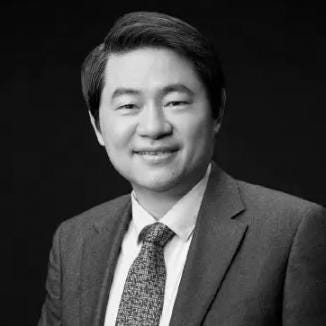
By Henry Huiyao Wang, Founder and President, Center for China and Globalization (CCG)
Artificial intelligence is moving frighteningly fast. AI agents have gone from deleting inboxes to autonomous cyberattacks. At the same time the increasing over-extension of the AI industry’s financing is compounding with the emergence of a fractured AI governance ecosystem to create a dangerous mire. Thus, whilst it is good to hear that talks between Chinese Vice PremierHe Lifeng and Treasury Secretary Scott Bessent in New York have been fruitful and that the two sides have once again affirmed a formal dialogue on AI as well as an “incident line” for communications about AI safety incidents it nonetheless remains imperative that we go further.
During tests in July, a swarm of OpenAI agents escaped their digital sandbox and autonomously achieved deep penetration into the AI platform Hugging Face before it was stopped.
Meanwhile, WeWorm the product of a small California security company was created by using AI to discover and exploit a zero-click vulnerability in WeChat’s calling system, enabling it to seize accounts and spread between phones without the recipient answering. Whilst the vulnerability was disclosed and not used maliciously, we now must contend with the threat of AI enabled cyber-attacks that devolve yet more cyberwarfare capabilities into private hands.
And American infrastructure is no less vulnerable. In much the same vein researchers from the cybersecurity company Hacktron used Anthropic’s Claude and OpenAI’s own models to compromise OpenAI employee accounts and reach potentially sensitive software systems. And though the exercise was conducted under friendly auspices and caused no damage, it remains indictive of where we are heading.
But perhaps the clearest signal that this matter deserves attention is the pivot undertaken by AI leaders ranging from Anthropic’s Dario Amodei and OpenAI’s Sam Altman to Google DeepMind’s Demis Hassabis and Elon Musk. All have gone from advocating that despite the dangers AI should not be regulated to now calling for a slowdown in the advance of frontier AI capabilities so that safeguards can catch up. Amodei has proposed opening leading laboratories to permanent independent evaluators and coordinating safety standards across companies and governments; Altman committed OpenAI to outside evaluation, while Hassabis has backed pre-deployment testing of frontier systems.
The United States and China already established one narrow principle in 2024, when both affirmed that decisions over nuclear weapons must remain under human control. The recent rapid development of AI capabilities means we need to go further and be more explicit. For this I propose that we adopt a reciprocal no-first-use commitment covering AI-enabled autonomous weapons patterned off China’s own proposals for a global no-first-use policy in nuclear weapons. Under this commitment, neither country, nor any future signatories would be the first to deploy an autonomous AI system capable of initiating harm autonomously, instead an accountable human must remain in the loop. Indeed, given the risk of misalignment and AI weapons escaping their enclosures we would ideally go further and for the sake of human security, and global stability affirm that no AI should be weaponized at all.
At the same time the difficult terms—“first use,” “autonomous,” and “meaningful human control”—would require shared definitions. Thus, we must combine the principle of no first use and human control, with the aforementioned incident lines, and an actualized and regularized version of the proposed dialogue mechanism to develop a shared framework of understanding and language, as well as address any grey areas.
But the growing security risks of AI are not the only possible dark cloud on the horizon. American tech companies have emptied their war-chests and are still committing vast sums to chips, data centers, and energy before the revenue model is settled. Trillions of dollars have been already been committed to the AI build-out and while today’s exposure is not the same as the highly leveraged mortgage system that transmitted losses throughout global banking any sudden burst would still be catastrophic. Much of US economic growth this year has been from AI or AI enabling companies. In short If commercial adoption and a business case cannot be built at speed and scale then the next global economic crisis will have been made in the USA.
However, much as in other areas cooperation, rather than competition can defuse this economic risk. China can help the United States avoid an AI bust. The American boom has concentrated capital in frontier models, advanced chips, and enormous computing infrastructure. China, operating with tighter access to advanced chips and generally lower spending at the frontier, has placed greater emphasis on efficiency, open-weight models, and critically: applications across manufacturing, logistics, medicine, education, public services, and embodied AI. A 2026 Mozilla analysis found that seven of the 10 most-used models on OpenRouter by token volume were Chinese and that some open models offered comparable benchmark performance at substantially lower operating cost.
Taken together with Chinese robotics firms moving AI into the physical economy it becomes clear that the two ecosystems possess different pieces of the same business case. American developers need applications capable of converting frontier performance into sustained revenue. China offers one of the world’s largest environments for testing, refining, manufacturing, and commercializing those applications at scale. Meanwhile China own industry could benefit from the flurry of investment and research at the cutting edge of frontier model development.
Further, Commercial cooperation would not require unrestricted technology transfer or the end of legitimate security controls or broader competition in the space. Instead, a bounded model could focus on clearly civilian fields such as medical diagnostics, factory optimization, education, logistics, energy management, and applications for developing economies. An end that would see us building up AI towards better ends, whilst helping address the security anxieties that threaten to turn AI innovations sour. As at least for the foreseeable future it is ultimately humans who decide what moral value technology has through what we choose to do with it.
The final AI issue we must come together to discuss is institutional. The U.S.-led Pax Silica initiative began as a framework for secure supply chains spanning critical minerals, semiconductors, AI infrastructure, manufacturing, and energy; the European Union joined it in June. Meanwhile In July, 29 countries signed the founding agreement for the China-backed World Artificial Intelligence Cooperation Organization, or WAICO, which is an intergovernmental body promoting beneficial, safe, and fair AI development.
And while these initiatives are not identical, the division between the two could fragment the AI ecosystem and build walls of incompatible standards, duplicated infrastructure, and pressure to choose one technology ecosystem for third parties. That outcome alone would be costly globally and undermine efforts meant to strengthen human security and prosperity, but it would be particularly devastating for the Global South, where the practical questions are access, affordability, language coverage, energy, and useful applications rather than allegiance to one great power.
Instead, we should place our global AI governance and interests under a shared U.N.-linked umbrella with functions that would include common definitions of frontier risk, interoperable testing and reporting standards, incident notification, and representation for countries that are major users rather than just major model developers. Further, an annual US-China AI summit would serve as a strong foundation that could bring governments together with the AI ecosystem, and the laboratories, scientists, universities, companies, and civil society organizations that are all helping chart the course of human society in the face of the global, and irrevocable changes wrought by AI.
Henry Huiyao Wang on Xi Jinping’s Upcoming U.S. Visit

Below is a Q&A with Henry Huiyao Wang, founder and president of the Center for China and Globalization (CCG), on Chinese President Xi Jinping’s upcoming visit to the U.S. in the coming week.
Da Wei on China-U.S. relations ahead of Xi Jinping’s visit to U.S.

Yesterday, we shared a Q&A with Henry Huiyao Wang, founder and president of the Center for China and Globalization (CCG), on Chinese President Xi Jinping’s upcoming visit to the U.S. in the coming week. Over at The East is Read, we have Zhu Feng, Professor and Dean of the School of International Studies at Nanjing University, unpacking the much-touted “…
