


Xue Lan, a Cheung Kong Chair Distinguished Professor, Dean of Schwarzman College, and Dean of the Institute for AI International Governance at Tsinghua University, is one of China’s leading scholars on AI governance. He also serves as Chair of China’s National Expert Committee on AI Governance and as a member of the United Nations Committee of Experts on Public Administration (CEPA). From 2000 to 2018, he served as Associate Dean, Executive Associate Dean, and Dean of the School of Public Policy and Management at Tsinghua University.
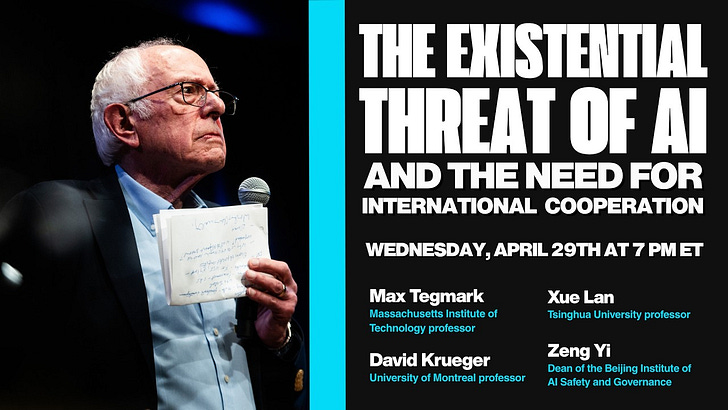
In May 2026, Xue joined a Capitol Hill discussion convened by U.S. Senator Bernie Sanders on the risks and governance of advanced AI.

Speaking at Tsinghua University’s 2026 Academic Conference on Digital Economy Development and Governance, Xue argued that AI’s economic and social impact will depend not only on technological capabilities, but also on the sociotechnical systems, institutions, culture, and governance structures built around it. He also highlighted China’s generally positive public attitude toward AI as an advantage in its adoption and development.
Xue’s speech was published on the official WeChat blog of the Institute for Service Economy and Digital Governance, Tsinghua University, on 30 July. He kindly reviewed and revised the following translation.

人工智能技术的社会应用——治理挑战
The Social Application of Artificial Intelligence:
Governance Challenges
I. Introduction
It is a great pleasure to join today’s conference. Today, I would like to discuss how artificial intelligence can be more effectively applied in society. AI has advanced very rapidly in recent years. Following large language models, we have seen the emergence of embodied AI, and many are calling this the inaugural year of embodied intelligence. From a technical perspective, AI has developed at a breathtaking pace over the past two years.
By comparison, the development of the sociotechnical systems has been much slower. It’s fair to say that AI has entered its second half of development, making it increasingly urgent to build the sociotechnical systems required for its application in society. That is the issue I will discuss today.
II. The Development of Artificial Intelligence: Does Technology Determine Everything?
Much of the current discussion about artificial intelligence focuses on large language models. Their capabilities have improved extraordinarily quickly: from ChatGPT to Gemini to Mythos, each generation has been more powerful than the last. Intentionally or otherwise, this trend has fostered the belief that the continuous optimization of algorithms, iteration of models, and expansion of computing power will naturally drive industrial upgrading, organizational transformation, and social progress.
Some now predict that artificial general intelligence (AGI) could be achieved within the next two or three years, making trillions of dollars in economic growth inevitable. The implicit assumption behind these claims is that technology determines everything: as long as frontier models continue to advance, their social value will inevitably grow in tandem.
Yet a closer examination of AI’s actual impact across industries reveals a very different picture. Outside a selected number of sectors, there has been much anticipation but little tangible progress. Successful large-scale adoption remains the exception. Analyses from consulting firms tell the same story: many companies have invested heavily in AI applications, only to see returns fall far short of expectations.
The reasons behind this are complex. Take healthcare for example. Several years ago, reports already suggested that AI systems could interpret medical images more accurately than physicians. But when human lives are at stake, taking ultimate responsibility remains a difficult question.
Autonomous driving is another example. A few years ago, during a research trip to the United States on AI governance, we spoke with the California Public Utilities Commission. Its representatives said that autonomous driving was technically ready for real-world deployment and particularly well suited to long-haul highway trucking, since routes and road conditions are relatively straightforward. Driver fatigue is also common in long-haul transport, so autonomous driving could significantly reduce traffic accidents. Even so, they did not expect the technology to be adopted quickly, because truck drivers’ unions strongly opposed its entry into the long-haul freight industry.
These examples reveal a substantial gap between expectations for technological development and its actual application in society, posing a major challenge to technological determinism. If the main task in the first half of AI development was technological advancement, then the second half is about its application. Technological progress is no longer the only core issue.
For society to use AI more effectively, the key task is to create a new sociotechnical system: an ecosystem in which technology and society are deeply integrated.
From the perspective of technological determinism, technological progress follows a relatively independent path, while social organizations, institutional arrangements, and cultural beliefs have to passively accommodate and adapt to it. Wherever technology goes, society follows; the logic of technology is the fundamental determining force.
Although this remains an important school of thought in the field of Science and Technology Studies (STS), a growing number of scholars recognize that technological innovation and social change do not have such a simple, linear causal relationship. This is especially true of a technology as far-reaching as AI. Its development must be understood within a broader social context and examined in relation to organizations, institutions, culture, and other social factors.
III. Research in the STS and the Classical Case of the Automobile Society
STS has long offered critical reflections on technological determinism, recognizing the limitations of viewing technology’s influence on society as one-directional. Newer theories, including the social construction of technology, large technical systems theory, and actor-network theory, emphasize that technology is a sociotechnical phenomenon embedded in complex social relations. More recently, scholars have advanced the concept of coevolution, arguing that technology and society shape and adapt to each other. This reciprocal relationship has been studied extensively at the micro, meso, and macro levels.
At the micro level, for example, the focus can be placed on how technology transforms organizations and reshapes their structures. In turn, organizational change determines whether technology can truly fulfil its potential; organizations also shape technology. When AI is applied in specific sectors, companies in different fields steer its development in different directions. Google, for instance, may focus heavily on information retrieval, while financial institutions place particular emphasis on risk management. Each type of company bears the imprint of its own field, including its specific organizational needs, and therefore exerts selective pressure on the direction of technological development.
At the macro level, institutions and culture are also crucial in redefining the boundaries of technology. The European Union’s General Data Protection Regulation (GDPR) sets strict external limits on data availability and use, and the regulation itself reflects the EU’s particular cultural and social environment.
Taken as a whole, the evolution of the automobile in human society provides perhaps the best comprehensive example of interaction between technology and society. The automobile went from a mechanical invention to a driving force that reshaped society as a whole in the 20th century, but the path between those two points was far from straightforward.
The first phase spanned the first one or two decades following Karl Benz’s development of his prototype internal-combustion automobile. During this period, the technology essentially developed in isolation rather than functioning as a transportation system in any social sense. Cars primarily served as status symbols for a small number of wealthy people, for whom driving was a novel and entertaining experience. They were not yet adopted by the public, and horse-drawn carriages remained the dominant means of transportation. The social systems required to support automotive technology had not yet fully developed.
The second phase, roughly from 1910 to 1945, was when a sociotechnical system for the automobile took shape and cars truly entered society. Many factors contributed to this process. First, Ford introduced the Model T in 1913 and reduced the price of a car from $850 to $300. Cars thus became affordable for many ordinary middle-class families, greatly expanding car ownership.
Second, supporting social institutions began to emerge, starting with the road system. Existing roads had been built for horse-drawn carriages and were unsuitable for automobiles. To support the widespread adoption of automobiles, governments began systematically developing road infrastructure. In 1916, the United States began developing highways and establishing a modern road transportation system. Cars could then travel much farther, creating demand for refueling on long-distance journeys. Networks of gas stations and related services emerged in response.
As these supporting systems improved, they stimulated further demand for cars. Many families could not afford to buy a car outright and needed financing, so financial and insurance services followed. A road transportation system could not be sustained if drivers lacked the necessary skills and accidents occurred constantly. A traffic management system therefore emerged, including driver’s licenses, traffic lights, traffic laws, and other institutional arrangements. During this phase, interaction between automotive technology and the social system promoted the adoption and diffusion of cars while also improving the associated physical and institutional infrastructure.
The third phase marked a period of social restructuring, during which the automobile profoundly reshaped the spatial organization of society. The United States provides a particularly clear example. After World War II, car ownership became widespread among American households, facilitating suburbanization. Large numbers of families moved to the suburbs and commuted by car to jobs in city centers. Commercial patterns were transformed as well, with integrated shopping malls and large supermarket chains emerging in suburban areas. This urban-suburban spatial structure was largely shaped by widespread household car ownership.
Because automobiles require large quantities of fuel, many countries have to import oil from resource-rich nations, giving rise to a global geopolitical order shaped by the production, transportation, and consumption of petroleum. By this third phase, the automobile had profoundly influenced not only the spatial organization of society but also the international political order.
This analysis shows that the automobile’s development was not simply a case of technological progress driving social change. Rather, the automobile became closely connected to, and interacted deeply with, social culture, industrial networks, national spatial patterns, and the international political landscape. Together, these relationships formed a sociotechnical system centered on the automobile.
IV. Building a Sociotechnical System Centered on Artificial Intelligence
By comparison, the key challenge today is how to build a new sociotechnical system centered around AI. Relative to the automobile era, AI is still at an early stage of development. Today’s large language models may be comparable to the engines of the early automobile era. The question facing AI is not only whether the technology itself is mature, but, more importantly, whether a complete supporting sociotechnical system has been established, just as automobiles required roads, traffic rules, a driving culture, and other forms of physical and institutional infrastructure.
Drawing on a range of perspectives, a sociotechnical system capable of supporting AI development requires three interlocking forms of physical and institutional infrastructure: physical infrastructure; institutions and governance structures; and organizational and cultural systems.
Some scholars call this new type of system an “intelligent sociotechnical system” (iSTS), distinguishing it from traditional sociotechnical systems. In the age of intelligence, intelligent machine agents are no longer merely auxiliary tools but collaborative members of human-machine teams. Systems must cope with dynamic technological environments and uncertainty in both their internal and external ecosystems. The design objective has likewise shifted from controlling change to responding to it with agility and resilience.
The physical infrastructure of the AI era is comparable to the highway network of the automobile era. Countries currently place the greatest emphasis on computing infrastructure. Both the United States and China, among others, are investing heavily in this area and building intelligent computing centers. At the industry level, AI infrastructure now comprises a multilayered market encompassing chips, servers, data centers, and more.
At the bottom of this technology stack are semiconductor chips: accelerators such as GPUs, CPUs, NPUs, and TPUs serve as AI’s computational engines. Companies including Intel, AMD, and NVIDIA, as well as Chinese firms such as Huawei and Cambricon, compete at this layer.
Above the chip layer are AI servers and data centers. Hyperscale data centers have become the main sites for training large models and must support high-density rack configurations, advanced cooling systems, and ultra-high-speed interconnection networks.
Data storage centers are another essential component. They are no longer merely data warehouses, but core engines and data hubs that drive AI’s evolution. The quality of AI training and inference depends heavily on the quality, representativeness, and reliability of the underlying data. Sources include the open internet, proprietary corporate databases, licensed content repositories, scientific datasets, public records, and artificially generated synthetic data.
Network infrastructure is also indispensable to AI development. AI workloads rely on high-speed network architectures to connect computing and storage resources, while low-latency, high-throughput fiber-optic and mobile communication networks are critical to deploying real-time AI applications.
Energy supply is equally important. Data center locations increasingly depend on reliable access to electricity, and some hyperscale providers have begun investing directly in new generation capacity to ensure that their computing infrastructure can operate.
Institutional infrastructure includes the various systems needed for AI development and application. These cover data circulation and ownership, liability when systems fail (as in healthcare or autonomous driving), and safety arrangements such as AI auditing and certification, regulatory sandboxes, and dynamic governance mechanisms. Together, these institutions form a framework for governing social responsibility. They embed social responsibility throughout the system’s lifecycle, from design requirements and runtime monitoring to institutional oversight, so that values such as fairness, transparency, and explainability become measurable and enforceable technical requirements rather than slogans that exist only at the level of principle.
In policy practice, China has formally incorporated AI into its national cybersecurity legal framework through the newly revised Cybersecurity Law. It has also introduced dedicated regulations addressing specific risks associated with deep synthesis and generative AI, and issued standards defining ethical and security boundaries for AI. Meanwhile, the international community is exploring new approaches such as classified and tiered management and risk-based, agile governance.
Some infrastructure combines physical and institutional elements. Standards for invoking AI models, for example, are analogous to traffic rules and signaling systems because they can ensure coordination among different models. The middle layer of the technology stack, including machine learning operations (MLOps) platforms, model as a service (MaaS), and API management, is precisely where the physical and institutional dimensions come together. This layer supports interoperability standards and invocation protocols across models.
Finally, there are organizational and sociocultural systems. AI technology has a fundamental impact on how organizations operate. If AI is simply inserted into existing workflows, its effects will be very limited. It can realize its transformative potential only when it is embedded in organizational change and drives the redesign of entire workflows.
Within the framework of intelligent sociotechnical systems, humans and intelligent systems must be redesigned as an entirely new work system. Functions and tasks should be allocated according to the complementary strengths of people and AI, while ensuring that humans retain ultimate decision-making authority and control. Anthropologist Alan McFarlane has observed that earlier technological changes primarily affected manual workers, whereas AI may replace certain forms of professional work, fundamentally altering the definition and structure of occupations. Some studies predict that organizations will move away from traditional pyramid-shaped bureaucracies toward more flexible, project-based, and team-based forms.
Sociocultural systems encompass many areas, including mechanisms of social trust, patterns of risk perception, and systems of education and skills. One favorable condition for the adoption of AI in China is the broadly positive and receptive attitude of Chinese society towards modern technology and AI. Comparative international surveys have found that countries such as China, the United Arab Emirates, and Singapore tend to view AI relatively positively.
Data from the 14th Survey on the Scientific Literacy of Chinese Citizens, for example, show that Chinese citizens are broadly positive about AI and that the foundation of trust is strong. However, clear differences exist among groups in their level of understanding, frequency of use, and confidence in AI’s development. People with higher levels of education and those working in more highly digitalized occupations tend to know more about AI and view it more positively. Younger people are more engaged with the technology and more open to it, while older people tend to have less familiarity with it but remain optimistic. The public has high expectations that AI will solve practical problems in areas such as transportation, health, education, and training.
An important part of building the broader sociocultural system will be to capitalize on this positive attitude while confronting the challenges created by differences among social groups and developing an inclusive system of AI literacy education for the entire population.
V. Conclusion
In summary, the dynamic and intertwined evolution of technology and society is a fundamental pattern of technological development, and AI is no exception. Historical experience from major technological revolutions, from the steam engine and electricity to the automobile and the internet, shows that their ultimate social impacts were never determined solely by technological capabilities alone. Rather, it depended on whether technology, institutions, organizations, and culture could develop a positive and mutually reinforcing relationship.
Moving beyond technological determinism towards a coevolutionary perspective requires abandoning the view of AI development as a linear process in which technological advances precede and drive social adaptation. Instead, social structures, values, and governance capacity must be recognized as forces that shape the trajectory and application of technology.
Technological capabilities are essential, but institutional, organizational, and cultural factors are equally important. These elements are interlocking and mutually dependent; the absence of any one of them would make sustainable competitiveness difficult to achieve.
As some scholars have noted, the next stage of AI competition may not simply be a contest over technological capabilities, but competition among broader industrial ecosystems and sociotechnical systems. Those that succeed in building a coordinated and efficient system across four dimensions — computing infrastructure, data governance institutions, organizational capacity for change, and a culture of social trust — will gain a genuine advantage in this long-term competition. Building a comprehensive sociotechnical system suited to AI development is therefore the central task in the second half of AI’s evolution and a strategic foundation for China’s transition from a technology follower to a shaper of global technological development.
Bernie Sanders invited two Chinese AI researchers to talk safety cooperation. Here is what they said.
Lingling Wei reported exclusively in The Wall Street Journal on Wednesday that “the White House and the Chinese government are considering putting AI on the agenda for a summit next week in Beijing between President Trump and Chinese leader Xi Jinping.”
Cai Fang's prescription for AI job disruption in China

China could consider moving towards living wages instead of minimum wages, non-contributory pensions for all older people, and broader income support referencing universal basic income as artificial intelligence reshapes the labour market, according to Cai Fang, one of the country’s leading labour economists.


Thank you. This is very informative with its emphasis on socio-technical systems and its debunking of simplistic technological determinism.
Keep up the good work.
The automobile analogy is powerful. But AI may be even more complex: we are not simply building roads for a finished engine. The engine itself is evolving while we build the roads, write the traffic rules, redesign organizations, and redefine the role of the driver. In that sense, coordination and interoperability may become the real bottleneck of AI’s second half.